Review · DELHI
4 Day Golden Triangle Tour(Taj Mahal at Sunset/Sunrise) – Delhi Agra Jaipur Tour
The heart of this tour is the Taj Mahal at sunrise, followed by Agra Fort and a drive to Jaipur. You get the famous white marble monument before the heat of the day, then move through Mughal and Rajput India with a private car and local guides.
I like the door-to-door transport and the fact that your own group travels together instead of being packed onto a large bus. I also like the hotel choice, since you can select a three, four, or five-star option to match your budget. The tradeoff is a busy schedule, with long road journeys and several major sights packed into only four days.
Key points to know before booking
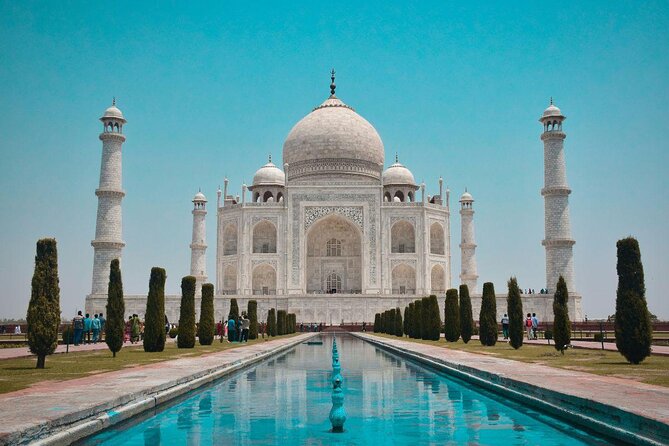
- Taj Mahal at 6 AM: The early start gives you the best chance of seeing the monument in cooler, softer morning light.
- Private air-conditioned vehicle: Your group has its own transport between Delhi, Agra, Jaipur, and back to Delhi.
- Delhi sightseeing in one day: You visit major landmarks including Red Fort, Jama Masjid, India Gate, Humayun’s Tomb, and Qutub Minar.
- Fatehpur Sikri on the Jaipur drive: The abandoned Mughal capital adds an important stop between Agra and Jaipur.
- Three hotel levels: Accommodation is offered in three, four, or five-star categories, depending on the option you choose.
- Entry fees are extra: Monument tickets, camera fees, and lunch and dinner are not included in the advertised price.
Why the Taj Mahal sunrise sets the tone
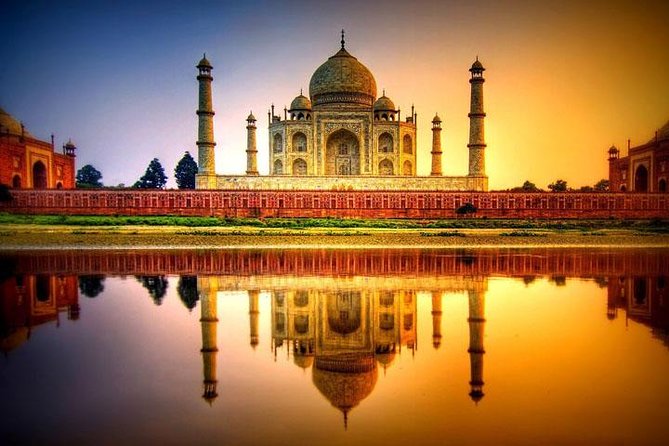
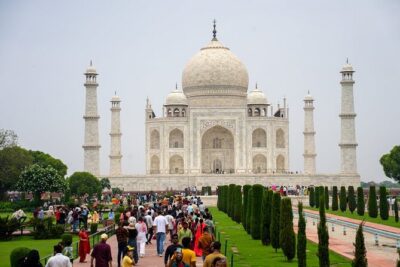
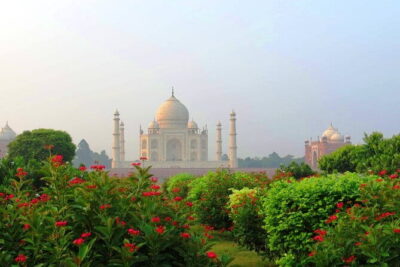
A Taj Mahal visit at sunrise is the strongest feature of this Delhi Agra Jaipur tour. You meet your guide at 6 AM and enter the grounds while the day is still cool, which is a much better arrangement than arriving at midday after a long drive.
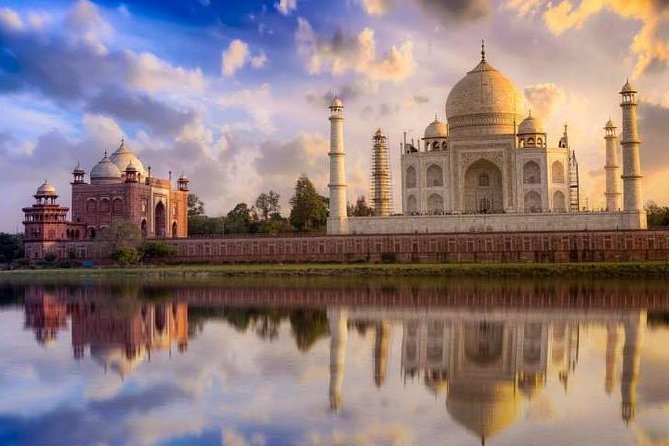
The Taj Mahal was built by Mughal emperor Shah Jahan as the tomb of Mumtaz Mahal. Its white marble changes appearance with the light, and the early morning setting gives you time to appreciate the building before the rest of your day begins.
You return to the hotel for breakfast after the visit. That small detail matters. Instead of carrying breakfast around or rushing straight into another monument, you have a chance to sit down, freshen up, and reset.
The Taj Mahal is closed on Fridays, so confirm that your dates work before paying. The tour information does not give a specific Taj Mahal entry fee, so plan for monument tickets to come out of your own pocket.
More Sunrise and Sunset Tours in Delhi
- Taj Mahal And Agra Fort Private Sunrise To Sunset Same Day Tour From Delhi
★ 4.5 · 22 reviews - Private Over Night Taj Sunrise and Sunset From New Delhi
★ 5.0 · 13 reviews - 6 Day Golden Triangle with Ranthambore – Taj Mahal Sunset/Sunrise
★ 5.0 · 13 reviews
Delhi in seven hours: Mughal monuments and modern India
Day one is a fast survey of Delhi, lasting about seven hours. Pickup is available from the airport, railway station, hotel, or another requested location in Delhi, Gurgaon, or Noida.
You begin with a photo stop at the Red Fort. The red sandstone walls tell you immediately that Delhi is a city shaped by Mughal power. Since this is listed as a photo stop, do not assume you will have a long interior visit unless you arrange that in advance.
Jama Masjid follows. Built by Shah Jahan, the same emperor connected with the Taj Mahal, it is described as one of India’s largest mosques. Dress modestly and expect the atmosphere to feel more active and local than the formal setting of a palace or tomb.
At Raj Ghat, you pause at the memorial to Mahatma Gandhi. It is a quieter stop and gives the day some modern political context after the Mughal monuments.
India Gate shifts the focus again. This large war memorial in central New Delhi honors Indian soldiers who died in World War I. Nearby, you see Parliament House, home to the Lok Sabha and Rajya Sabha, the two houses of India’s Parliament.
The afternoon moves toward Humayun’s Tomb and Qutub Minar. Humayun’s Tomb is an important Mughal monument, while Qutub Minar was begun by Qutub-ud-din Aibak and is surrounded by other historic structures.
I like this mix because Delhi is not reduced to one period or one style. You see Mughal architecture, a national memorial, Gandhi’s memorial, government buildings, and the soaring stonework of the Qutub complex in a single day.
The limitation is pace. Seven hours sounds generous, but Delhi traffic can eat into sightseeing time. You will get a strong introduction rather than a slow, detailed study of every site.
The private car is the tour’s practical advantage
The main benefit of booking this as a private tour is control over your day. Your group travels in an air-conditioned vehicle with a private chauffeur, rather than following the fixed rhythm of a large coach.
That is especially useful on the Delhi to Agra and Agra to Jaipur sections. You can keep your bags with you, avoid arranging separate transfers, and return to your hotel without working out local transport after a tiring sightseeing day.
The vehicle type depends on group size. One published experience used a spacious minibus for a larger group, while other arrangements used a private car. Ask what vehicle is assigned to your party before booking if luggage space or seating room matters.
The driver is a key part of the experience. The service information highlights clean vehicles, and one guest specifically noted that sanitizers and face masks were provided. Do not treat this as a guaranteed current amenity, but it suggests that vehicle presentation and passenger comfort receive attention.
The road days still require patience. Delhi, Agra, Jaipur, and the roads between them cover a lot of ground, and the itinerary is designed to save planning time, not eliminate driving time.
Agra Fort adds depth after the Taj Mahal
After breakfast, you visit Agra Fort. This is a UNESCO World Heritage site and was home to early Mughal emperors. The fort occupies an older site traditionally known as Badalgarh, adding another layer to Agra’s long role as a seat of power.
Agra Fort is a useful companion to the Taj Mahal. The Taj is a mausoleum built around love and memory, while the fort shows the working world of imperial rule, with defensive walls, palace spaces, and royal residences.
The tour places Agra Fort on the same morning as the Taj Mahal. That makes sense geographically and lets you see two major Mughal sites before leaving the city.
Plan for an early start and a full morning. You will have already visited the Taj Mahal, eaten breakfast, and toured the fort before continuing toward Jaipur. Comfortable shoes and water are sensible, although packaged drinking water is included.
More Sunrise and Sunset Tours in India
- From New Delhi: 2-Day Taj Mahal Sunrise and Sunset Tour
★ 5.0 · 3 reviews - Taj Mahal Sunrise & Sunset All Inclusive Private Luxury Agra Tour
★ 5.0 · 348 reviews - Mumbai Private Sunrise/Sunset Sailing 8ppl Boat Tour
★ 4.5 · 86 reviews - Full Day Agra Tour with Taj Mahal at Sunrise and Sunset
★ 5.0 · 42 reviews
Fatehpur Sikri breaks up the journey to Jaipur
On the drive from Agra to Jaipur, the tour stops at Fatehpur Sikri. Emperor Akbar founded the city as the Mughal capital in 1571, but it was abandoned as a capital after only a short period and later completely deserted.
That history gives the site a special character. You are not simply adding another palace to the day. You are seeing a former imperial center whose brief political life makes its courtyards and buildings feel unusually still.
The stop also breaks up the long transfer. Without it, the drive would be only transport. With Fatehpur Sikri, you get another major architectural site before reaching Jaipur and checking into your hotel.
Admission is not included in the tour price, so budget separately for Fatehpur Sikri and the other monuments. The schedule gives an approximate eight-hour day, but actual timing will depend on road conditions and the length of your visits.
Jaipur in six hours: forts, palaces, and astronomy
Day three begins after breakfast and covers Jaipur for about six hours. The centerpiece is Amber Fort, a large palace complex built with pale yellow and pink sandstone and white marble.
Amber Fort is divided into four main sections with courtyards. Give yourself time to look beyond the exterior walls. The design is about movement through gates, courtyards, palace rooms, and views over the surrounding area.
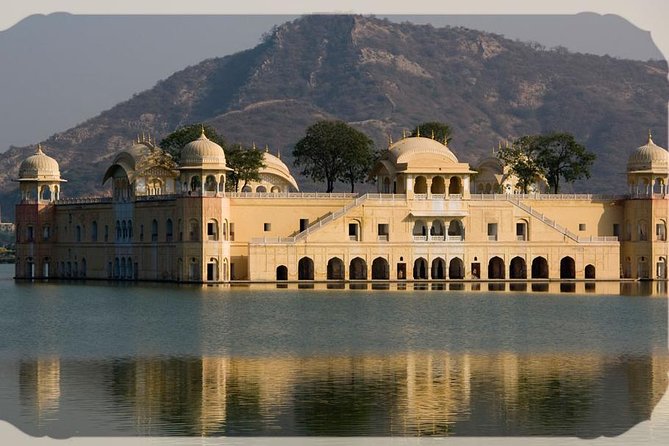
Jal Mahal is a photo stop at the center of Man Sagar Lake. You do not need a long visit here to understand why it is included. The palace rising from the water provides one of Jaipur’s most recognizable images.
The City Palace takes you into the former seat of Jaipur’s Maharaja. The complex includes Chandra Mahal and Mubarak Mahal, along with other buildings. It is a useful contrast to Amber Fort because it shows royal life within the city rather than a hilltop defensive setting.
Jantar Mantar may be the most unusual stop. This collection of nineteen architectural astronomical instruments was built by Sawai Jai Singh II and includes the world’s largest stone sundial. It is also a UNESCO World Heritage site.
I would give Jantar Mantar your full attention even if you are not an astronomy enthusiast. The instruments make science visible in a way that is easy to grasp when a guide explains what each structure measured and how it was used.
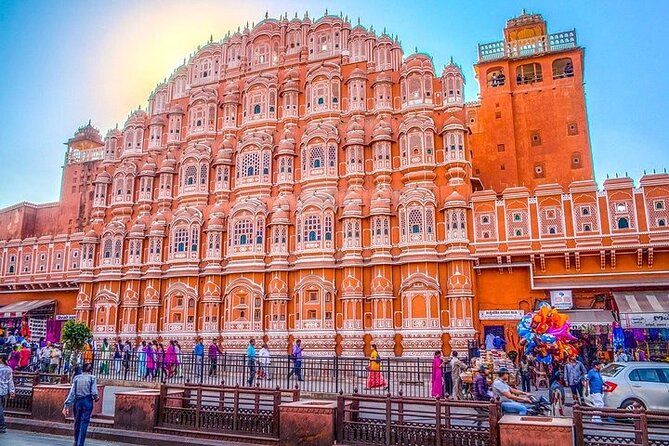
The day ends with Hawa Mahal, the red and pink sandstone Palace of Winds. Its many small windows are one of Jaipur’s defining sights, and the building is best understood as part of the city’s royal architecture rather than as a standalone palace visit.
As with Delhi, six hours is enough for a strong introduction but not enough for an unhurried exploration. If Amber Fort and the City Palace matter most to you, tell your guide early so you know how much time remains for the other stops.
Hotels and meals at the $299 price point
The advertised price is $299 per person, with group discounts available. Its value depends heavily on the hotel category you select and the size of your group.
The package includes accommodation in a three, four, or five-star hotel, three breakfasts, private air-conditioned transfers, sightseeing, professional guides, airport or hotel pickup and drop-off, and packaged drinking water.
That is a useful bundle for someone who wants one company to coordinate the major moving parts. You are paying not only for monument visits, but also for transport between three cities, hotel arrangements, local guides, and return transport to Delhi.
The price does not include monument admission, camera fees, lunch, dinner, or anything not specifically listed. These extra costs can add up across the Taj Mahal, Agra Fort, Fatehpur Sikri, Amber Fort, City Palace, Jantar Mantar, and other sites.
Ask for the exact hotel names before you book. The service has previously used properties such as Jaypee Palace in Agra and Jaipur Palace in Jaipur, and five-star hotels have been arranged for some groups, but the specific hotel depends on the option and availability.
The hotel category can make this tour either a strong value or a less compelling deal. If you choose a lower-priced hotel and already prefer to arrange your own transport, you may find a self-planned trip cheaper. If you value a private vehicle, coordinated hotels, and guides in each city, $299 can be reasonable for the amount covered.
What the guide service adds
A private guide changes the experience from simply looking at monuments to understanding why they were built. The tour includes professional local guides, and the available service record points to strong English communication and clear explanations of architecture and history.
Shilpi is specifically associated with caring for a couple during their Taj Mahal visit, including an early morning visit and a stop at a local market in Agra. That kind of personal help can be useful when you want assistance beyond the main monument.
Mahinder is also identified as a particularly strong guide with broad knowledge of both major and lesser-known details. Since guide assignments can change, treat these names as examples rather than a promise that one of them will lead your tour.
The market stop in Agra is not clearly part of the standard four-day schedule, so do not assume it is included. You can ask your guide about local shopping, but keep your own budget and preferences in mind.
The return to Delhi takes five hours
Day four is primarily a transfer day. After breakfast, you drive back to Delhi and are dropped at a Delhi or Jaipur airport, railway station, hotel, or Delhi International Airport, depending on your onward plans.
The stated duration is about five hours. That makes the tour useful if you need to end in Delhi, but it also means you should not schedule a tight international connection without allowing extra time for road delays.
The drop-off flexibility is one of the better practical details. You can finish at a hotel, station, or airport rather than returning to the original pickup point.
Who should book this Golden Triangle tour
I would choose this tour if you are visiting North India for the first time and want the main Delhi, Agra, and Jaipur sights arranged without managing several hotel bookings and intercity transfers.
It also suits couples, families, and small private groups who prefer their own car. The private format means only your group participates, and group discounts may improve the per-person value for larger parties.
The schedule works best for people who accept early mornings and road time. It is not ideal if you want long afternoons at one monument, slow meals, or several free hours in each city.
The tour is also a good fit if the Taj Mahal is your priority. The sunrise visit is built into the plan, rather than treated as an optional extra.
You should look elsewhere if you want an independent, low-cost trip with complete control over hotels, restaurants, and sightseeing order. You should also compare the total cost after adding entry tickets, camera fees, lunch, dinner, tips, and any optional shopping stops.
Booking details worth checking
Confirmation is provided at booking, and pickup is available from locations in Delhi, Gurgaon, and Noida. The listed start time is 9 AM, but Day Two begins with a 6 AM Taj Mahal visit, so confirm the pickup time for your first morning and the exact timing for the Agra transfer.
Free cancellation is available when you cancel at least 24 hours before the experience start time. Cancellations or changes made within 24 hours are not refunded or accepted.
Most people can take part, and the tour is near public transportation, though the main transport is the provided private vehicle. Ask directly about your hotel category, vehicle size, monument ticket costs, and final drop-off point before making payment.
Should you book it?
Book this tour if you want the classic Golden Triangle in four tightly planned days, especially with the Taj Mahal at sunrise and private transport throughout. The best value comes from the convenience: one booking links hotels, guides, drivers, breakfasts, and city transfers.
Skip it if you dislike early starts or want a slow, independent visit. Before you commit, confirm the hotel names, vehicle size, guide arrangements, and all monument fees. With those details clear, this is a practical first look at Delhi, Agra, and Jaipur, not a leisurely stay in any one city.
FAQ
How long is the Golden Triangle tour?
The tour lasts approximately four days. The listed sightseeing durations are about seven hours in Delhi, eight hours on the Agra and Jaipur day, six hours in Jaipur, and five hours for the return to Delhi.
What time does the tour start?
The listed start time is 9 AM. The Taj Mahal visit on Day Two begins at 6 AM, so confirm the exact pickup schedule for that morning.
Is the Taj Mahal visited at sunrise?
Yes. The itinerary schedules a Taj Mahal visit at 6 AM on Day Two, followed by breakfast at the hotel.
Is transportation private?
Yes. Transfers and sightseeing are provided in an air-conditioned private vehicle, and only your group participates in the tour.
Which cities are included?
The tour includes Delhi, Agra, and Jaipur. The route also includes Fatehpur Sikri between Agra and Jaipur.
Are hotels included?
Yes. Accommodation is included in the three, four, or five-star option you select. The exact hotel depends on the chosen option and availability.
Are monument entrance fees included?
No. Monument fees and camera fees are not included. Lunch, dinner, and other items not specifically listed are also excluded.
Where can the tour end?
The return transfer can drop you at a Delhi or Jaipur airport, a railway station, a hotel, or Delhi International Airport, depending on your onward plans.
More Four-Day Trips in Delhi
- 4-Day Highlights of Zhangjiajie With Sunrise Experience
★ 5.0 · 4 reviews
More Taj Mahal sunrise visits around Delhi
- From Delhi: Taj Mahal and Agra Fort Private Sunrise Tour
★ 4.9 · 2,270 reviews - Sunrise Taj Mahal, Agra Fort & Baby Taj Tour from Delhi by Car
★ 5.0 · 2,243 reviews - Private Sunrise Taj Mahal Trip from Delhi all Inclusive
★ 5.0 · 1,537 reviews - Private Taj Mahal at Sunrise and Agra Day Tour from Delhi
★ 4.5 · 373 reviews
Newly added sunrise trips around Delhi
- From Delhi: Taj Mahal & Agra Private Day Trip with Transfers★ 4.9 · 38 reviews
- From Delhi: Taj Mahal Sunrise and Old Delhi Walking Tour★ 5.0 · 2 reviews
- From Delhi: Same-Day Express Trip to Agra & Back Transfer★ 5.0 · 5 reviews
- From Delhi: Taj Mahal Sunrise & Elephant Rescue Private Tour★ 5.0 · 2 reviews
- From Delhi: Sunrise Taj Mahal and Agra City Day Tour By Car★ 5.0 · 5 reviews
- From Delhi: Taj Mahal Sunrise Tour w/ Elephant Conservation★ 4.4 · 3 reviews
- From Delhi: Taj Mahal Sunrise, Baby Taj & Agra Fort Day Tour★ 5.0 · 2 reviews
- From Delhi: Taj Mahal Sunrise, Baby Taj & Agra Fort Day Tour★ 5.0 · 23 reviews
Taj Mahal Sunrise Tours, compared at first light.

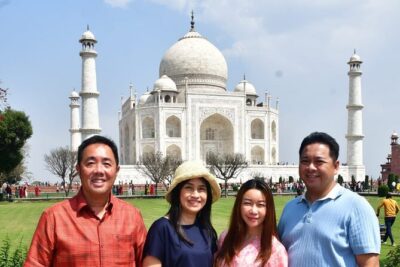
Sunrise Taj Mahal, Agra Fort & Baby Taj Tour from Delhi by Car
Read our review →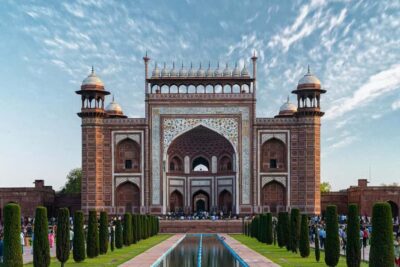
Private Sunrise Taj Mahal Trip from Delhi all Inclusive
Read our review →
Private Taj Mahal at Sunrise and Agra Day Tour from Delhi
Read our review →
Private Sunrise Taj Mahal Tour from Delhi By Car -All inclusive
Read our review →
Taj Mahal Sunrise & Sunset All Inclusive Private Luxury Agra Tour
Read our review →