
Review · ITALY
Etna Special Dawn Excursion
Mount Etna is at its most dramatic before sunrise. You begin in darkness, climb across black volcanic ground, and watch the first light spread over Sicily from high on the north side. Antonio and Sofia are among the guides praised for clear explanations and a warm, encouraging manner, while the route can reach Pizzi Deneri at 2,847 meters when conditions allow.
I like the flexible route, which lets the guide match the climb to the slowest person in the group. I also like the small-group format and the loan of sticks, a helmet, backpack, and k-way jacket. The catch is simple: this is a real mountain hike, not a scenic stroll. The pace has occasionally felt too quick for some participants, so you need strong fitness and a willingness to work hard.
Key points to know before you book
- The day begins at 4 a.m. at Rifugio Citelli, with part of the climb taking place in darkness.
- The route changes on the spot, based on weather, volcanic activity, altitude rules, and the group’s fitness.
- Pizzi Deneri is the highest possible target, at 2,847 meters, but reaching it is never guaranteed.
- The descent on loose volcanic sand is a major part of the outing, and it can be tiring even after the uphill work is done.
- Basic mountain equipment is supplied, including sticks, helmet, backpack, and k-way jacket.
- Breakfast and lunch are not included, so you need to plan food and water for a long morning outside.
Why the pre-dawn start makes Etna special
The early departure is not just a scheduling trick. It changes the whole feel of the outing.
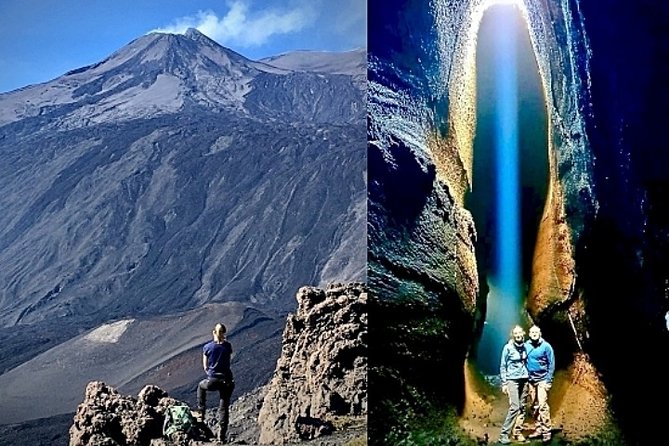
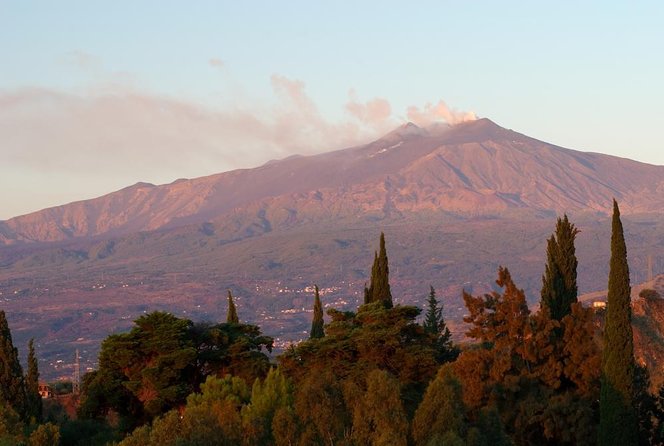
At 4 a.m., you meet at Rifugio Citelli on Via Mareneve, on Mount Etna’s north side. You start before daylight, often using headlamps supplied by the guide according to the outing arrangements. The mountain is quiet, and the first section feels more like a serious expedition than a standard sightseeing trip.
As the sky brightens, the reward arrives gradually. You may see the sea, the valleys, and the upper volcanic cones emerge from the darkness. Several participants have described the sunrise above the clouds as the defining moment of the experience. I can see why. You are not simply driving to a viewpoint and stepping out for a photograph. You have earned the view with several hours of walking.
The dawn timing also helps with temperatures. The starting air can be chilly and windy, while the sun brings warmth later. That makes layered clothing essential. Do not dress for the afternoon forecast at sea level. Etna’s upper slopes can feel cold even in summer.
More Volcano Sunrise Tours in Italy:
- Mount Etna: Sunrise Excursion with an expert Local Guide
★ 5.0 · 8 reviews - Maui: Haleakala Sunrise Spectacular with Local Breakfast
★ 4.5 · 2,155 reviews - Borobudur Sunrise from setumbu Hill , Merapi Volcano & Prambanan Full Day Tour
★ 5.0 · 1,030 reviews
The north side route and its volcanic terrain
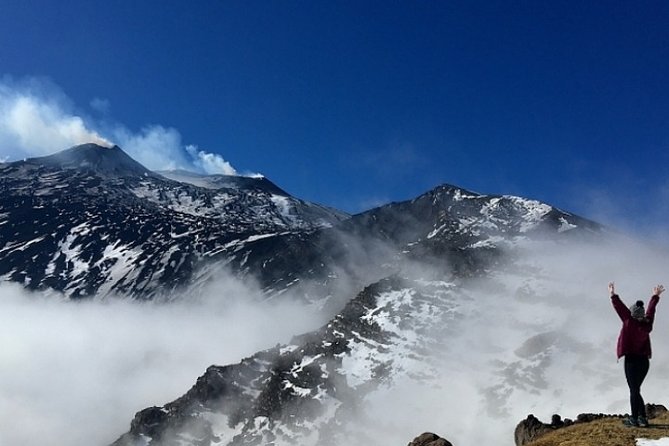
This outing uses Etna’s north side, where the route can rise from about 1,800 meters to a maximum of 2,847 meters. The total vertical gain or drop varies from roughly 300 to 1,100 meters, and the walking distance can range from 6 to 12 kilometers.
Those numbers are broad because the guide makes the final call during the hike. Weather, volcanic conditions, altitude restrictions, and the physical ability of the least trained participant all matter. You might follow a shorter route at a lower altitude, or you might continue toward Pizzi Deneri if the group and conditions are right.
The ground is rugged, with steep slopes and loose volcanic sand. The black and gray surface gives Etna its famous moonlike appearance, but it is not easy underfoot. On the descent, your boots sink into the ash and gravel. Sticks are particularly useful here, helping with balance and reducing strain on your knees.
You should expect a workout rather than a paved mountain walk. The route is not designed for a casual stroll, and the guide may keep a steady pace to complete the planned distance before the morning ends. A past outing was criticized for moving too quickly and allowing too few breaks. That appears to have been an exception, but it points to a real question you should ask yourself: can you comfortably walk for five or six hours over uneven, steep ground?
Reaching Pizzi Deneri at 2,847 meters
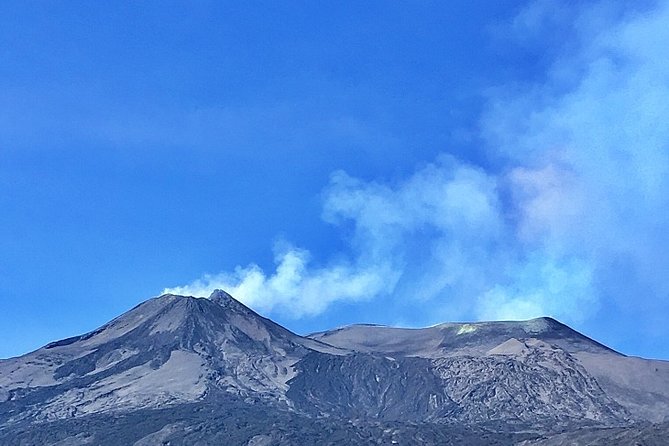
Pizzi Deneri is the strongest possible objective on this excursion. At 2,847 meters, it sits near Etna’s upper volcanic zone and offers a high viewpoint toward the summit area, including the imposing northeast crater.
The phrase possible objective matters. You are on an active volcano, and conditions can change. The guide may lower the maximum altitude, shorten the route, or turn the group around. That is not a failure of the excursion. It is the correct response to unstable weather, volcanic activity, or a group that needs a more manageable route.
Current access limits also affect how high you can go. This north side walk is presented as one of the best ways to reach a high point under the permitted conditions, but no guide can promise a specific crater or summit access. You should book it for the experience of hiking Etna at dawn, not as a guaranteed summit climb.
The altitude may also affect how hard the walk feels. Even fit hikers can notice the thinner air as the route rises. The guide aligns the pace with the slowest participant, which is an important safety feature, but it cannot remove the physical effort.
What the guide adds to the morning
The guide is more than a person who points out the trail. The best part of this experience is the chance to understand what you are seeing while you walk.
Antonio is frequently named for his enthusiasm, volcanic explanations, and ability to share small stories without making the hike feel like a classroom. Sofia has also been praised for her energy, clear teaching, and knowledge of volcanology. Gino is described as attentive and safety-minded, while Andrea has led a well-regarded north-side outing. The exact guide depends on the date and assignment.
There is a language detail to check before paying. The information describes a private English-speaking guide in one place and a French-speaking guide in another. Several published experiences were conducted in French, and the guides named above have worked with different language groups. If your language needs matter, confirm the guide language directly with Etna3340 before booking.
The guide also decides the route, walking speed, altitude, and number of breaks. That flexibility is useful, but it means you are buying a guided mountain experience rather than a fixed sightseeing program. You will not know every turn in advance.
More early starts worth the alarm around Italy:
- Rome: Vatican, Sistine Chapel, St. Peter Early Morning Tour
★ 4.9 · 227 reviews - Sunrise in Rome: Small Group E-Bike tour with Italian Breakfast
★ 5.0 · 179 reviews - Sunrise in Rome: Small Group E-Bike Tour & Italian breakfast
★ 4.9 · 177 reviews - Florence: Duomo Dawn Entry with Key Holder & Dome Climb Tour
★ 4.8 · 105 reviews
Possible lava tunnels and other memorable details
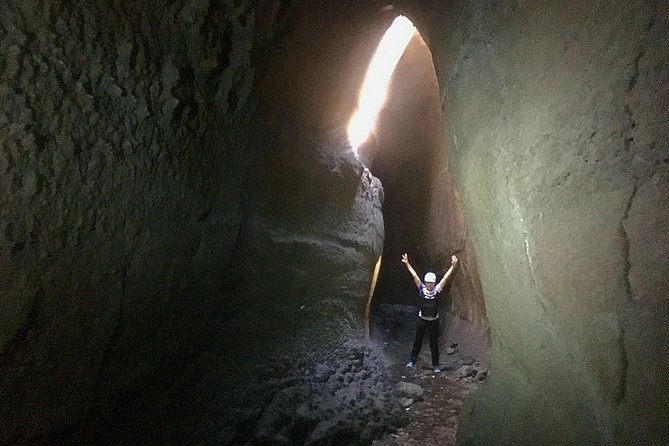
Some outings have included a lava tunnel visited at night, with helmets and front lights provided by the guide. This can be an atmospheric extra, especially when combined with the starry sky and the sound of the volcano. It is worth asking if a tunnel visit is planned for your date, since the core description does not promise it on every departure.
The active volcano setting adds another layer of uncertainty. You may hear occasional rumbling or see smoking volcanic areas, but the exact activity is never guaranteed. The route is adjusted to keep the group within the conditions allowed that day.
This is also a good outing for people who enjoy learning through conversation. Guides have used simple explanations and visual descriptions to explain Etna’s volcanic structure, lava flows, and craters. The information is most useful because you are standing on the material being discussed, not looking at a diagram from a coach window.
How difficult is the 5 to 6 hour hike?
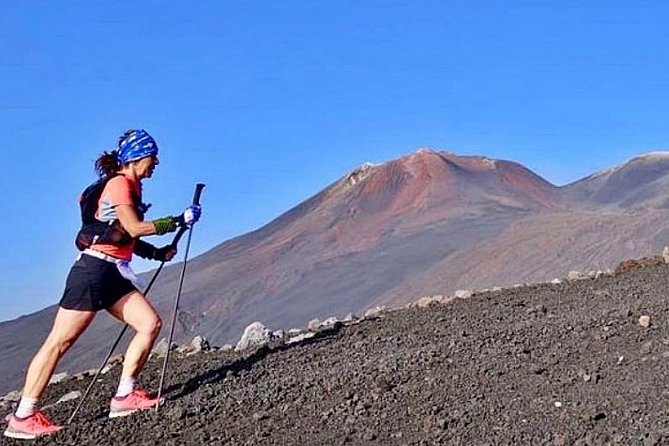
The advertised duration is about five hours, while the more detailed description allows five to seven hours depending on the route. You should plan your morning around the longer figure, especially if the group moves slowly or the guide includes extra stops.
The route can involve 6 to 12 kilometers of walking and up to 1,100 meters of vertical change. That is why the experience requires a strong fitness level and has a minimum age of 12. The age limit alone should not be mistaken for a sign that it is easy. A fit teenager may manage it, but younger participants need to be comfortable with steep, sustained walking.
You should be able to:
- Walk for several hours on rough ground
- Handle steep uphill sections
- Descend on loose volcanic sand
- Cope with cold, wind, and changing temperatures
- Stay with a group at a steady pace
- Manage without a full breakfast before the start
The guides aim to match the slowest participant, but that does not mean the route is relaxed. One account specifically advised future participants to hold on during the opening section. Take that seriously. Train with hills before your trip if you are not used to mountain walking.
Equipment, food, and what to bring
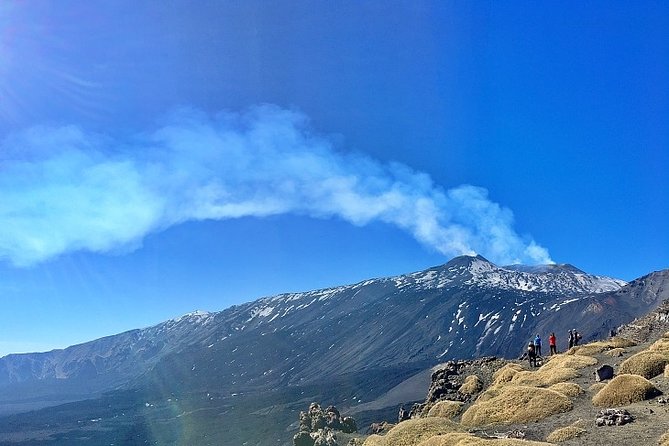
The price includes sticks, a helmet, backpack, and k-way jacket. These are useful extras, particularly the walking sticks for the loose descent and the waterproof layer for sudden weather changes.
You still need suitable personal clothing and footwear. The provided equipment does not replace sturdy hiking shoes, warm layers, gloves, or a head covering. The information does not give a full packing list, so use sensible mountain clothing rather than relying on the loaned gear.
Breakfast and lunch are not included. Since the meeting time is 4 a.m., you should arrange food beforehand. Bring water and compact snacks that you can eat during a pause. Do not expect to buy breakfast at the trailhead unless the operator tells you otherwise.
The experience ends back at Rifugio Citelli. There is no included transfer listed, so you need to arrange your own transport to and from the meeting point. Check the driving time carefully if you are staying in Catania, Taormina, or elsewhere on the island. A 4 a.m. start requires more planning than a normal day tour.
Is $157.57 a fair price?
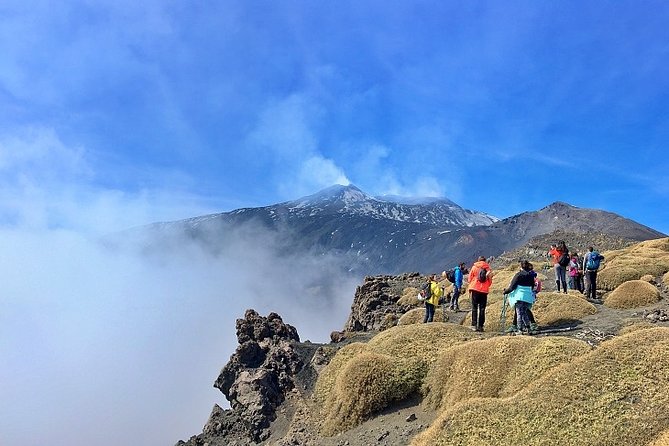
At $157.57 per person, this is not the cheapest way to see Mount Etna. You are paying for a specialist guide, route planning, safety decisions on an active volcano, a small group of up to eight people, and loaned equipment.
The value improves if you want to hike rather than simply reach a viewpoint. The guide’s ability to change the route is important on Etna, where weather and volcanic conditions can affect access. You also get a quieter start, a chance to walk before the main daytime crowds, and the possibility of reaching a high point such as Pizzi Deneri.
The value is weaker if you only want a short volcano visit or a guaranteed summit view. The route and maximum altitude can change, and the price does not include meals or transport. You are paying for a demanding, weather-dependent experience rather than a fixed product with every feature guaranteed.
The small-group limit is a real advantage. A group of up to eight makes it easier for the guide to watch the pace, explain the geology, and adjust the route. Some past outings appear to have had larger groups, so confirm the expected size when you book.
Cancellation and weather planning
You can cancel for a full refund up to 24 hours before the 4 a.m. start time. Changes or cancellations inside that window are not accepted for a refund.
Weather is central to this activity. If poor conditions force a cancellation, you are offered another date or a full refund. The same applies if the minimum number of participants is not reached. I like this policy because it recognizes that a high-altitude volcano hike should not run at any cost.
Keep your schedule flexible if possible. A weather cancellation can be disappointing, but walking into unsafe conditions would be far worse.
Who should book this Etna experience?
I would choose this outing if you want an active, unusual morning and care more about the mountain itself than easy sightseeing. It suits fit hikers, amateur geologists, photographers who enjoy changing light, and anyone who wants to see Etna before the day becomes busy.
It can also work well for families with children aged 12 and over, provided everyone has strong fitness and understands the effort involved. The guides have handled family groups, but the route remains physically demanding.
I would not choose it if you dislike early starts, loose ground, cold temperatures, uncertain routes, or long climbs. You should also think twice if you need frequent long breaks or have difficulty walking downhill. The descent through volcanic sand can be the hardest part.
Should you book the Etna Special Dawn Excursion?
Book it if you want the most atmospheric version of a Mount Etna hike: darkness at the start, sunrise above the clouds, volcanic ground underfoot, and a guide who can explain the mountain as you climb.
Go in with realistic expectations. Pizzi Deneri is a goal, not a promise. The route may be shortened, the weather may cancel the outing, and the pace may challenge you. Confirm the guide language, group size, meeting arrangements, and expected route before you pay.
For a fit visitor who enjoys real walking, I think the combination of silence, sunrise, flexible route planning, and expert guidance makes the price reasonable. For anyone seeking an easy viewpoint visit, choose a less demanding Etna option instead.
FAQ
Where does the Etna dawn hike start?
The meeting point is Rifugio Citelli, Via Mareneve, 95010 Sant’Alfio, in Sicily. The activity ends back at the same meeting point.
What time does the excursion begin?
The scheduled start time is 4 a.m. You begin before sunrise, with part of the walk taking place in darkness.
How long does the hike last?
The tour summary lists about five hours. The detailed information gives a typical duration of five to six hours, with some routes taking up to seven hours.
How high can the hike go?
Depending on weather, volcanic conditions, access limits, and group fitness, the hike may reach Pizzi Deneri at 2,847 meters above sea level. The guide may choose a lower maximum altitude.
What equipment is included?
The experience includes walking sticks, a helmet, backpack, and k-way jacket. Breakfast and lunch are not included.
Can I cancel for a full refund?
Yes. You can cancel at least 24 hours before the local start time for a full refund. Cancellations or changes made less than 24 hours before the start are not refunded.
Newly added sunrise trips around Italy
- Venice: Sunrise Walking Tour with Espresso★ 4.6 · 12 reviews
- Sunrise Kayak Tour / Snorkeling and Italian Coffee Included★ 5.0 · 3 reviews
- Sunrise in SUP with breakfast on board and private lesson★ 5.0 · 4 reviews
- Rome: No-Crowd Early Morning Tour with Trevi Fountain★ 4.9 · 10 reviews
- Sardinia: SUP Paddleboard Tour Sunrise, lesson and Breakfast★ 4.7 · 3 reviews
- Mount Etna: Sunrise Excursion with an expert Local Guide★ 5.0 · 8 reviews
- Golfo Aranci: Sunrise Dolphin Kayak Tour with Breakfast★ 4.8 · 39 reviews
- Florence: Duomo Dawn Entry with Key Holder & Dome Climb Tour★ 4.8 · 105 reviews
Volcano Sunrise Tours, compared at first light.
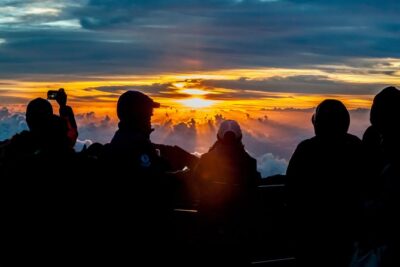
Maui: Haleakala Sunrise Spectacular with Local Breakfast
Read our review →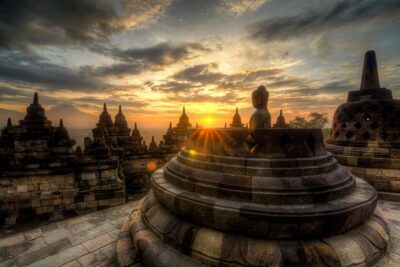
Borobudur Sunrise from setumbu Hill , Merapi Volcano & Prambanan Full Day Tour
Read our review →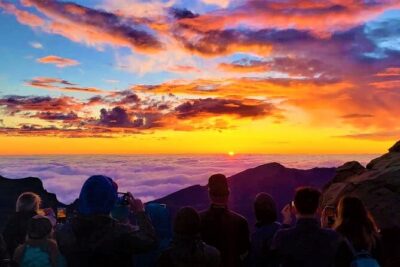
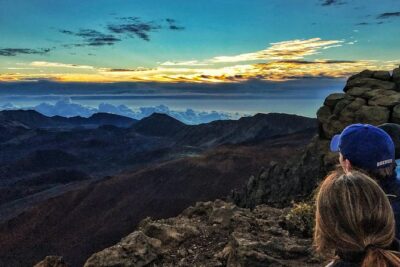
Maui: Majestic Haleakala Sunrise Tour with Pick-up
Read our review →
Haleakala Sunrise Tour with Breakfast and West Side Pickup
Read our review →
Maui Haleakala Sunrise Downhill Bike Tour with Mountain Riders Rated #1
Read our review →
More lists with this sunrise on them