
Review · INDIA
Sunrise / Sunset Backwater Village Kayaking Tour (Kumarakom)
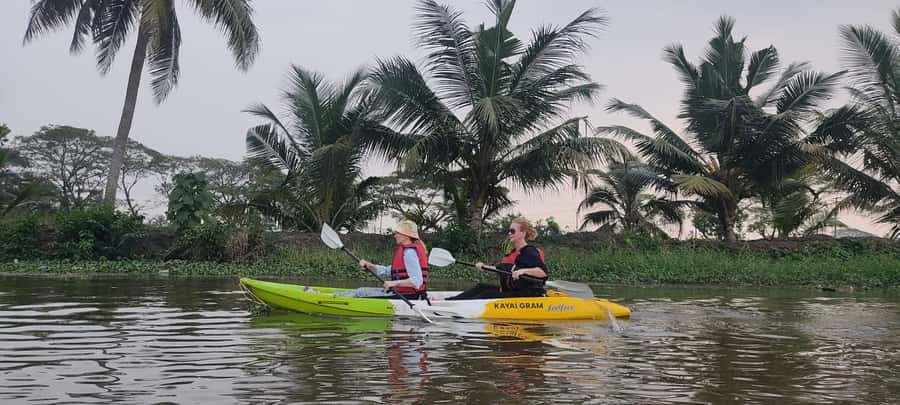
Kumarakom’s backwaters reveal their best details from a kayak. You move quietly past paddy fields, duck farms, and small waterfront homes, close enough to see children heading to school by boat and women washing clothes beside the canals. This is not just a scenic paddle. It is a short look at how people live around the water.
I like the private format, which lets you set the pace and ask questions without keeping up with a large group. I also like the wildlife focus. Kingfishers, herons, an owl, fruit trees, and even a snake have been spotted on recent outings, so you get more than postcard views.
The main consideration is the water itself. Floating plants can block a canal, and difficult weather may force a route change, a short walk, or a motorboat transfer at extra cost. Choose an early or late departure for cooler conditions and a more comfortable paddle.
Key points to know before you go
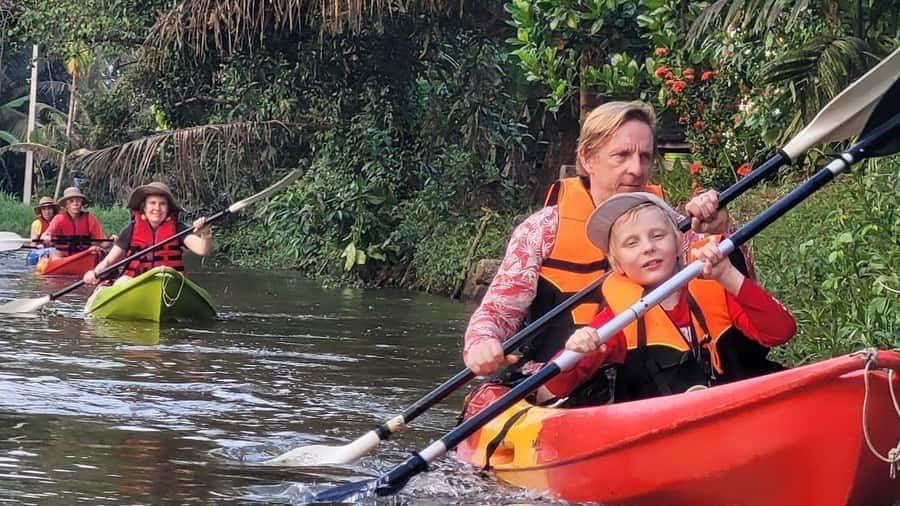
- Cheepunkal Village by kayak: The route covers roughly 3 to 6 kilometers through rivers, lakes, and narrow canals.
- Wildlife close to the water: Keep watch for kingfishers, herons, owls, ducks, fruit trees, and other local flora and fauna.
- A working village, not a staged show: You may pass fishing boats, mussel harvesting, duck farming, temples, churches, and homes along the canals.
- Private and flexible: You can discuss your interests and schedule with the English-speaking guide.
- Two hours is a useful taste: The tour gives you a close look at village life without taking up a full morning or afternoon.
- Weather matters: Floating plants can close some passages, and a motorboat may be arranged for difficult conditions at an additional charge.
Starting at Mount de Kumarakom Resort
You meet the guide at Mount de Kumarakom Resort, at approximately 9.639802932739258, 76.4249038696289. Check this location carefully before setting out, especially if you are staying elsewhere in Kumarakom.
The meeting point matters because this is not a general pickup tour with a long sightseeing transfer. You begin near the backwater area and spend most of the two hours on the water. That keeps the experience focused and leaves more time for paddling, wildlife watching, and village scenes.
The activity is private, so you do not have to fit into the rhythm of a large mixed group. You can ask to spend more time watching birds, learning about farming, or looking at village life. The route and distance can be adjusted around your interests and schedule, within the conditions of the day.
English is the listed tour language. The local guides know the waterways and can explain what you are seeing, but you should ask questions rather than wait for a formal lecture. A new or shy guide may take a little time to open up, and simple questions about fishing, crops, religion, boats, or family life can make the outing more personal.
More Sunrise and Sunset Tours in India
- Taj Mahal Sunrise & Sunset All Inclusive Private Luxury Agra Tour
★ 5.0 · 348 reviews - Mumbai Private Sunrise/Sunset Sailing 8ppl Boat Tour
★ 4.5 · 86 reviews - Full Day Agra Tour with Taj Mahal at Sunrise and Sunset
★ 5.0 · 42 reviews
Paddling through Cheepunkal Village
The tour begins around Cheepunkal Village, a water-based community where canals function like roads. From a kayak, you see the area at a human pace. You are not looking through a bus window or gliding past on a large houseboat. You make each turn yourself, with the guide leading the way.
The route may include quiet stretches of river, broader lake water, and narrow connecting canals. The distance is usually between 3 and 6 kilometers, which gives you a fair amount of paddling during a two-hour trip. You should be ready to use your arms for most of the outing, though the pace is intended to be relaxed rather than athletic.
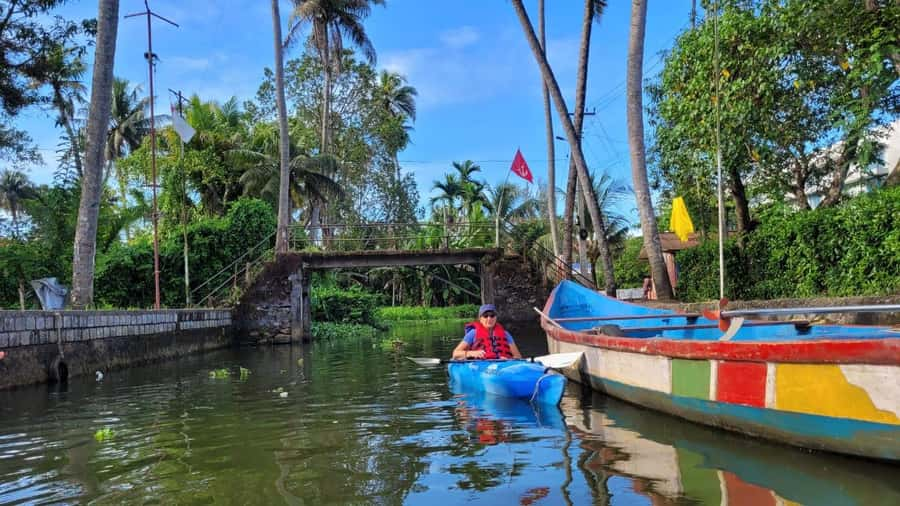
The narrow waterways are the most interesting part. They take you close to the homes, trees, gardens, and small landing places along the banks. You may see women washing clothes near the water, local ferries carrying people, or children traveling to school by boat. These details explain why the backwaters are more than a pretty setting. Water shapes transport, work, school, and daily errands.
You also pass local temples and churches, sometimes near the same waterways used for farming and transport. The tour does not present village life as a museum display. People are carrying on with ordinary tasks, so you should observe quietly and ask before taking close photographs.
Wildlife watching from a quiet kayak
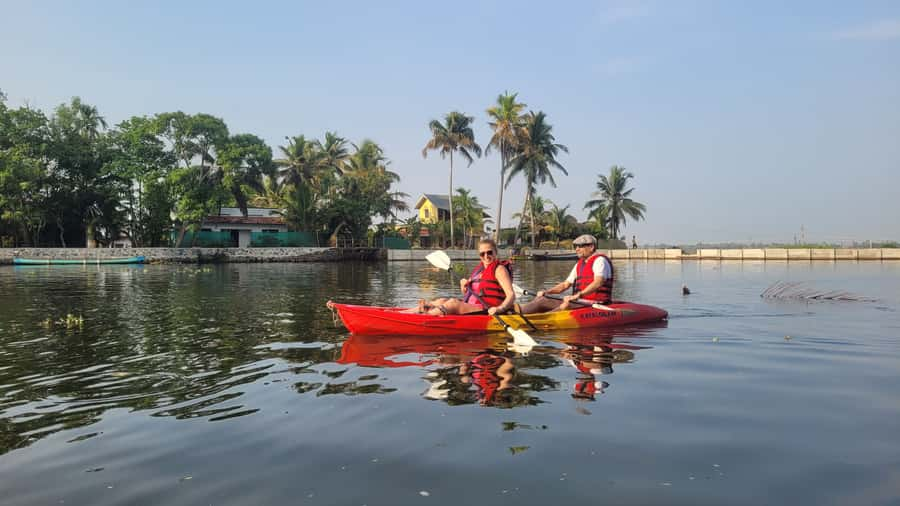
A kayak gives you a better chance to notice small movements than a motorized boat. The low seating position brings you near the water and banks, while the lack of a loud engine makes it easier to listen for birds and watch them without rushing.
Keep your eyes open for kingfishers and herons. An owl has also been spotted, along with a snake, so the guide may point out animals you would otherwise miss. You might see ducks around a farm, birds in trees, or signs of life along the muddy edges of the canals.
The wildlife is not guaranteed. This is a natural environment, not a bird park with fixed viewing points. Light, weather, water levels, and timing all affect what appears. That uncertainty is part of the appeal, but you should book this for the chance to observe nature rather than for a guaranteed list of species.
The same applies to plants. You may pass different fruit trees and thick bankside growth, with the guide explaining how local vegetation fits into village life. If plants, birds, or farming interest you, say so early. The private format makes it easier to shape the conversation around what catches your eye.
Bring patience. The best moment may be a kingfisher flashing across the canal or a quiet pause beside a tree, not a major landmark. A phone camera can record the trip, but watching the water and banks is more useful than staring at a screen.
Seeing how the backwaters work
The most valuable part of this tour is the connection between scenery and work. You may see people fishing, harvesting mussels, raising ducks, or moving between homes by boat. These are not added activities designed for visitors. They are parts of the local economy and household routine.
Paddy fields show another side of the area. The broad green plots contrast with the narrow canals, while boats and ferry routes help link communities separated by water. The guide can help explain what you are seeing, but you will get the most from the outing if you ask direct questions.
You may also pass small waterfront homes where everyday jobs happen beside the canal. Washing clothes, loading supplies, and watching children leave for school all look simple from a distance, yet together they show how completely the waterway is built into local life.
This is why I prefer the kayak setting to a purely scenic cruise for a short introduction to Kumarakom. You are not just taking in views. You are close enough to notice how people use the same water for transport, food, work, and recreation.
At the same time, remember that you are passing through lived-in communities. Keep your voice low near homes, avoid pointing a camera directly at people, and follow the guide’s advice about where to pause. Respect makes the experience better for everyone.
More Sunrise Kayak and Paddleboard Tours in India:
- SUP in Kochi: Sunrise Stand-Up Paddleboarding Tour
★ 5.0 · 3 reviews - Sunrise / Sunset Backwater Village Kayaking Tour (Nedumudy)
★ 5.0 · 3 reviews - Sydney: Harbour Sunrise Kayak Tour
★ 5.0 · 1,899 reviews - Sydney: Sunrise Kayak, Opera House & Under Harbour Bridge
★ 5.0 · 869 reviews
Sunrise, sunset, and choosing the right time
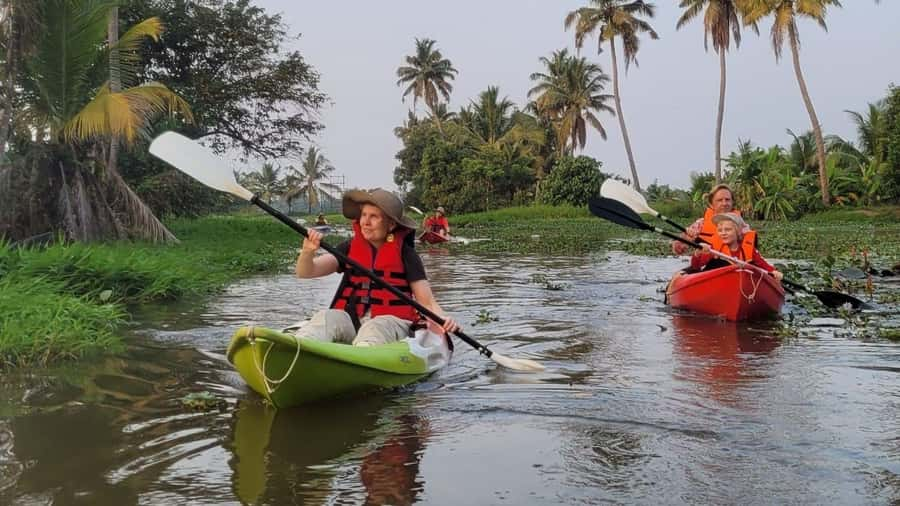
The experience is described as a sunrise or sunset tour, with starting times subject to availability. You can also customize the schedule around your plans. The cooler hours are especially sensible in Kerala, since paddling in strong midday heat can make two hours feel much longer.
Sunrise should give you a quiet start and softer light, though the tour information does not promise a particular view or wildlife sighting at that hour. Sunset offers a different mood, with the water and village silhouettes changing as the light fades. The best choice depends on your sleep schedule and the rest of your day.
The operator specifically recommends cooler hours because weather can make kayaking difficult. If conditions become too challenging, the guide may arrange a motorboat, but this costs extra. Ask about the likely conditions and any additional charge before accepting that option.
A two-hour slot is easy to fit around a stay in Kumarakom. It works well before breakfast, before an afternoon rest, or near the end of the day. It is less suitable if you want a long expedition through a large section of the backwaters. For that, you would need to compare it with the available full-day kayaking options.
What happens when canals are blocked
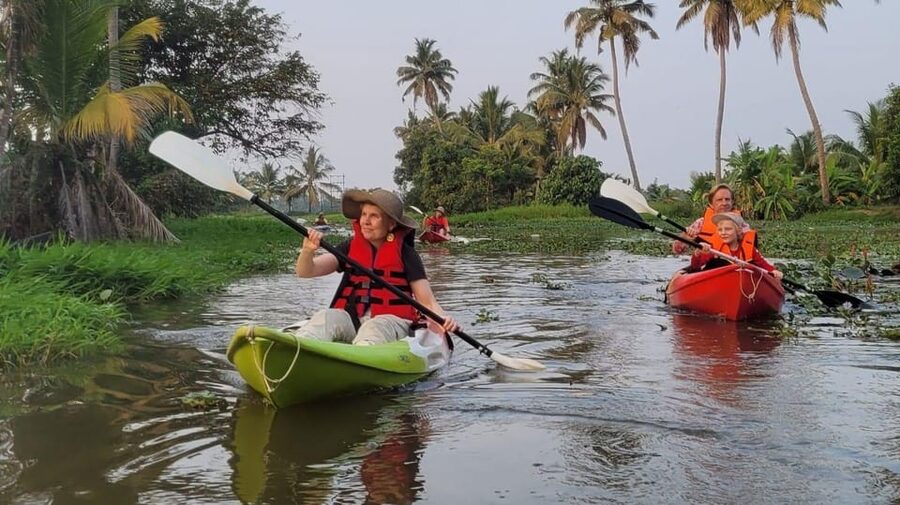
Backwaters change. Floating water plants can drift into narrow routes and make some canals impossible to pass. If that happens, the guide will look for another route. If no alternative is available, you may return along the same stretch.
In some cases, you may need to walk briefly beside the canal while the guide handles the kayak and equipment. This is a practical adjustment, not a failure of the trip, but it is worth knowing before you book. The route is shaped by nature, and the operator cannot control every obstruction.
Weather can also alter the plan. Rougher or uncomfortable conditions may lead to a motorboat arrangement for an extra fee. If you want a pure kayaking experience, choose a cooler, calmer time and accept that the final route may still change.
These limits are part of the backwater setting. A fixed route would sound reassuring, but it would not always reflect the actual water conditions on the day. The guide’s local route knowledge is useful here, especially when a narrow canal is blocked or the weather changes.
Safety, equipment, and comfort
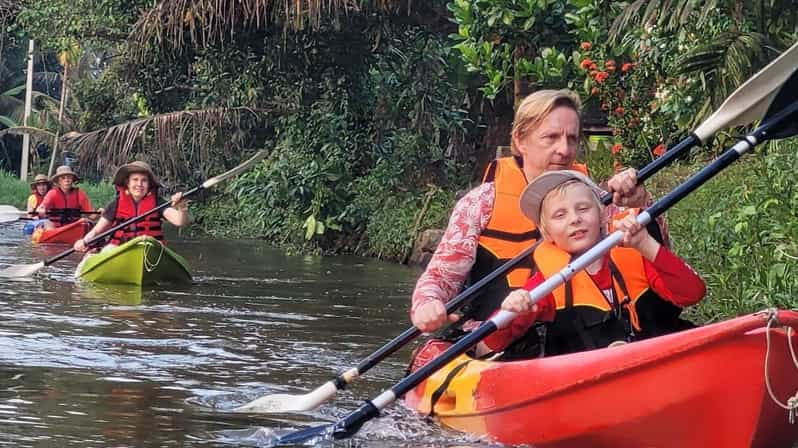
The equipment includes kayaks and life vests. The supplied information states that the equipment was in good condition and that the outing felt safe, which is important for anyone new to kayaking.
You do not need to treat this as a hard workout, but you should be comfortable sitting in a kayak and paddling for up to 6 kilometers. If you are unsure about your fitness or balance, tell the guide at the start so the pace and route can be handled sensibly.
The activity is listed as wheelchair accessible. Since the outing involves kayaks and possible movement beside canals, ask the provider about the exact boarding and transfer arrangements before booking if you use a wheelchair.
Wear clothes that can handle splashes and bring sun protection. Cooler hours reduce the heat, but you are still exposed to the weather. Keep cameras and phones secure around the water, and follow the guide’s instructions in narrow canals or near passing boats.
How much value does a two-hour private tour offer?
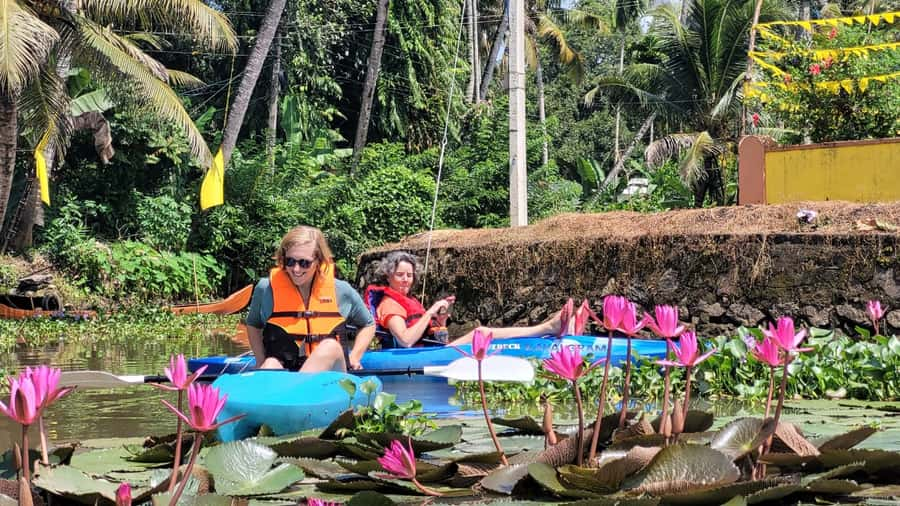
No price is provided here, so I cannot judge the exact cost. The value depends on how much you want personal attention and how well the timing fits your stay.
A private two-hour tour costs more than joining a larger group, but you are paying for flexibility, a local guide, and a route that can respond to your interests. If you care about birds, village work, or photography, the chance to pause and ask questions can justify the extra cost.
The short duration also has value. You get a focused introduction without committing a full day or giving up other Kumarakom plans. It is a good match for someone staying at a resort, fitting several activities into one day, or testing whether kayaking suits them.
The value is weaker if you want a long, strenuous paddle or a guaranteed sunset spectacle. In that case, compare the two-hour outing with a full-day kayaking tour or a longer cruise. This tour is best viewed as a close, flexible window into the backwaters rather than a complete exploration of the region.
Cancellation is flexible up to 24 hours before the activity for a full refund, and you can reserve now and pay later. Those terms are useful when weather and holiday plans are still uncertain.
Who should book this Kumarakom kayaking tour?
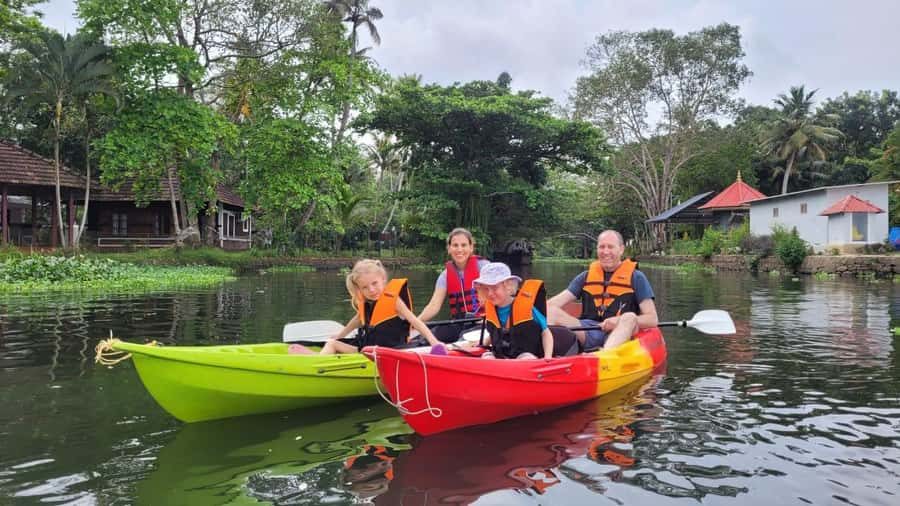
I would choose this tour if you want to see the backwaters from close range and care about ordinary village life as much as scenery. It suits couples, families, solo visitors, and small private groups who prefer a quiet outing with room for questions.
Birdwatchers will like the chance to spot kingfishers, herons, owls, and other wildlife, though no sightings are guaranteed. Anyone interested in local work will appreciate the fishing, mussel harvesting, duck farming, paddy fields, and boat transport.
It is less suitable if you dislike heat, cannot paddle comfortably, or want a fully fixed route. Floating plants, weather, and water conditions can change the plan. The possibility of a motorboat at an extra charge is another point to settle before you go.
Should you book it?
Book this Kumarakom kayaking tour if you want an active but manageable introduction to the backwaters, with local life close at hand. The strongest reasons are the private setting, flexible route, good equipment, and the chance to see details that pass too quickly from a houseboat.
Choose an early or late start, ask questions from the beginning, and keep your expectations open about the route. If you want a long day on the water, choose a longer tour instead. For two hours of quiet paddling through Cheepunkal Village, this is a practical and authentic choice.
FAQ
Where does the kayaking tour begin?
You meet the guide at Mount de Kumarakom Resort in Kumarakom. The stated coordinates are 9.639802932739258, 76.4249038696289.
How long does the activity last?
The kayaking tour lasts two hours.
How far will I paddle?
The route covers approximately 3 to 6 kilometers, depending on the route and conditions.
Can the tour schedule be customized?
Yes. The tour can be adjusted around your interests and schedule, subject to available starting times and water conditions.
What language does the guide speak?
The live guide speaks English.
What happens if the weather makes kayaking difficult?
The guide may arrange a motorboat for your convenience. This option is subject to an additional charge.
Can I cancel the booking?
You can cancel up to 24 hours in advance for a full refund. A reserve-now, pay-later option is also available.
Newly added sunrise trips around India
- Taj Mahal Sunrise and Agra Overnight Tour from Chennai★ 5.0 · 3 reviews
- 2 days Tour – Delhi Local and Sunrise Agra ( Tajmahal Tour )★ 5.0 · 14 reviews
- Taj Mahal Sunrise Tour from Delhi★ 5.0 · 6 reviews
- Taj Mahal Sunrise Tour from Delhi★ 5.0 · 9 reviews
- From Delhi: Private Taj Mahal Sunrise & Sunset 2-Day Tour★ 5.0 · 2 reviews
- Taj Mahal sunrise and Agra Overnight Tour from Bangalore★ 5.0 · 15 reviews
- 02 Day Taj Mahal Sunrise Tour By Flight From Bangalore★ 5.0 · 5 reviews
- Private Sunrise Taj Mahal Tour with Agra Fort & Baby Taj★ 4.5 · 9 reviews
Sunrise Kayak and Paddleboard Tours, compared at first light.
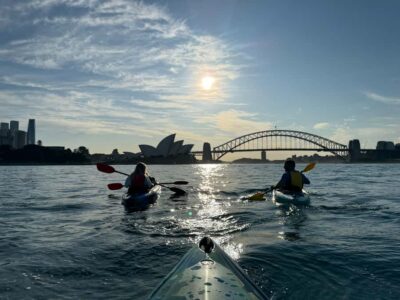
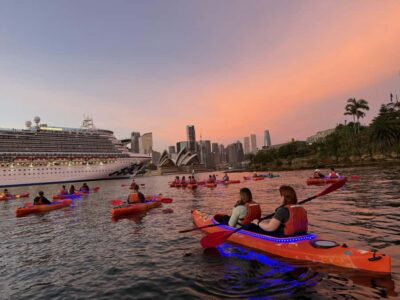
Sydney: Sunrise Kayak, Opera House & Under Harbour Bridge
Read our review →
Barcelona: Sunrise Paddleboarding with Instructor and Photos
Read our review →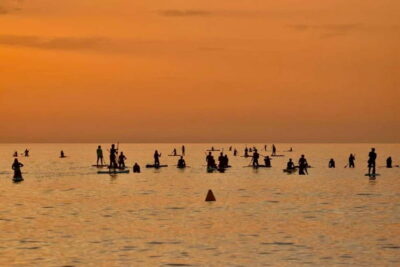
Barcelona: Paddleboarding at Sunrise. Includes: instructor, photos, equipment
Read our review →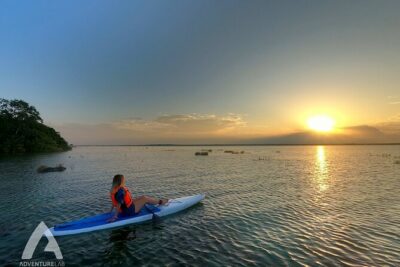
Sunrise Paddle Quest: Embrace the Dawn on Bacalar’s Waters
Read our review →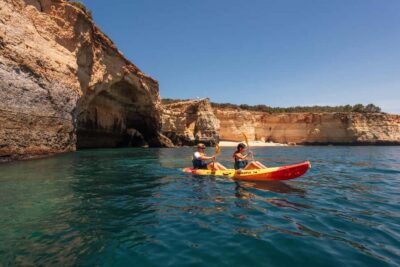
Algarve: Benagil Cave Sunrise Kayak Tour with Shower Use
Read our review →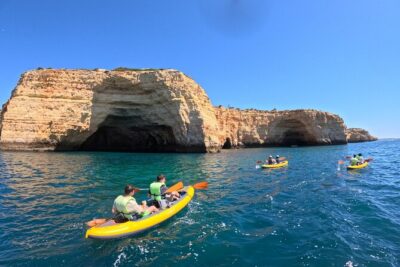
Sunrise Small Group Kayak Experience in BENAGIL Cave & 4K Photos
Read our review →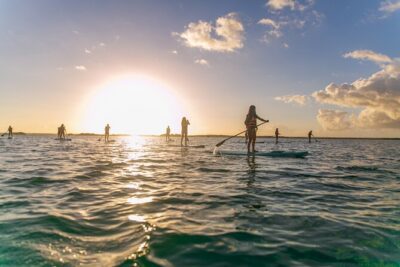
Sunrise by Paddle or Kayak with Floating Picnic
Read our review →More lists with this sunrise on them