
Review · THE USA
Monument Valley: 3-Hour Sunrise Tour with Navajo Guide
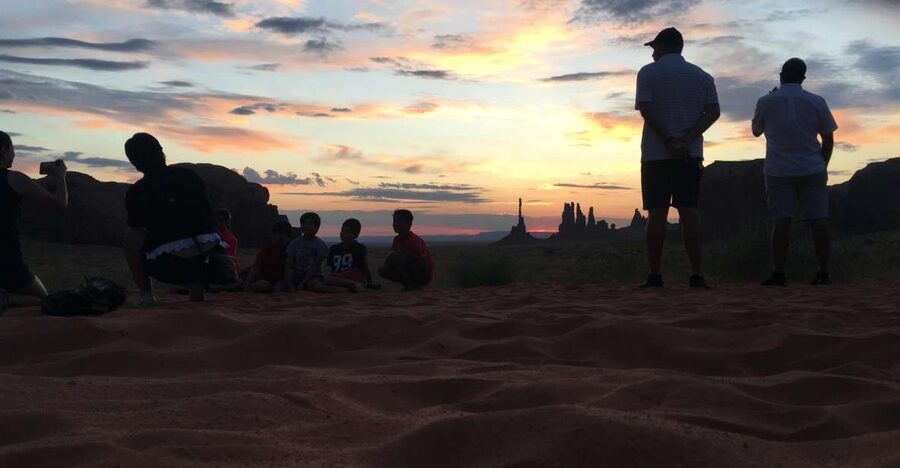
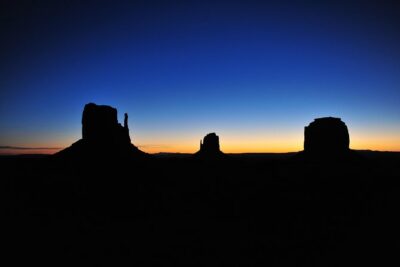
Sunrise in Monument Valley is the main event here. You follow your Navajo guide to a viewpoint where the sun appears near the center of Totem Pole, then watch early light shift across the buttes, arches, and red stone. The colors change quickly, so keep your camera ready and your eyes off the screen now and then.
I like the small group limit of 12, which makes it easier to hear the guide and find a good place for photos. I also like the chance to enter restricted backcountry areas that you cannot visit alone, with Navajo stories and a traditional musical performance along the way. The catch is the early start, plus the cold before sunrise and the added $8 park entry fee.
Key points at a glance
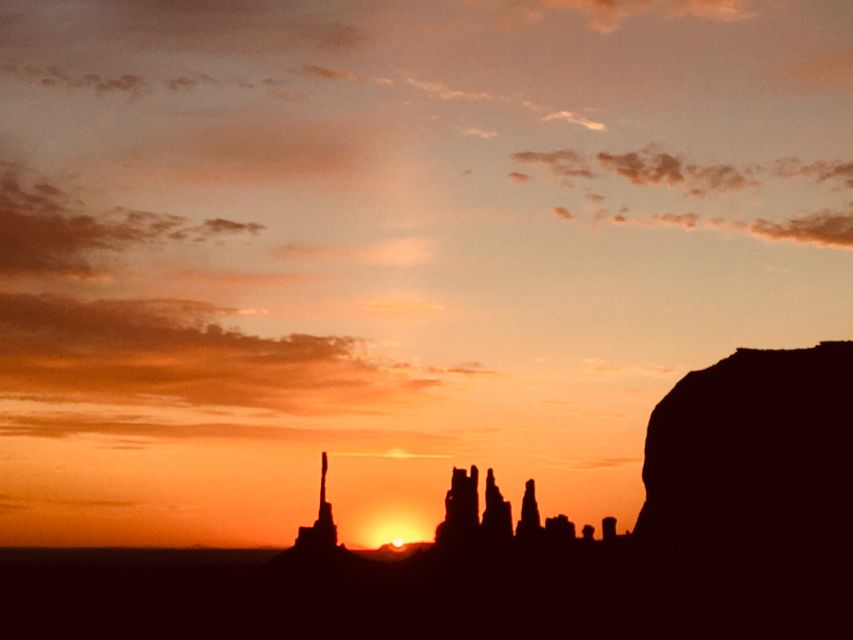
- Sunrise at Totem Pole: Begin at a viewpoint chosen for the sun rising near this famous rock formation.
- Eight named photo areas: See the Mittens, John Ford Point, Three Sisters, Moccasin Arch, Big Hogan, Sun’s Eye, North Window, and Sleeping Dragon.
- Navajo-led touring: Your guide explains local culture, traditions, rock formations, and the Navajo way of life.
- Restricted backcountry access: The route includes areas reserved for tours with a Navajo guide.
- Live traditional music: Your guide may sing or play music in places known for strong echoes, including Big Hogan.
- Small vehicles: Warm-weather tours use an open-air safari vehicle for up to 12 people. Colder or hotter conditions call for an enclosed SUV with up to seven.
Why sunrise makes Monument Valley feel different
Monument Valley is impressive at any hour, but dawn gives you a short show that changes by the minute. Before the sun clears the horizon, the rock shapes can look dark and severe. Then a thin wash of light reaches the stone, picking out ridges and edges one at a time.
The planned viewpoint lets you watch the sun rise near Totem Pole rather than simply arriving after daylight. That timing matters. The first light can bring soft pink, orange, and red tones, while the shadows help separate one formation from another. Cloud cover can reduce the sunrise effect, as it did on one January tour, but the valley still offers plenty to see in poor conditions. Snow can even add its own appeal.
You will need to leave your lodging early, and the exact start time changes with the season. This is not a tour for someone who wants a relaxed morning in bed. It is a strong choice if you enjoy photography, quiet scenery, and the feeling of having a major viewpoint before the day gets busy.
Bring warm clothing even in seasons that feel pleasant later in the day. One September visitor specifically advised warm clothes, and that is sound advice. Sunglasses, a hat, sunscreen, a scarf, and comfortable shoes belong in your daypack as well.
More Three-Hour Experiences in the USA:
- Monument Valley: 3-Hour Sunrise Tour
★ 4.9 · 112 reviews - 3 Hour Sunrise Photo Tour with Malasada
★ 5.0 · 81 reviews - Small Group 3 Hour Honolulu Sunrise Tour with Malasadas
★ 5.0 · 23 reviews
Meeting your Navajo guide at The View Hotel
The meeting point is the Navajo loading area in front of The View Hotel, on Indian Route 42. Wait outside the lobby. The driver does not come inside to collect you, so allow enough time to find the loading area and look for a guide from Monument Valley Tribal Tours.
The tour runs on Utah Time, or Mountain Daylight Time. From March through November, Utah is one hour ahead of Arizona. This detail can cause real trouble around sunrise, especially if you are staying on the Arizona side and crossing toward the park. Set your alarm using the tour’s time zone, not just the clock in your room.
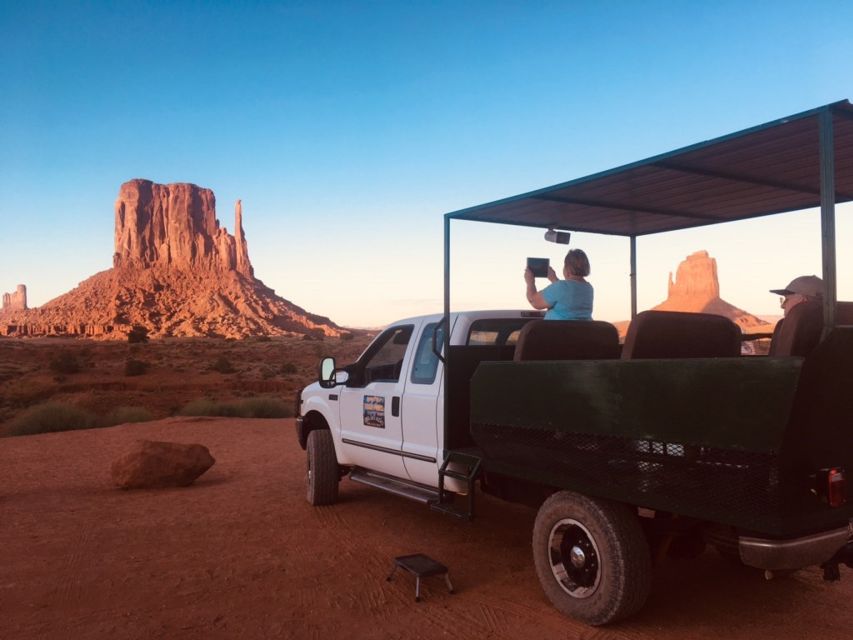
The ride itself depends on weather. In warm conditions, you may travel in an open-air safari-style vehicle with a maximum of 12 passengers. In colder or very hot conditions, the operator uses an enclosed SUV with a maximum of seven. The open vehicle gives you a clear view and a good chance for wide photographs, but you will feel the morning air. The enclosed vehicle is more comfortable when temperatures drop.
The smaller group size is one of the practical strengths of this tour. Twelve people is still enough for a busy photo stop, but it is far easier to follow a guide’s explanation than in a large coach. Past guides have included Cheryl, Sheryl, Bruce, Comi, and Marjorie. Your assigned guide may be different, but the experience depends heavily on the person leading it.
The first hour: Totem Pole and the changing light
The sunrise stop is carefully timed around Totem Pole. From the chosen viewpoint, you watch the sun appear close to the center of the slender formation while the surrounding stone catches the first light.
This is also when you need patience. The best color may last only a few moments, and the light keeps moving. A good guide can point out where to frame the rock, but you should expect other people in the group to be taking pictures too. One past visitor had sunrise photographs interrupted by fellow passengers walking into the frame. That is a fair warning for anyone carrying serious camera gear.
Your guide may help with photo positions and suggest angles as the light shifts. One guide was praised for finding places that worked in several directions, giving the group more than one view as the sun rose. Still, this is a shared tour, not a private photography workshop. If you want complete control over every image, a private trip would be better.
The scenery is the star, but the guide adds meaning. The explanations can cover the names of formations, Navajo traditions, local ways of life, and the stories connected with the valley. I like this combination because it keeps the morning from becoming a quick sequence of roadside stops.
Famous formations along the main route
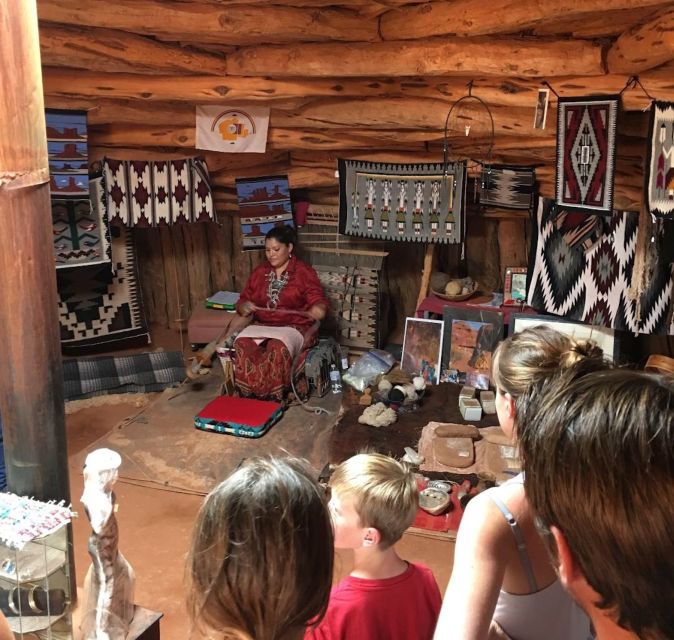
After sunrise, the tour continues through Monument Valley with frequent chances to stop for photographs. The exact pace can depend on the group and the morning light, but the route includes a long list of well-known places.
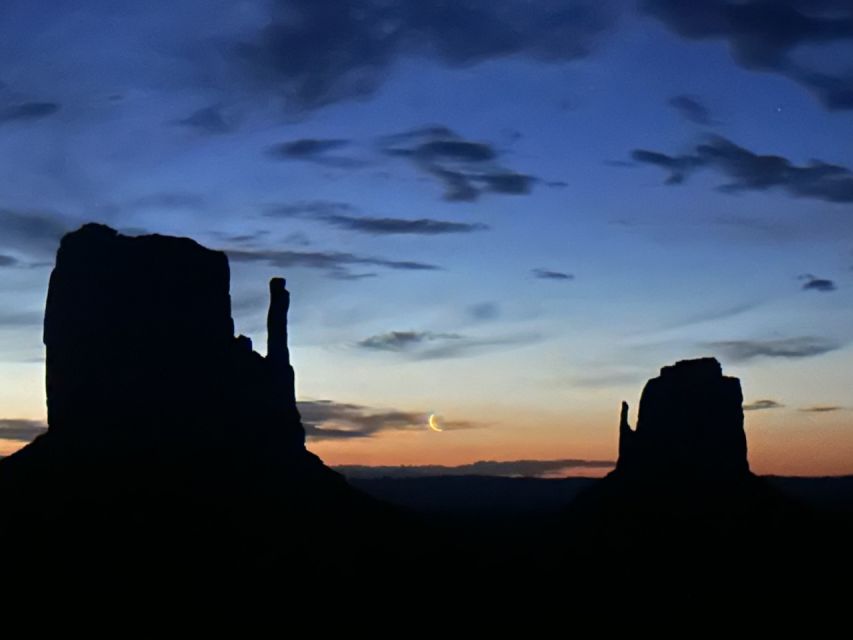
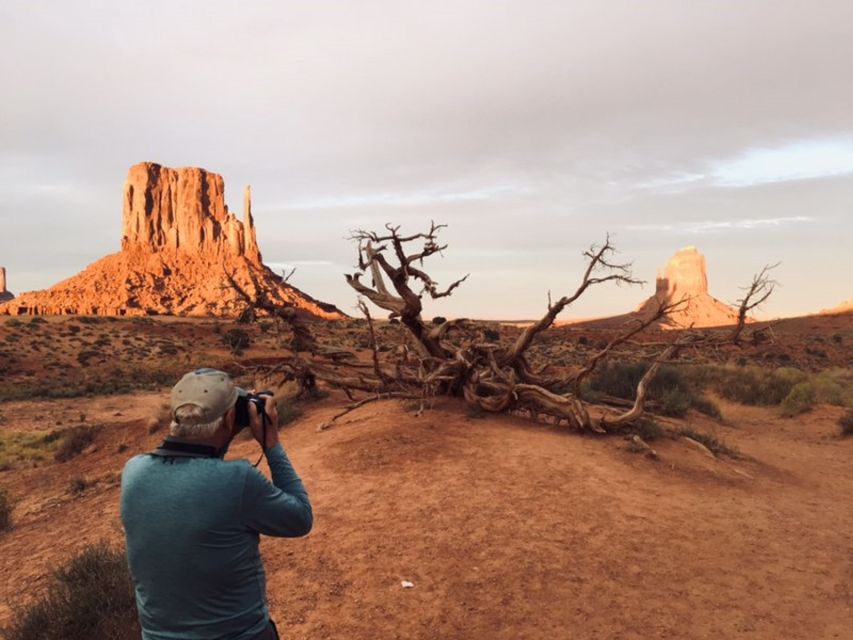
The West and East Mitten Buttes are among the most recognizable formations in the valley. Their names come from their mitten-like shapes, and they make an easy first lesson in reading Monument Valley’s rock forms. You will want a wide view here, since the scale is difficult to capture in a close shot.
At John Ford Point, the setting connects with the classic Western films made in the area. The stop gives you another broad view and a chance to compare how the buttes look under changing light. If you are interested in film history, this is one of the most meaningful points on the route.
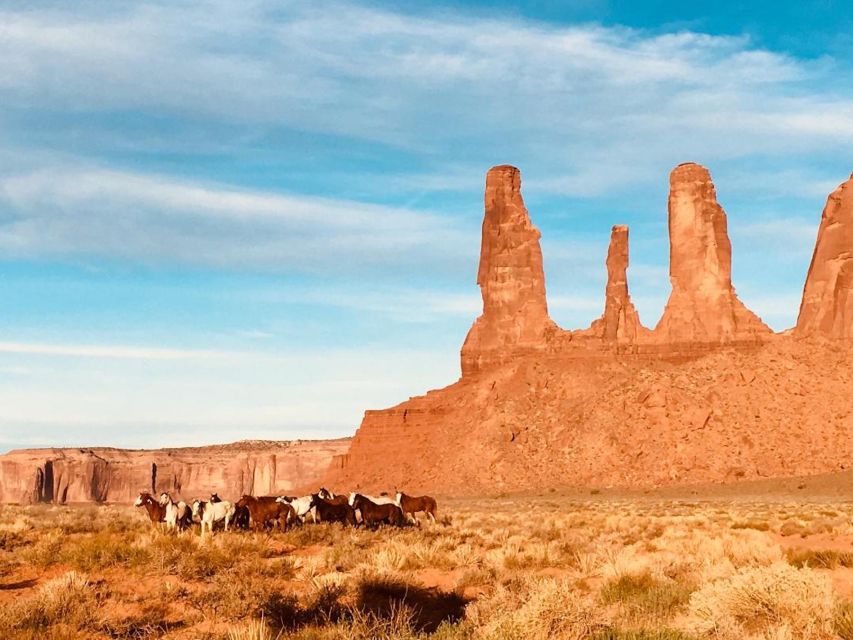
The Three Sisters are a group of narrow rock spires. Their shape is more vertical and delicate than the broad Mitten Buttes, so they give you a different kind of photograph. Moccasin Arch adds a natural opening in the stone, while The Big Hogan offers a more enclosed setting with strong echoes.
At Sun’s Eye, the rock creates another opening for light and shadow. North Window frames the valley through stone, and Sleeping Dragon adds another named formation to the ride. These names are not just labels for a checklist. They give you a way to remember the shapes and notice how people have read this place over generations.
The number of stops is a plus for anyone who wants variety, but it can also make the morning feel busy. You will not have unlimited time at every formation. I suggest choosing a few places where you put the camera down and simply look.
More Guided Tours in the USA:
- Haleakala Sunrise Best Self-Guided Bike Tour
★ 4.5 · 745 reviews - Stunning Sunset or Sunrise Guided Hiking Adventure in Phoenix
★ 5.0 · 335 reviews - Haleakala Sunrise Best Guided Bike Tour with Bike Maui
★ 4.5 · 271 reviews - Jackson: Grand Teton Sunrise Safari with Naturalist Guide
★ 4.8 · 49 reviews
Entering the restricted backcountry
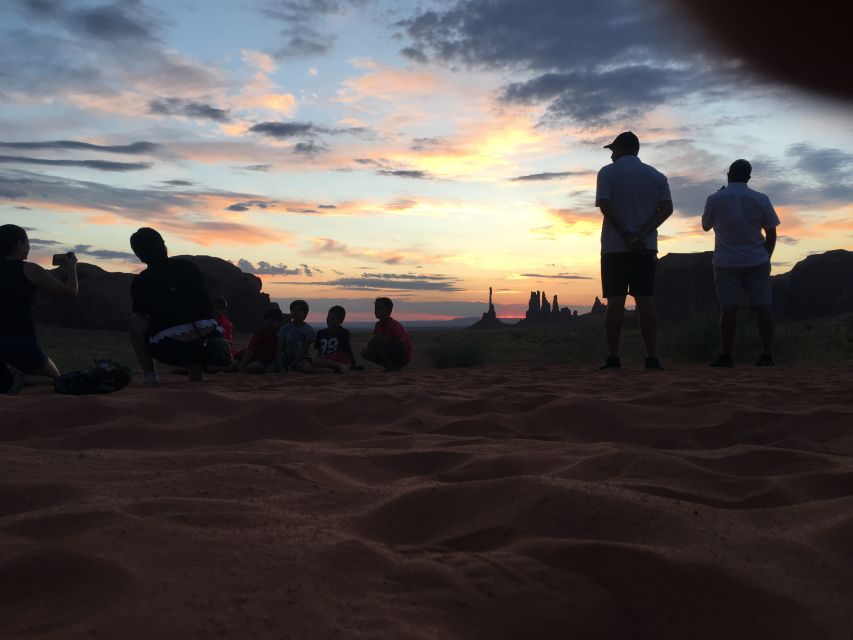
A major reason to book a guided trip is access to the restricted backcountry. You cannot visit this portion of Monument Valley independently, and entry is permitted when you are accompanied by a Navajo guide.
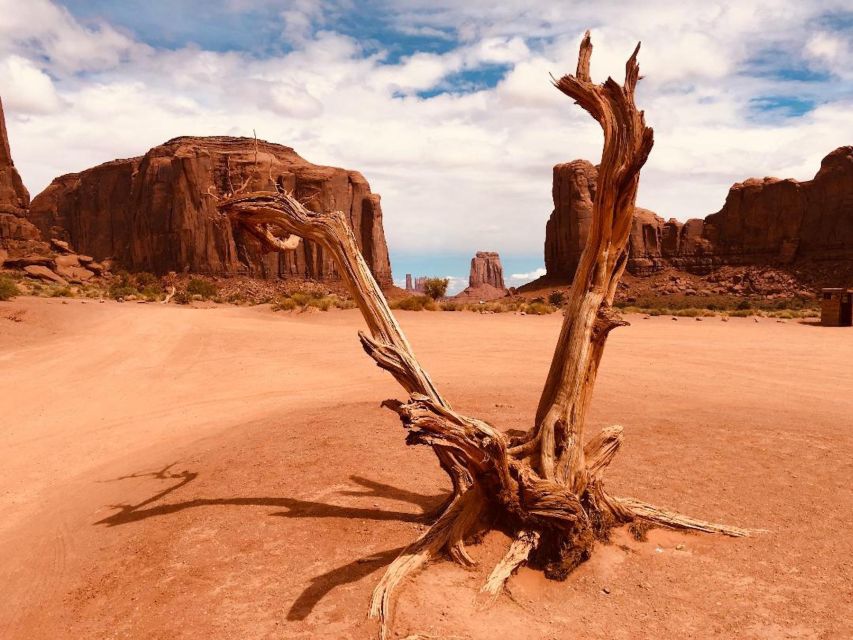
The backcountry portion makes the experience feel less like a standard scenic drive. You move beyond the most familiar public viewpoints and see formations and spaces that are not part of a self-guided car loop. The route may include Big Hogan, Sun’s Eye, North Window, and Sleeping Dragon, depending on how the tour is arranged that day.
This access is valuable for two reasons. First, it takes you beyond the same few views seen in most photographs. Second, it gives the guide room to explain the land and Navajo culture in a setting that feels connected to the subject.
The roads can be rough, so the safari vehicle or SUV is more practical than using your own car. One past visitor called the backcountry portion a highlight and said they would not have wanted to take their own vehicle there. That is useful advice. You are paying not only for transport, but also for local access and someone who knows the route.
Navajo culture, stories, and traditional music
The cultural part of the tour is not a separate museum-style talk. It comes as you move through the valley. Your guide can discuss Navajo traditions, local history, the meaning of the rock formations, and everyday life.
The musical performance adds a personal touch. Guides have sung in Navajo, played flute, and performed inside echoing rock spaces. Bruce was remembered for singing two songs in his native language, while another guide performed a song about embracing people who have been away for a long time. Big Hogan is especially suited to this, since the stone can carry the sound back across the space.
I appreciate this part because it gives the tour a human voice. You are not simply collecting photographs of famous buttes. You are hearing from a Navajo guide in a place tied to Navajo culture and traditions.
The style may vary by guide. Some guides talk often, while others give you more quiet time. Comi, for example, was praised for balancing conversation with space to take in the scenery. That balance matters on a sunrise tour. You want useful information, but you also need a few silent minutes to watch the light.
Is $92 a fair price?
At $92 per person, this is not the cheapest way to see Monument Valley. You also pay the Monument Valley Tribal Park entry fee of $8 per person, and food is not included. Even so, the price makes sense if you want sunrise timing, a Navajo guide, backcountry access, and transport through rougher areas in one three-hour outing.
A self-guided visit may cost less, but it cannot give you access to the restricted backcountry. It also leaves you responsible for navigation, timing, and learning the cultural context on your own. The value here comes from combining those pieces in a short morning.
The group limit helps the price feel fair. With up to 12 people in warm weather and up to seven in the enclosed vehicle, you are not paying for a giant coach tour. You still need to share photo locations, but the guide can generally speak to the whole group without a microphone.
If your main goal is one perfect sunrise photograph, a private guide could suit you better. If you want a broad introduction to Monument Valley and do not mind sharing the ride, this tour gives you a lot in three hours.
Who should book this sunrise tour?
I would choose this tour if you are visiting Monument Valley for the first time, want a Navajo perspective, or prefer not to drive the backcountry yourself. It is especially well suited to photographers who can work quickly and people who enjoy place-based stories along with scenery.
It also suits anyone trying to fit Monument Valley into a busy Southwest road trip. Three hours gives you the sunrise, the main formations, backcountry access, and music without taking the entire day.
This is less suitable if you dislike early mornings, struggle with rough vehicle travel, or need a slow pace at every stop. Children under two and pregnant women should not book this activity. The provider also does not include food, so plan your breakfast before or after the tour.
Weather can change the mood of the outing. Clouds may hide the direct sunrise, and cold conditions can make the first part uncomfortable. Yet the valley remains worthwhile in snow or broken cloud, and the tour still includes the formations, backcountry route, cultural explanations, and music.
Practical tips for a better morning
Wear layers rather than relying on the later daytime temperature. A warm jacket, scarf, hat, and gloves can make the first viewpoint much more comfortable, especially when you are sitting in an open vehicle.
Use comfortable shoes. You will be moving around at viewpoints, and the route may be dusty or uneven. Sunglasses and sunscreen matter once the sun is up, even if the morning begins cold.
Keep your camera ready before the sunrise stop. The strongest color may appear quickly, and you will not want to search through a bag while the light is changing. A phone works fine for many views, but a wide lens helps with the Mitten Buttes and larger formations.
Meet outside The View Hotel and check the time carefully. If you are coming from Arizona between March and November, leave one hour earlier than you might expect because the tour operates on Utah Time.
Cancellation is flexible if your plans change: you can cancel up to 24 hours ahead for a full refund. You can also reserve now and pay later, which helps when your Southwest route is still shifting.
Should you book it?
Book this tour if sunrise is important to you and you want more than a quick stop at the main viewpoints. The strongest reasons are the Navajo guide, restricted backcountry access, small group size, and the chance to hear live traditional music in natural echoing spaces.
Skip it if you cannot manage a pre-dawn start or want complete freedom to linger at one formation. For most first-time visitors, though, $92 plus the park fee is a reasonable price for a well-packed introduction to Monument Valley, especially when you factor in access you cannot arrange by yourself.
FAQ
How long is the Monument Valley sunrise tour?
The tour lasts three hours, though the exact starting time depends on availability and the season.
Where do I meet the guide?
Meet in front of the lobby of The View Hotel at the Navajo loading area. The driver does not come inside the hotel. Look for a guide from Monument Valley Tribal Tours.
What time zone does the tour use?
The tour operates on Utah Time, or Mountain Daylight Time. From March through November, Utah is one hour ahead of Arizona.
How many people can join the tour?
The open-air safari vehicle holds a maximum of 12 passengers in warm weather. In cold or very hot conditions, an enclosed SUV is used, with a maximum of seven people.
Is the Monument Valley entry fee included?
No. The Monument Valley Tribal Park entry pass costs $8 per person and is paid when you enter the park.
Does the tour include a Navajo guide and music?
Yes. A local Navajo guide leads the tour, explains Navajo culture and traditions, and provides a traditional musical performance.
Who should not take this tour?
The activity is not suitable for children under two years old or pregnant women.
Newly added sunrise trips around the USA
- Sunrise Tour of Rocky Mountain National Park★ 5.0 · 21 reviews
- Mesa Verde Sunrise Tours★ 5.0 · 6 reviews
- Daytona Beach: Sunrise Cruise on the Atlantic Ocean★ 5.0 · 3 reviews
- Crystal River: Sunrise Manatee Tour – Clear Kayak – Slow/Beginner★ 5.0 · 2 reviews
- Breathtaking Colorado Springs Sunrise Hot Air Balloon Flight★ 5.0 · 42 reviews
- Colorado Springs Sunrise Balloon Ride★ 4.5 · 138 reviews
- Sunrise and Coffee Jeep Tour★ 5.0 · 21 reviews
- The Escape Game at Sawgrass Mills in Sunrise★ 5.0 · 3 reviews
USA Sunrise Tours, compared at first light.
Maui: Haleakala Sunrise Spectacular with Local Breakfast
Read our review →
3.0 Hours of Monument Valley’s Sunrise or Sunset 4×4 Tour
Read our review →


Phoenix area Hot Air Balloon Ride on the Largest Balloon in USA
Read our review →
Maui: Majestic Haleakala Sunrise Tour with Pick-up
Read our review →More lists with this sunrise on them