
Review · CAMBODIA
Siem Reap Angkor Wat Sunrise Explore The Most Iconic Temples
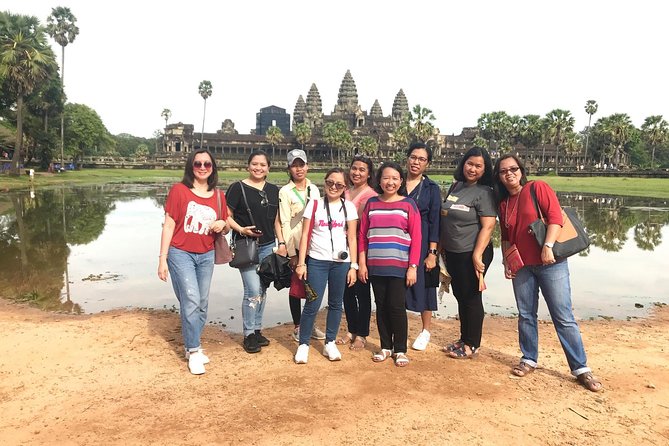
Angkor Wat is at its best before the heat sets in, and this tour gets you through the park early enough to watch dawn spread behind its famous towers. You then move through five major temple stops, from quiet Banteay Kdei to tree-covered Ta Prohm and the stone faces of Bayon.
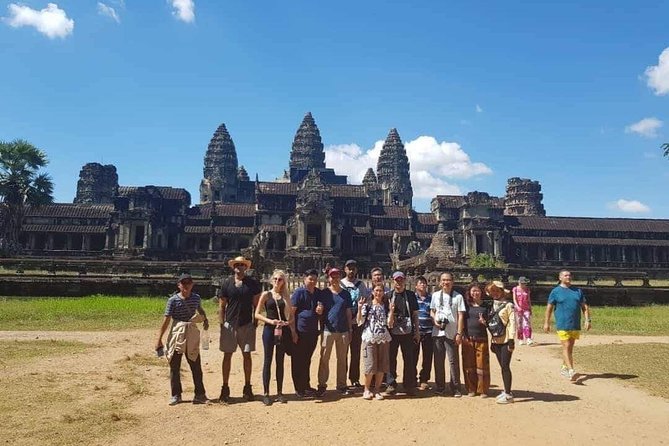
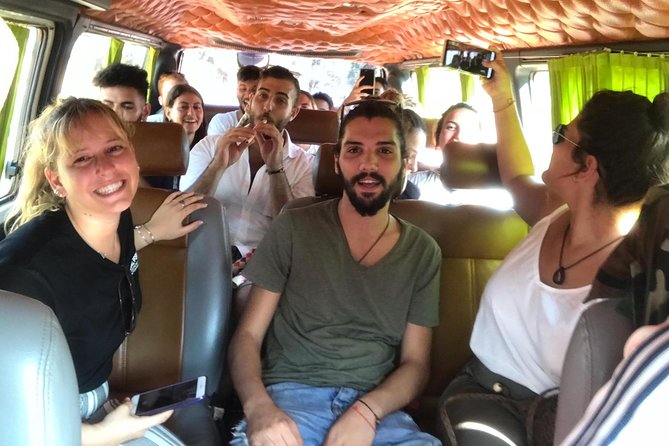
I like the low $13 price, which covers hotel transport, a guide, and drinking water. I also like the route itself: it pairs the essential temples with Banteay Kdei, a calmer stop that gives you a break from the busiest sights. The catch is group size. One booking involved two buses and more than 40 people, which can make one guide less available for questions and personal attention.
Key points to know before booking
- Sunrise comes first: Pickup is between 4:20 and 5:15 a.m., so expect an early alarm and a long morning.
- The temple pass costs extra: Your Angkor Archaeological Park entrance ticket is not included.
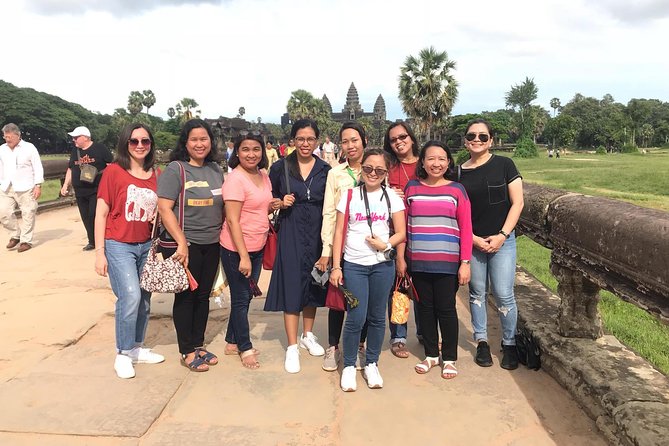
- Noun has earned praise: When guide Noun leads the tour, you can expect useful temple explanations and help finding good photo spots.
- The route covers the essential sights: Angkor Wat, Banteay Kdei, Ta Prohm, Bayon, and Tonle Om Gate all fit into one day.
- Large groups are possible: The air-conditioned bus keeps costs down, but the group may be too large for a personal guiding style.
- Lunch is on you: Drinking water is provided, but the midday meal is not.
Why the sunrise start matters at Angkor Wat
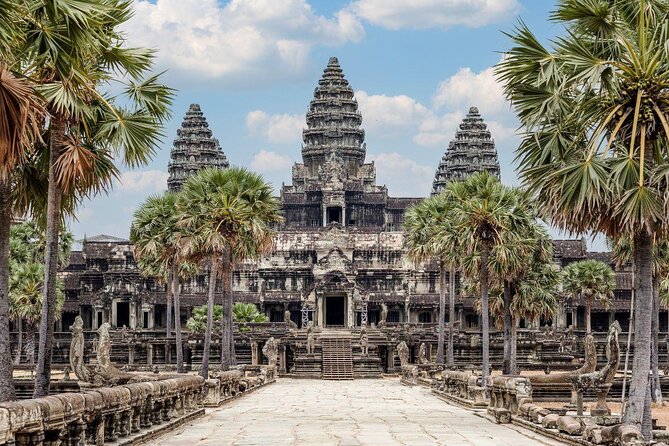
This is an eight-hour temple day, but the most important hour comes first. Hotel pickup begins between 4:20 and 5:15 a.m., depending on where you stay in Siem Reap. You ride in an air-conditioned bus or minibus toward the Angkor Archaeological Park, with the drive from the pickup area taking about an hour.
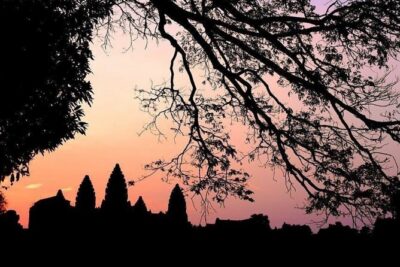
The early start is not just a marketing trick. Angkor Wat becomes hot and crowded later in the day, while the first light gives the temple a cooler, quieter setting. You watch the towers reflect in the moat, then enter the complex for a guided visit before continuing to the next temples.
The tour uses the less-visited western entrance for the sunrise visit. That detail matters because it can make the arrival feel less like a queue and more like an approach to a sacred site, although the main sunrise viewing area can still draw plenty of people.
Bring a small bag, water, and something warm for the first part of the morning. The supplied drinking water is useful, but you still need to arrange your own meal. Comfortable walking shoes are sensible because the day includes repeated walks through temple courtyards, corridors, and partly ruined areas.
More Sunrise Temple Tours in Cambodia
- Angkor Wat Sunrise & 3 Main Temples with Breakfast – Small Group
★ 5.0 · 2,857 reviews - 2 Days Exclusive Temple Highlights with Sunset and Sunrise Tour
★ 5.0 · 1,157 reviews - Siem Reap: Angkor Sunrise 1- or 2-Day Guided Temples Tour
★ 4.9 · 1,132 reviews
Exploring Angkor Wat after first light
Angkor Wat was built as a Hindu temple dedicated to Vishnu and later became a Buddhist site. That change gives the complex a layered character, with sacred images, galleries, and carvings reflecting different periods of use.
After sunrise, the guide takes you inside for about two hours. This is the longest stop, and rightly so. You have time to see the grand galleries, study the bas-reliefs, and reach the central sanctuary rather than stopping only for a quick photograph.
The carvings are one of the great reasons to slow down here. They show scenes from Hindu mythology and help turn the stone walls into a record of religious ideas and royal ambition. A guide is especially useful at Angkor Wat because the scale can overwhelm you. Without context, it is easy to spend the entire visit photographing towers and miss the meaning behind the reliefs.
The tradeoff is that two hours can feel short if you want to inspect every gallery. This is a highlights tour, not a full archaeological study. You will see the central features, but you will not have unlimited time for every corner.
Banteay Kdei gives the morning room to breathe
Banteay Kdei follows Angkor Wat and receives about an hour. Its name means Citadel of Chambers, an apt description for a temple built around corridors, enclosed spaces, and partly ruined galleries.
Built in the late 12th century as a Buddhist monastery, Banteay Kdei has a more restrained mood than Angkor Wat. It is not as instantly famous, and that is part of its value. The damaged sections and quiet passageways give you time to look at the architecture without feeling that you must compete for the perfect photograph.
I like this stop because it breaks up the grand monuments with something more intimate. You can walk through the site, examine carvings, and get a better sense of how large temple complexes are made from many connected rooms rather than one dramatic building.
The condition of the temple is also part of the experience. Some visitors may prefer polished, fully restored monuments, but Banteay Kdei is rewarding if you enjoy ruins that retain their rough edges. Watch your footing and stay aware of the guide’s meeting point, especially if the group is large.
Ta Prohm and the trees that took over
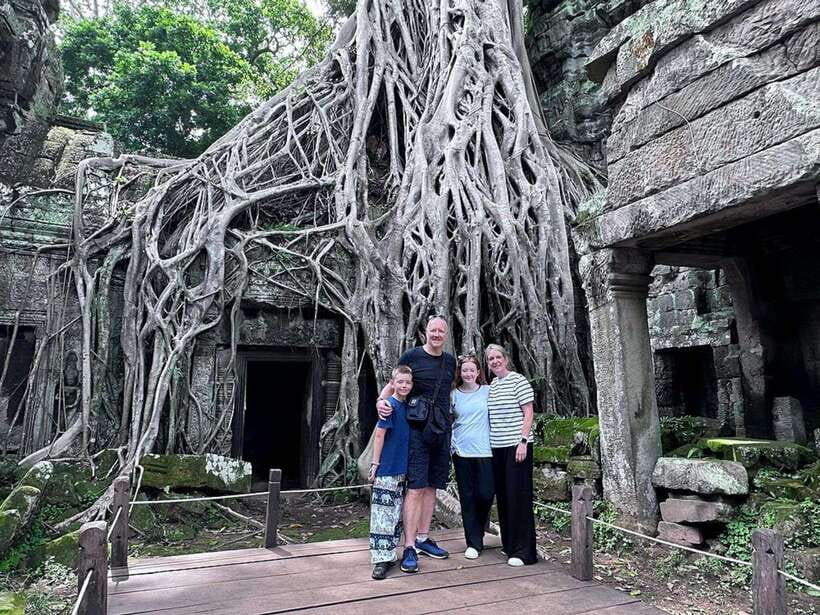
Ta Prohm is allotted about an hour and a half. This is the stop most likely to trigger instant recognition because the temple is famous for huge tree roots spreading over walls and stone chambers. Its appearance was also featured in the movie Tomb Raider, which helped make it one of Angkor’s best-known sites.
The appeal is visual, but not only visual. Ta Prohm shows what happens when a major religious complex is left largely unrestored. Roots push through masonry, trees rise above collapsed sections, and the boundary between forest and temple becomes difficult to separate.
You will have time to walk through the main areas and take photographs, but expect bottlenecks near the most famous root-covered sections. A large group can make this stop harder to manage, since people tend to pause at the same few viewpoints.
The guide can add useful context here by pointing out carved details that are easy to miss beneath the roots and broken stone. I would not rush this visit, but I would also avoid spending all your time at one photo spot. Ta Prohm has its best moments in the smaller corridors and side areas, where the setting feels less staged.
More Sunrise Temple Tours in Siem Reap:
- Siem Reap: Angkor Wat Sunrise Explore The Most Iconic Temples
★ 5.0 · 879 reviews - Siem Reap: 2-Day Temple Highlights Sunrise and Sunset Option
★ 4.9 · 445 reviews - 1-Day Angkor Wat Sunrise & All Interesting Temples Private Tour
★ 5.0 · 174 reviews - From Siem Reap: Angkor Wat Sunrise and Temples E-Bike Tour
★ 5.0 · 52 reviews
Bayon’s stone faces in Angkor Thom
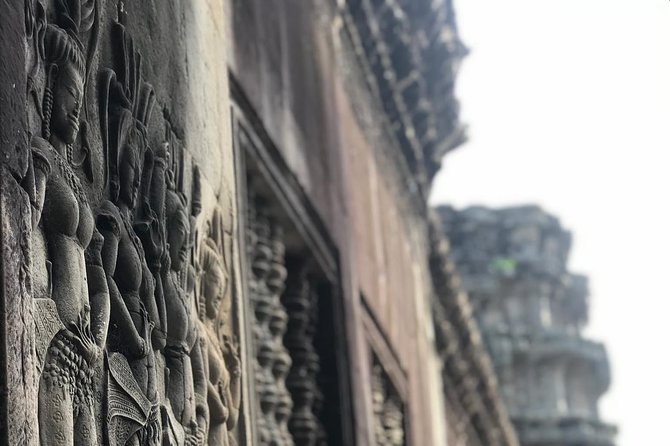
Bayon comes next, with about an hour and a half for the visit. Located at the center of Angkor Thom, it is unlike Angkor Wat in both design and mood. Instead of a single clear silhouette, Bayon rises as a dense cluster of towers carrying more than 200 large stone faces.
The faces are generally associated with Avalokiteshvara and are known for their calm expressions. From certain angles, several appear to look directly at you. This makes Bayon one of the most memorable stops on the route, even after a full morning of temples.
Do not look only upward. The lower walls contain carvings of daily life and historical battles. These scenes can show you more about ordinary activity and conflict than the grand religious architecture does. A guide helps connect those carvings to the wider site instead of leaving you with only the famous faces.
Bayon can feel crowded inside because its towers create narrow routes and frequent pauses. Still, the long visit gives you a fair chance to see the central faces, walk around the outer carvings, and take in the unusual structure. If you like dramatic stonework and close-up details, this is likely one of the strongest parts of the day.
Tonle Om Gate closes the temple circuit
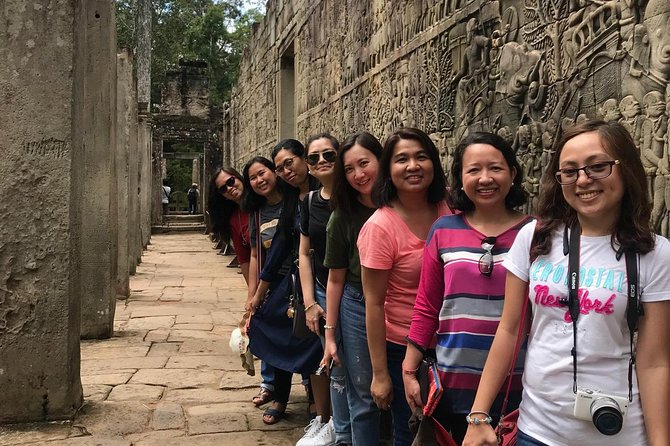
The final sightseeing stop is Tonle Om Gate, also called the Southern Gate of Angkor Thom. The visit lasts about 30 minutes, so think of it as a focused photo and context stop rather than another full temple exploration.
The gate is approached by a causeway lined with statues of gods and demons. Its design relates to the larger Angkor tradition of cosmic symbolism, with opposing figures framing the route into the city. Above the entrance are four giant stone faces that recall Bayon.
This is a good place to appreciate how Angkor Thom was organized. The temples were not isolated monuments scattered at random. Gates, roads, causeways, and central buildings formed part of a planned royal city.
The short stop works well at the end of the route because you have already spent several hours walking. You can take photographs, hear the explanation, and then return to the bus. If you want a long look at every statue, 30 minutes may feel limited, but the gate is a useful final chapter rather than an unnecessary extra.
What the $13 price really covers
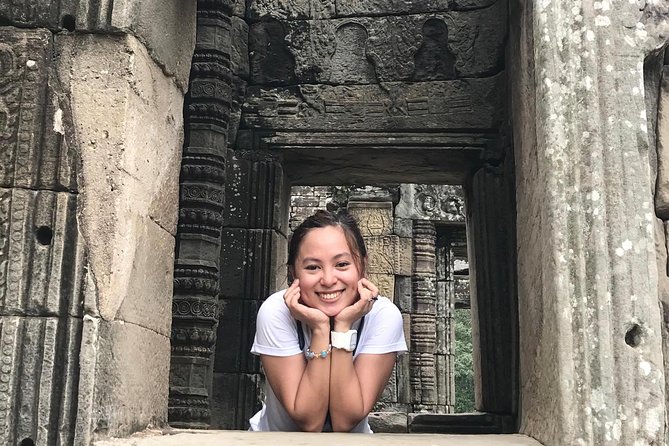
At $13 per person, this is an unusually inexpensive way to reach the major Angkor sights. The price includes hotel pickup and drop-off in Siem Reap, air-conditioned transportation, an English-speaking guide, and drinking water.
It does not include the Angkor temple ticket. That is the largest extra cost to plan for, and you should not mistake the tour price for the full cost of the day. Lunch is also not included, so carry money for food.
The value is strongest if you want transport and a basic guided route without paying for a private car. You avoid arranging the early pickup yourself, and the bus takes you between widely separated sites. The low price also makes sense for visitors who care more about seeing the main temples than having a custom schedule.
The compromise is personal attention. One booking described a group of more than 40 people spread across two buses, with one guide responsible for keeping everyone together and answering questions. That can lead to repeated explanations, delays while people regroup, and less time for individual questions.
This is not automatically a problem. If you are comfortable following a meeting point and listening during the main explanations, the price is strong. If you want a quiet, flexible day with long discussions at each carving, a private tour would likely suit you better, though it would not match this price.
The guide can shape the whole day
The guide is the human part of this experience. The best feedback centers on clear explanations, good timing, and help finding attractive places for photographs. Guide Noun is specifically praised for knowing Angkor Wat well and showing guests useful photo locations. If Noun is assigned to your group, you can expect a guide who adds practical value beyond simply pointing out the buildings.
The language offered is English. Keep in mind that the guide must serve the full group, and the quality of the experience can depend on how many people are traveling together that day.
I would treat the guide as a source of orientation rather than a personal scholar assigned only to you. Listen closely at Angkor Wat and Bayon, where the carvings and symbols benefit most from explanation. At Ta Prohm and Tonle Om Gate, use the free time to look around and take photographs.
The tour received an overall rating of 4.8 from 20 reviews, with high marks for punctual pickup, friendly guides, temple coverage, and photo help. One low rating focused on organization and group size rather than the driver or guide’s attitude. That distinction is useful: the people leading the day may be kind and capable, while the format itself can still feel crowded.
Timing, comfort, and the long morning
The stated duration is eight hours, with return to your Siem Reap accommodation expected between noon and 1 p.m. The day starts before dawn and includes roughly five hours of sightseeing at the main stops, plus driving and transfers.
That schedule is efficient, but it is not gentle. You will go from the dark of an early pickup to several hours of walking in the open air. Angkor Wat takes about two hours, Banteay Kdei one hour, Ta Prohm 1.5 hours, Bayon 1.5 hours, and Tonle Om Gate 30 minutes.
The air-conditioned vehicle is important during the transfers. It gives you a chance to cool down between sites, though the bus format means you need to return on time at every meeting point.
I would choose this tour early in a Siem Reap stay if possible. That gives you a quick introduction to the park and helps you decide which temple deserves a slower return visit. It also leaves the afternoon free after you return, although you may prefer a quiet meal and a rest after the early start.
Who should book this tour
This tour suits you if you want the major Angkor highlights in one organized day, need hotel transport, and are watching your budget. It is especially useful for first-time visitors who do not want to arrange a pre-dawn vehicle and temple route on their own.
It also suits photographers who want sunrise at Angkor Wat and practical help finding picture locations. Ta Prohm and Bayon offer very different subjects, while Banteay Kdei provides a quieter change of pace.
You should think twice if you dislike early mornings, large groups, or fixed schedules. The route leaves little room to linger at one favorite temple, and the entrance ticket and lunch add to the advertised price.
Should you book it?
Book this tour if your priority is good coverage at a low price. You will see Angkor Wat at sunrise, visit Ta Prohm and Bayon, add the quieter Banteay Kdei, and finish at the Southern Gate without arranging transport yourself.
Skip it in favor of a private option if you want long conversations with a guide, a slower pace, or control over every stop. The possible large group is the main weakness, but for many first-time visitors, the combination of early access, air-conditioned transport, an English-speaking guide, and five major sites makes this a sensible introduction to Angkor.
Free cancellation is available up to 24 hours before departure, and you can reserve now and pay later. Those terms help if your Siem Reap plans are still changing.
FAQ
Where does the tour begin?
Pickup is from hotels in Siem Reap City, in Krong Siem Reap Province.
What time is hotel pickup?
Pickup takes place between 4:20 a.m. and 5:15 a.m.
When does the tour finish?
The tour is expected to finish between 12:00 p.m. and 1:00 p.m.
How long is the experience?
The full tour lasts about eight hours.
Which temples are included?
The route includes Angkor Wat, Banteay Kdei, Ta Prohm, and Bayon, plus Tonle Om Gate, also called the Southern Gate of Angkor Thom.
Is the Angkor temple ticket included?
No. The temple entrance ticket must be purchased separately.
Is food included?
No. A meal is not included, but drinking water is provided.
Is transportation provided?
Yes. Air-conditioned bus transportation, hotel pickup, and hotel drop-off are included.
What language does the guide speak?
The live guide speaks English.
Can I cancel the booking?
Yes. You can cancel up to 24 hours in advance for a full refund. You can also reserve and pay later.
Newly added sunrise trips around Siem Reap
- Sunrise at Angkor Wat with a sharing group★ 5.0 · 2 reviews
- Sunrise at Angkor Wat Temple: 3-Hour Private Tour★ 4.7 · 30 reviews
- Sunrise at Angkor Wat and Full day with Fascinating Temples★ 5.0 · 2 reviews
- Small-Group Explore Angkor Wat Sunrise Tour with Guide★ 5.0 · 3 reviews
- Siem Reap Temple Tour 2-Day with Sunrise/Sunset★ 3.7 · 3 reviews
- Angkor Wat: Sunrise 2.5 Days Temples & Tonle Sap-Small Group★ 5.0 · 10 reviews
- Siem Reap: Angkor Wat Sunrise Tour via Tuk Tuk & Breakfast★ 5.0 · 29 reviews
- Siem Reap: Angkor Wat Sunrise Tour with Spanish Guide★ 5.0 · 18 reviews
Sunrise Temple Tours, compared at first light.
Angkor Wat Sunrise & 3 Main Temples with Breakfast – Small Group
Read our review →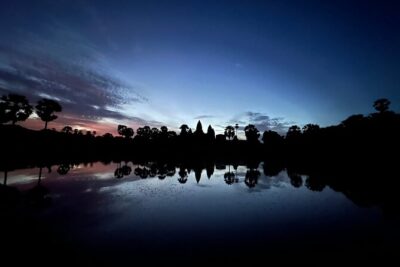
2 Days Exclusive Temple Highlights with Sunset and Sunrise Tour
Read our review →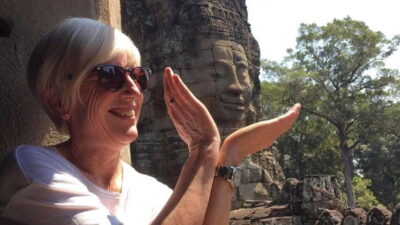
Angkor Sunrise 1- or 2-Day Guided Temples Tour
Read our review →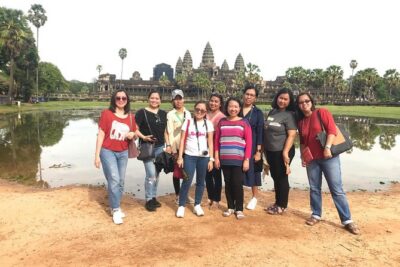
Angkor Wat Sunrise Explore The Most Iconic Temples
Read our review →
North Bali: Sunrise Tour with Dolphins, Waterfalls & Temples
Read our review →
From Sharm: Mount Moses Trekking, Sunrise & Monastery Visit
Read our review →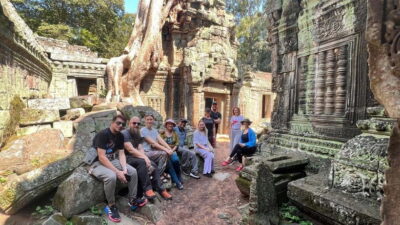
2-Day Temple Highlights Sunrise and Sunset Option
Read our review →
More lists with this sunrise on them