
Review · CAMBODIA
Angkor Wat Small-Group Sunrise Tour from Siem Reap
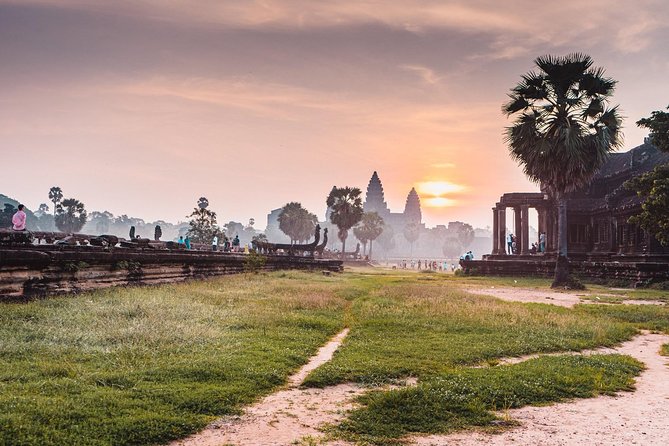
Angkor Wat before breakfast is the main event here. You leave Siem Reap in the dark, reach the temple complex before dawn, and watch the sky brighten behind one of the world’s great religious buildings. I like the small group of up to 15 and the practical hotel pickup, since arranging a pre-dawn ride on your own can be a hassle.
I also like the route beyond Angkor Wat: Angkor Thom’s South Gate, the many-faced Bayon, and tree-covered Ta Prohm. A possible drawback is the early start and uneven timing. One poor experience involved a long wait at a restaurant, while another missed the best sunrise light after a late departure. The $39 tour price also excludes the $37 park ticket, so budget $76 before food.
Key points to know before booking
- Sunrise requires a very early pickup: Collection is listed between 4:20am and 5:20am, with a 4:30am start time.
- The famous temples come in one compact route: You visit Angkor Wat, Angkor Thom’s South Gate, Bayon, and Ta Prohm.
- The group is capped at 15 people: One or two people travel by tuk tuk, while groups of three or more use a minivan.
- The park ticket costs extra: The required Angkor National Park ticket is $37 per person.
- Dress and equipment matter: Wear trousers or a knee-length skirt or dress, comfortable walking shoes, and bring a flashlight and mosquito spray.
- Guide quality can shape the day: An English-speaking guide is included, and one guide named Nak is praised for his enthusiasm and temple explanations.
Why sunrise at Angkor Wat is worth the alarm
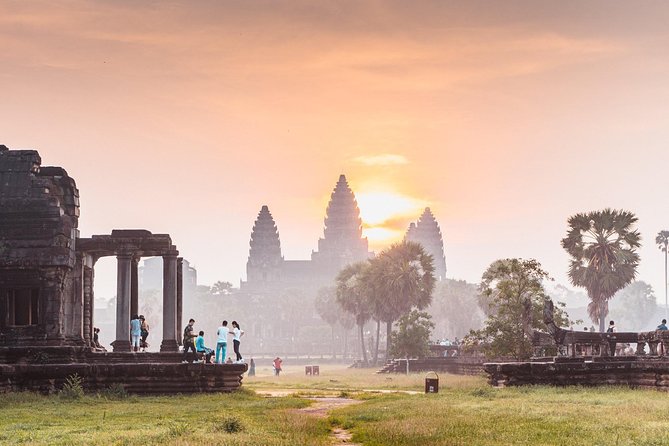
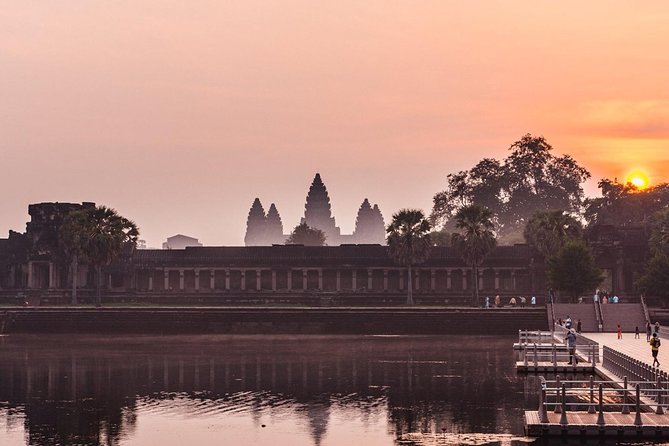
The appeal is simple: you see Angkor Wat at the quietest and most atmospheric point of the day. In the darkness, the temple begins as a silhouette. Then the towers and reflecting pools slowly take shape as the light improves.
Sunrise is never guaranteed to produce a dramatic red sky. Clouds can flatten the color, and one account describes a cloudy morning that felt less impressive than expected. Even so, the early hour gives you a calm wait beside one of Cambodia’s most famous sights. That quiet can be just as memorable as a perfect sky.
This tour removes the hardest part of the plan: getting there on time. Your hotel pickup is arranged, transport is provided, and a guide leads you through the first major stops. You do not need to work out a route in the dark or negotiate a ride before dawn.
The tradeoff is sleep. Pickup can begin at 4:20am, and the stated start time is 4:30am. You should be ready before the vehicle arrives, especially since the pickup window may vary by hotel and route. If you sleep badly after an early morning, the remaining six to seven hours may feel long.
More early starts worth the alarm around Siem Reap:
- Angkor Wat Sunrise or Sunset Tour with Guide from Siem Reap
★ 5.0 · 12,109 reviews - Siem Reap: Angkor Wat: Small-Group Sunrise or Sunset Tour
★ 5.0 · 9,444 reviews - Siem Reap: Angkor Wat 2-Day Tour with Sunrise and Sunset
★ 4.9 · 4,429 reviews
The pre-dawn ride from Siem Reap
Transport depends on the size of your booking. One or two people are carried by tuk tuk, while groups of three or more use a minivan. This is useful to know if you have a strong preference for open-air travel or enclosed transport.
The tour is limited to 15 people. That is not a private visit, but it is more manageable than a large coach group. You should have a better chance of staying near your guide at the temples, and a guide can explain details without speaking to a crowd of dozens.
Pickup and drop-off at your hotel are included. Cold bottled water is also provided, a small detail that matters once the walking begins. Food and drinks are not included, so you should plan to buy breakfast or carry something suitable if you need food after the sunrise portion.
Bring a flashlight. The path and temple areas will still be dark at the beginning, and a phone light may not be ideal for the whole group. Mosquito spray is also recommended. Wear shoes that can handle several hours of walking and temple surfaces.
Angkor Wat: two hours with Cambodia’s great temple
Angkor Wat was built between 1113 and 1150 and dedicated to Vishnu, the Hindu god of preservation. It is described as the best-preserved temple in the complex, and its scale is the first thing you notice.
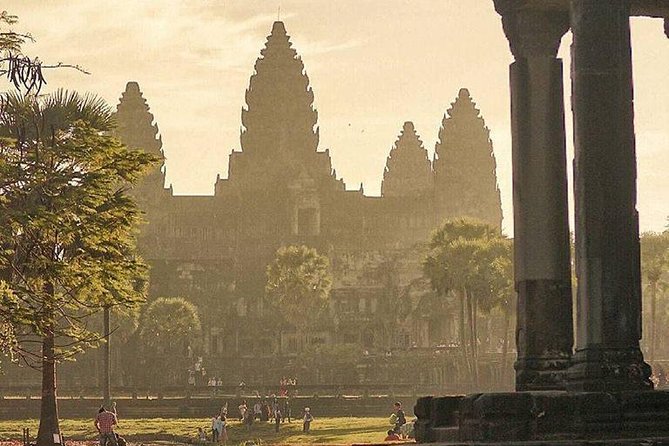
The morning visit gives you time to look beyond the famous front view. You can take in the surrounding wall, the great approach, the towers, and the way the building was planned as a vast religious center. Your guide can add context about the temple’s original purpose and design, which helps turn a series of impressive stones into a place with meaning.
The scheduled time here is about two hours. That is enough for a guided introduction and a substantial walk, though it will not cover every corner in detail. The sunrise stop itself can also affect how much time remains for exploration. If the group arrives late, or if people move slowly, the first part of the visit may feel rushed.
The temple is also the most crowded and anticipated stop of the day, even with an early arrival. Your best approach is to enjoy the sunrise without expecting a perfect photograph. The sky may be cloudy, and the reflections may not look like the images you have seen online.
The entrance fee is not part of the $39 tour price. The required national park ticket costs $37 per person. That makes the real basic cost $76, before food and any other personal spending. I would compare that total with the price of arranging transport, park entry, and a guide independently, rather than judging the tour only by its advertised rate.
Angkor Thom’s South Gate and the road into the old city
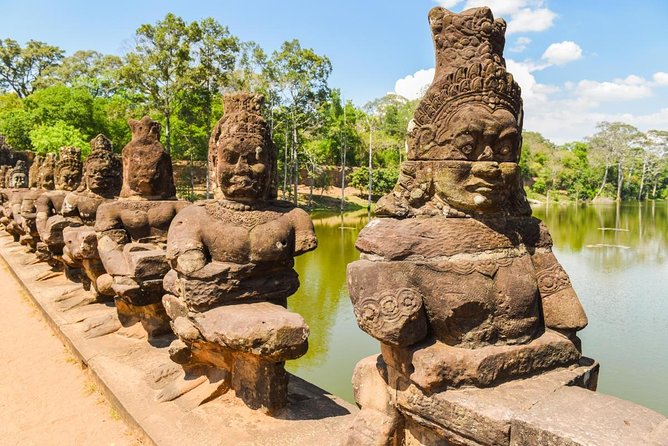
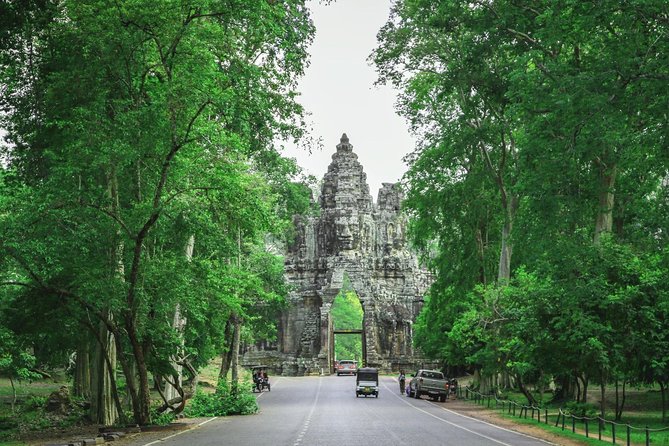
After Angkor Wat, the route continues to Angkor Thom, a large walled complex that contains several major monuments. The walls are described as about 6 meters wide, 8 meters high, and 13 kilometers long. Those figures help explain the scale of the former royal city.
The South Gate is a strong transition in the morning. You move from Angkor Wat’s focused temple setting into a much larger fortified area. The gate gives you a sense of how the city was organized and protected, while the guide can explain who lived and worked inside the walls.
The scheduled stop is about 45 minutes. That is enough to see the gate and begin understanding Angkor Thom, but it is not a full tour of every monument within the enclosure. The next stop, Bayon, supplies the main temple visit inside the complex.
Same dawn, a different vantage point:
- Angkor Wat Sunrise tour with Small – Group and Guide tours
★ 5.0 · 3,655 reviews - Angkor Wat Highlights and Sunrise Guided Tour from Siem Reap
★ 5.0 · 3,213 reviews - Full-Day Angkor Wat Sunrise Private Tour with Guide from Siem Reap
★ 5.0 · 2,920 reviews - Angkor Wat Sunrise & 3 Main Temples with Breakfast – Small Group
★ 5.0 · 2,857 reviews
Bayon’s smiling faces
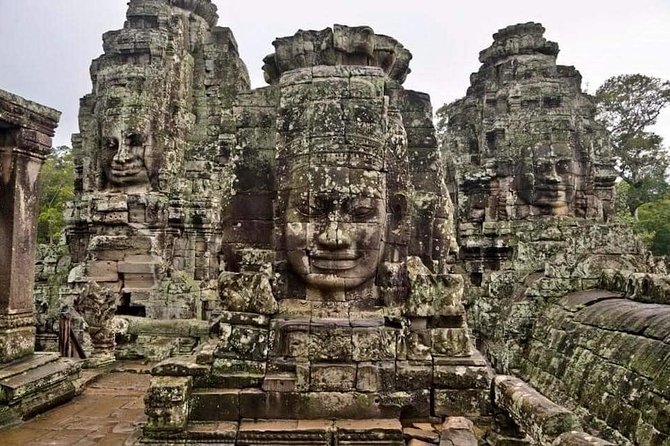
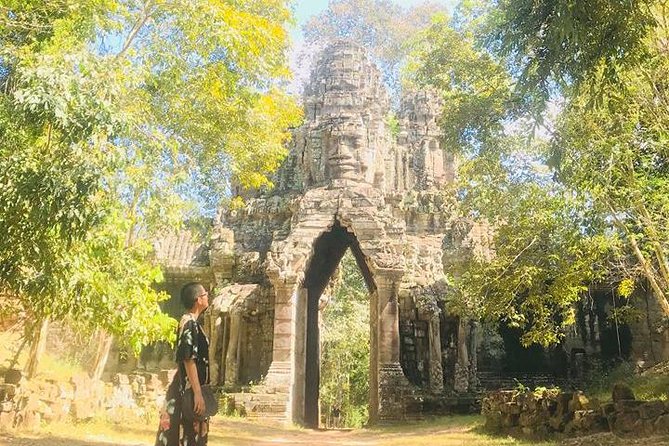
Bayon is scheduled for about 50 minutes. Its signature feature is the collection of enormous carved faces, often described as around 200 smiling faces. They appear from different levels and angles, making the temple feel more complex as you walk through it.
The temple mountain sits at the center of Angkor Thom. That location matters because Bayon was not an isolated shrine. It formed the central religious focus of the royal city.
I would pay close attention to the guide here. The faces are easy to photograph, but a good explanation helps you understand why the temple feels different from Angkor Wat. The two buildings have different roles, designs, and visual moods, and seeing them on the same morning makes the contrast clearer.
Fifty minutes is a useful amount of time for an introduction, but expect to keep moving. The stone levels, narrow passages, and uneven surfaces require care. Comfortable walking shoes are not just a suggestion for this stop.
Ta Prohm and the appeal of unfinished-looking ruins
The final major temple is Ta Prohm, visited for about an hour. King Jayavarman VII built it as a monastery, a residence for his mother, and a school. That background gives the site a human purpose beyond its famous appearance.
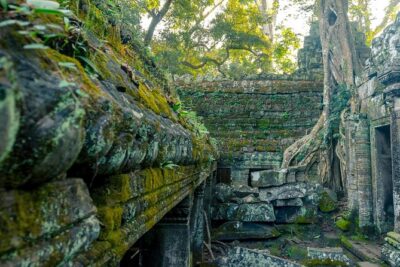
Ta Prohm is known for being left exposed to the forces of nature. Trees and roots press against the old stone, creating the tangled setting that makes the temple so recognizable. The effect is powerful because you can see both the skill of the original construction and the damage caused by time and vegetation.
This stop often feels different from Angkor Wat and Bayon. Angkor Wat is broad and ordered. Bayon is crowded with faces and tight spaces. Ta Prohm feels more irregular, with broken sections and tree-covered walls.
The hour-long visit should give you time to see the main areas with the group. Do not expect to wander everywhere at your own speed. The route is shared, and the day already contains several stops. Still, Ta Prohm is an essential part of the tour because it shows another side of the Angkor complex.
The guide can make the stones easier to read
An English-speaking guide is included, and the experience depends partly on how well that guide handles the pace and explanations. One guide named Nak is praised for his enthusiasm and willingness to share information about the temples. That sort of energy helps during a very early morning, when everyone is working with limited sleep.
You should also keep your expectations practical. A group tour cannot stop for every question or adjust every minute to your preferred pace. The guide must keep the group moving through four major temple areas, and the timing can be affected by pickup delays.
The strongest value here is not simply transport. It is the combination of transport, access to a guide, a sensible route, and local explanations at sites that can otherwise blur together. Angkor Wat, Bayon, and Ta Prohm are all impressive, but they are more useful to you as a connected story than as three unrelated photo stops.
The timing problem you should understand
Early tours live or die by punctuality. A late pickup or a slow start can reduce the best part of the morning. One disappointing experience involved another person being late, which meant the group reached Angkor Wat after the sky had already brightened. That is a reminder to be ready at your hotel before the stated pickup time.
There is also a report of a long, unclear stop at a restaurant after sunrise. The scheduled visit includes several temples, so an unexplained break of about three hours would take a large portion of the day. This may not happen on every departure, but you should ask the guide what the plan is if the schedule changes.
The tour is advertised as six to seven hours, while the listed stops add up to roughly five hours, not counting driving, pickup, ticketing, and breaks. That leaves some room for transport and changes in pace. It also explains why the day can feel stretched if the group is delayed.
If you want complete control of each stop, a private guide and driver may suit you better. If you prefer a set route and do not want to arrange a pre-dawn ride, the small-group format is the more convenient choice.
Price, extra costs, and overall value
The tour costs $39 per person, but the national park ticket adds $37. Your starting cost is therefore $76 per person. Food, drinks beyond the supplied water, travel insurance, and other personal costs are not included.
That is not the cheapest possible way to see Angkor Wat, but the price covers hotel transport, an English-speaking guide, bottled water, and a route through the four main stops. You are paying for an organized morning, not just a vehicle.
The small group improves the value. A maximum of 15 people is still large enough to include different walking speeds and interests, but it is far less unwieldy than a large bus. The tour also offers group discounts, though the actual discount amount is not provided.
I would choose this tour if you have only a short stay in Siem Reap, want the standard highlights, and value having the morning organized. I would look elsewhere if you want a leisurely temple study, a guaranteed private pace, or no uncertainty around meal breaks.
Who should book this sunrise tour?
This experience suits first-time visitors to Angkor who want to see the essential temples in one morning. It also works well for you if you are staying in Siem Reap and want hotel pickup rather than arranging transport before dawn.
You should be comfortable walking for several hours, handling uneven temple surfaces, and starting before sunrise. Children must be accompanied by an adult, and the minimum age is four. The tour requires a moderate level of physical fitness.
Pack light, but do not forget the useful items:
- Flashlight
- Mosquito spray
- Comfortable walking shoes
- Trousers or a knee-length skirt or dress
- Money for the $37 park ticket
- Water or a snack if you need food before the tour ends
The cancellation policy is flexible if your plans change. You can cancel at least 24 hours before the local start time for a full refund. Changes or cancellations made within 24 hours are not accepted for a refund.
Should you book it?
Book this tour if you want Angkor Wat at sunrise plus the three essential follow-up stops without arranging a driver, park entry, and guide separately. The price becomes more reasonable once you count the included transport and guiding, though you must add the $37 entrance ticket.
Think twice if you dislike early starts, need a private schedule, or want to linger at every temple. Be ready before pickup, confirm the day’s plan with the guide, and accept that clouds may soften the sunrise. For a first visit to Siem Reap, the combination of convenience, a small group, and a strong classic route makes this a practical choice.
FAQ
What time does the Angkor Wat sunrise tour start?
The listed start time is 4:30am. Hotel pickup is scheduled between 4:20am and 5:20am, so you should be ready before the pickup window given for your hotel.
Is the Angkor National Park ticket included?
No. The required national park ticket costs $37 per person and is not included in the tour price.
How many people are in the group?
The tour has a maximum of 15 travelers.
What transport is used?
One or two people travel by tuk tuk. Groups of three or more use a minivan.
Which temples are visited?
The route includes Angkor Wat, Angkor Thom’s South Gate, Bayon Temple, and Ta Prohm Temple.
What should I wear and bring?
You should wear trousers or a knee-length skirt or dress and comfortable walking shoes. A flashlight and mosquito spray are recommended.
Newly added sunrise trips around Siem Reap
- Sunrise at Angkor Wat with a sharing group★ 5.0 · 2 reviews
- Sunrise at Angkor Wat Temple: 3-Hour Private Tour★ 4.7 · 30 reviews
- Sunrise at Angkor Wat and Full day with Fascinating Temples★ 5.0 · 2 reviews
- Small-Group Explore Angkor Wat Sunrise Tour with Guide★ 5.0 · 3 reviews
- Siem Reap Temple Tour 2-Day with Sunrise/Sunset★ 3.7 · 3 reviews
- Angkor Wat: Sunrise 2.5 Days Temples & Tonle Sap-Small Group★ 5.0 · 10 reviews
- Siem Reap: Angkor Wat Sunrise Tour via Tuk Tuk & Breakfast★ 5.0 · 29 reviews
- Siem Reap: Angkor Wat Sunrise Tour with Spanish Guide★ 5.0 · 18 reviews
Cambodia Sunrise Tours, compared at first light.
Angkor Wat Sunrise or Sunset Tour with Guide from Siem Reap
Read our review →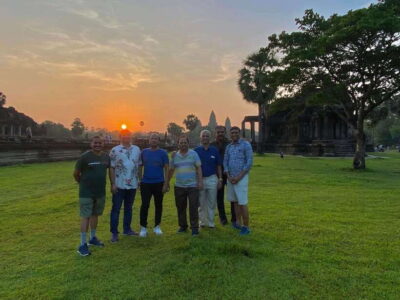
Angkor Wat: Small-Group Sunrise or Sunset Tour
Read our review →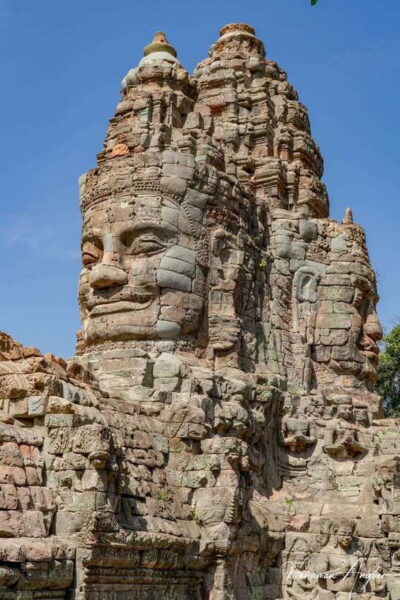
Angkor Wat 2-Day Tour with Sunrise and Sunset
Read our review →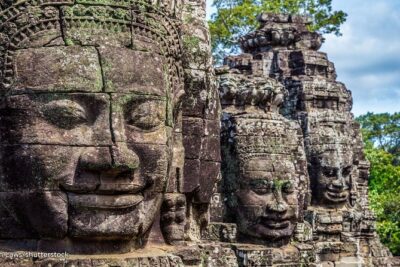
Angkor Wat Sunrise tour with Small – Group and Guide tours
Read our review →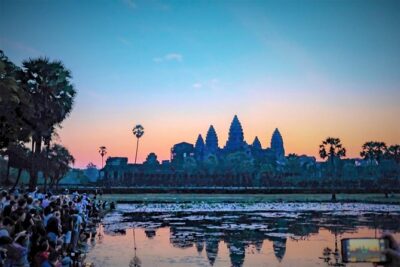
Angkor Wat Highlights and Sunrise Guided Tour from Siem Reap
Read our review →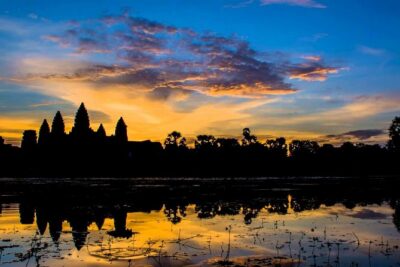
Full-Day Angkor Wat Sunrise Private Tour with Guide from Siem Reap
Read our review →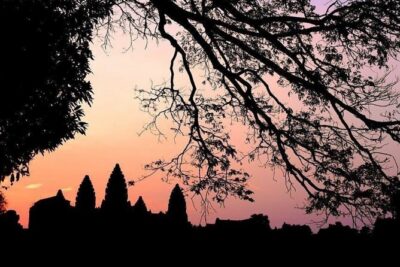
Angkor Wat Sunrise & 3 Main Temples with Breakfast – Small Group
Read our review →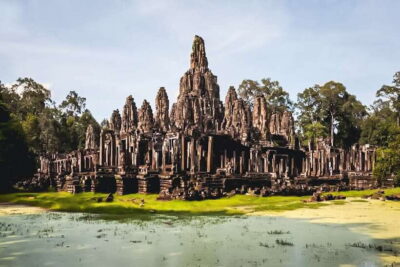
Angkor Wat Sunrise and Full-Day Sightseeing Tour
Read our review →More lists with this sunrise on them