
Review · CAMBODIA
Siem Reap: Angkor Wat 2-Day Tour with Sunrise and Sunset
Angkor Wat at sunrise is the headline, but the real strength of this two-day temple tour is the way it fills in the larger Khmer story. You see the famous places, then return to the road for quieter ruins where your guide can explain how kings, gods, engineers, and ordinary worshippers shaped Angkor.
I like the air-conditioned minibus, cold water, and wet towels after long walks in the heat. I also like having two different days: a dawn start for the major sights, followed by a later second day with more time for temples such as Preah Khan and Ta Som. The drawback is simple: these are long, hot days, and the sunrise pickup can begin around 4:30 a.m.
Key points to know before booking
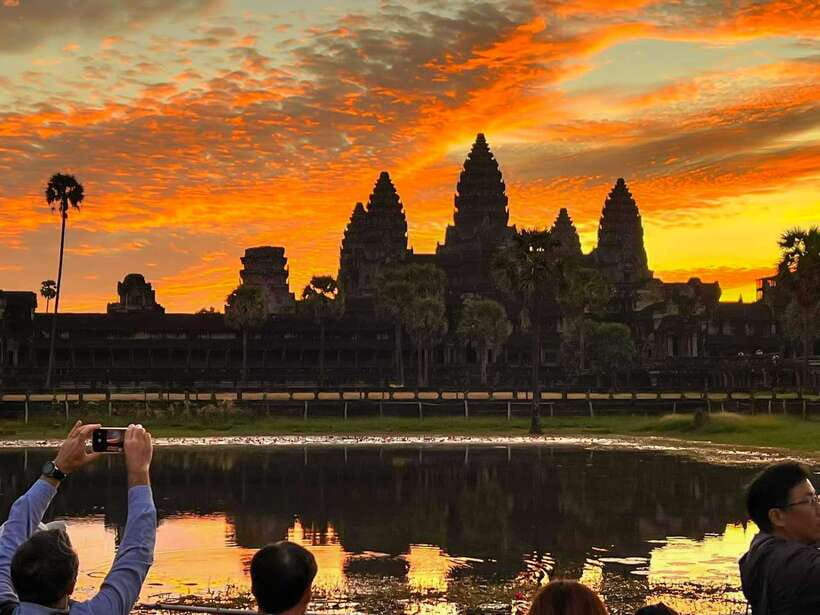
- Sunrise at Angkor Wat: Start before dawn and see the temple reflected in the water as daylight arrives.
- Eleven temples over two days: The route covers the essential central temples plus several quieter eastern and northern sites.
- Strong guide-led experience: Guides including Sary, Sok, Sam, Vone, Pheap, and Nick, also called Kosal, are praised for clear stories, photography help, and good time management.
- Cool transport between stops: Hotel pickup, an air-conditioned minibus, bottled water, and refreshing towels make the heat easier to handle.
- A full second day: The big tour runs roughly from 10:30 a.m. to 7 p.m., ending with sunset.
- Temple pass extra: You must pay separately for the Angkor Archaeological Park ticket, and meals are not included.
Two days that make Angkor easier to understand
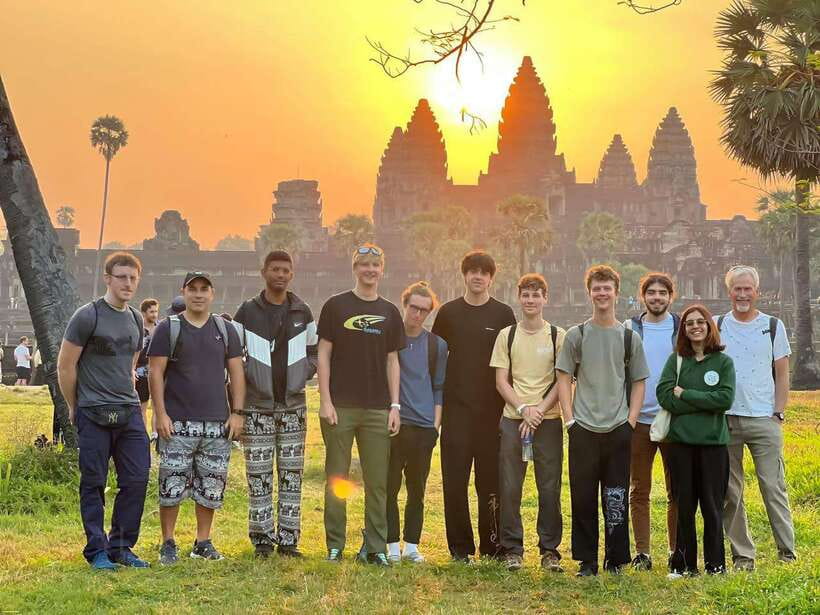
A first visit to Angkor can feel like a pile of spectacular stones. The scale is enormous, the temples are spread across a large area, and the names can blur together after a few hours.
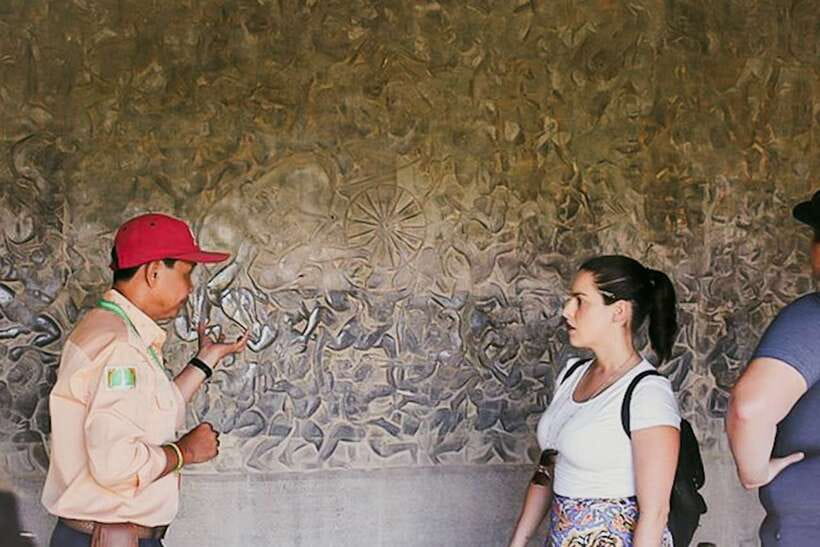
This tour gives you a useful framework. Day one follows the most famous sights, while day two moves through a wider loop of temples with a slower feel. An English-speaking guide connects the architecture to Khmer kingship, Hindu and Buddhist beliefs, temple design, and daily life.
That matters because Angkor is not just a collection of photo stops. The smiling faces at Bayon, the carved stories at Angkor Wat, and the trees growing through Ta Prohm each belong to a different part of the empire’s development. A good guide helps you see those differences instead of treating every ruin as the same.
The tour costs $34 per person, before the temple pass and meals. For two days of transport, guiding, hotel pickup and drop-off, water, towels, and visits to 11 temples, that is a strong price. You are paying for organization as much as sightseeing. The company handles the long drives between sites and keeps the route moving while you focus on the monuments.
The tradeoff is energy. You are not buying a relaxed, one-temple-per-day outing. You are buying broad coverage. If you want to see as much of Angkor as possible in two days, this is useful. If you prefer long, unhurried time at each site, the schedule may feel brisk.
More Sunrise and Sunset Tours in Cambodia
- Angkor Wat Sunrise or Sunset Tour with Guide from Siem Reap
★ 5.0 · 12,109 reviews - Siem Reap: Angkor Wat: Small-Group Sunrise or Sunset Tour
★ 5.0 · 9,444 reviews - Angkor 2-Day Sunset & Sunrise Small-Group Tour
★ 5.0 · 2,567 reviews
Day one begins before dawn at Angkor Wat
Pickup for the small tour begins around 4:30 a.m. You need to be ready about 30 minutes before the stated start time, with your hotel address supplied correctly when booking.
The early start is not a gimmick. Angkor Wat is at its most atmospheric as the sky lightens behind the towers. The reflection pool, the dark outline of the temple, and the growing morning light create the classic scene that brings people here in the first place.
Sunrise depends on nature, so clouds can soften or block the view. You should treat the setting as the reward, not a guaranteed postcard. Even on a gray morning, arriving early gives you cooler temperatures and time to explore before the day becomes hottest.
Your guide can also help you find better viewpoints and manage the first rush of people. Guides such as Nick, Pheap, Sayon, and Sok are praised for knowing where to position groups and for taking photos. That practical help is valuable at a site where it is easy to spend your first hour simply trying to work out where to stand.
After sunrise, you explore Angkor Wat itself. The temple was built as a major religious monument and is known for its galleries, towers, courtyards, and carved scenes. This is where a guide adds real value. The scale can be hard to read on your own, while a clear explanation helps you connect the carvings and layout to Khmer beliefs and royal power.
Wear clothing that covers your shoulders and knees. Shorts, short skirts, and sleeveless shirts are not allowed, so do not dress only for the heat. Lightweight, respectful clothing is the better choice.
Ta Prohm brings the jungle into the story
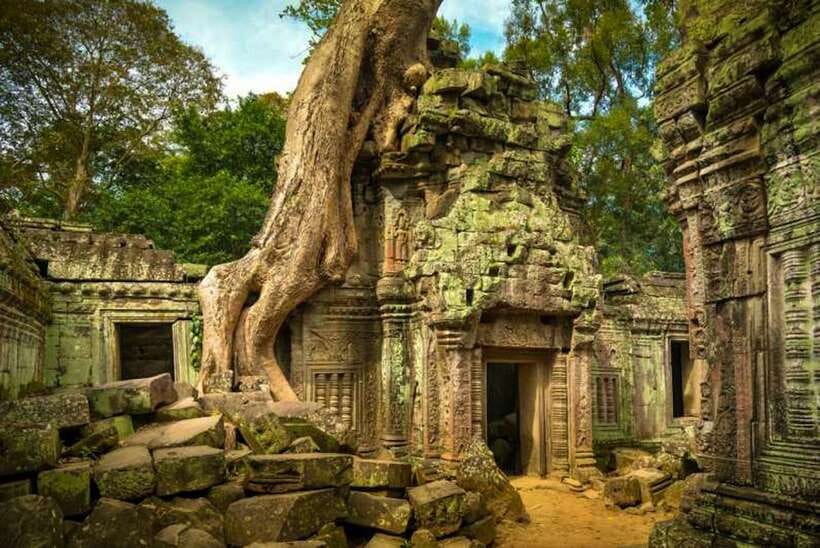
Ta Prohm is the temple many people recognize from the Tomb Raider film, but its appeal goes beyond cinema. Trees grow over walls and doorways, making it easier to picture how the site might have appeared before conservation work cleared paths and stabilized the ruins.
The tour aims to reach Ta Prohm earlier than some other group outings. That can help, though no schedule can remove crowds entirely from one of Angkor’s best-known temples.
Take your time looking at the stonework rather than only hunting for the famous tree-framed doorway. The temple has carved dancers, galleries, and narrow passages that show how large and active the complex once was.
This stop also shows why comfortable shoes matter. The ground can be uneven, and you will be walking, standing, and climbing steps throughout the day. Some visitors have needed to move slowly because of knee or foot problems. Guides have helped people manage the steps, but the tour is still physically demanding.
Bayon and Angkor Thom explain royal power
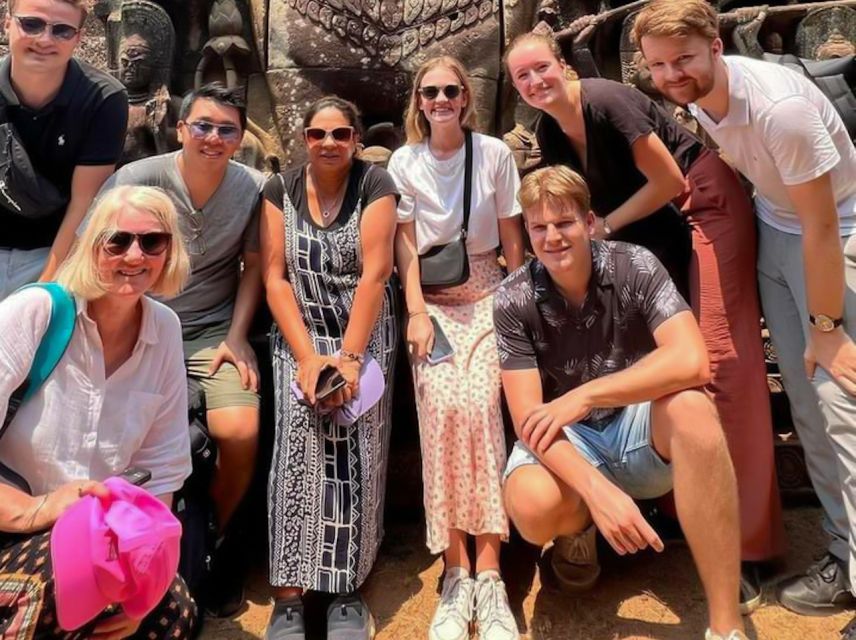
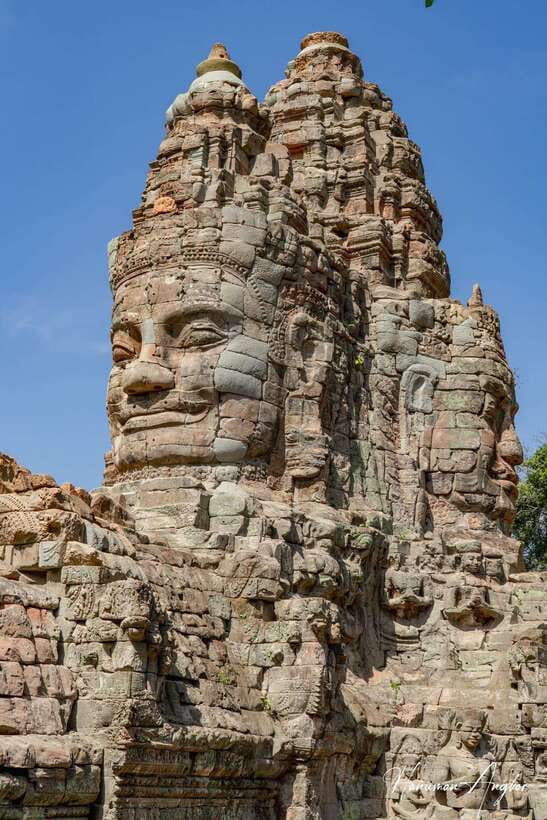
Bayon is one of the day’s great surprises. Its towers carry large carved faces with calm, smiling expressions. The effect is striking from a distance, then increasingly complex as you walk among the towers.
The temple was built during the reign of Jayavarman VII and is associated with Buddhist royal power. Your guide can explain how its architecture differs from Angkor Wat and why its face towers have become one of Cambodia’s best-known images.
The wider Angkor Thom area adds scale. You are not visiting one isolated monument, but the central area of a major capital. The South Gate is especially memorable, with rows of gods and demons pulling at a seven-headed naga along the bridge.
The gate is a strong photo stop, but it also carries a story about the balance of opposing forces in Hindu and Buddhist imagery. A guide can point out details you might otherwise miss, including the expressions and posture of the statues.
More Sunrise and Sunset Tours in Siem Reap:
- Siem Reap: Angkor Wat Sunrise or Sunset Guided Tour
★ 4.9 · 2,123 reviews - 2 Days Exclusive Temple Highlights with Sunset and Sunrise Tour
★ 5.0 · 1,157 reviews - Siem Reap: 2-Day Temple Highlights Sunrise and Sunset Option
★ 4.9 · 445 reviews - Angkor Sunrise or Sunset Tour (includes breakfast or lunch)
★ 4.8 · 144 reviews
Ta Keo adds steps and a change of pace
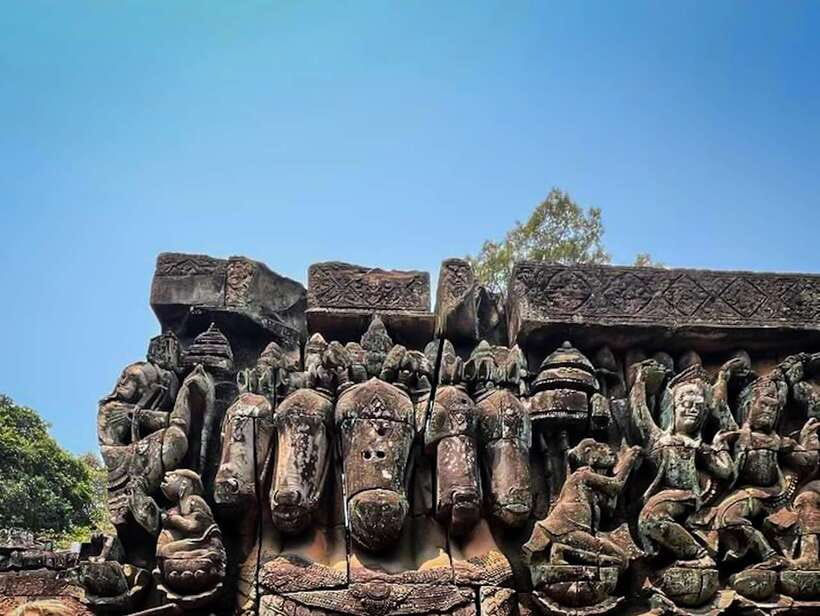
Ta Keo is a mountain temple built in the 10th century. Its tall, tiered design gives it a more severe and upward-reaching character than Ta Prohm or Bayon.
You walk up the temple steps, moving between the modern visitor experience and an older building tradition designed to represent a sacred mountain. The climb is not the longest part of the tour, but after an early start and several sites, it can feel demanding.
This is a good point to slow down, drink water, and listen to your body. The minibus and regular water breaks help, but they do not remove the need for sun protection and sensible pacing.
Day one normally returns around 1 p.m., though exact timing can vary. That early finish gives you a chance to rest before the next day. It is also one reason the two-day plan works better than forcing every temple into one enormous outing.
Day two moves toward quieter temples
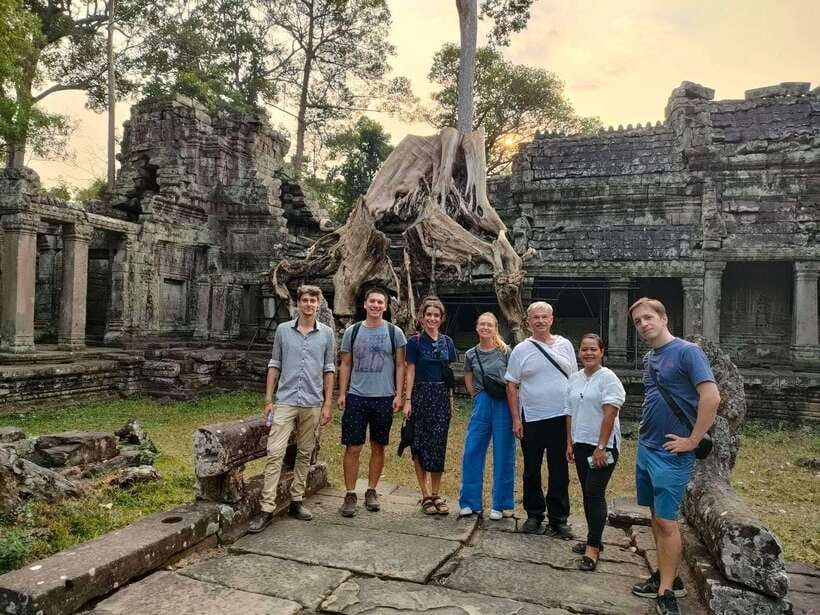
The second day begins around 10:30 a.m. and runs until about 7 p.m. That later start is welcome after sunrise, and the route has a different character. You visit several temples that can feel calmer than Angkor Wat, Bayon, and Ta Prohm.
Preah Khan is one of the major stops. It is a large complex with long corridors, carved details, courtyards, and sections where vegetation has reclaimed parts of the structure. The size rewards a guide who can keep the history clear without turning every wall into a lecture.
Neak Pean is smaller and more unusual. The temple sits on an island within a system of water, which was associated with bathing and health during the Angkor period. The approach across the water gives the stop a different rhythm after the heavy stonework of the larger temples.
At Ta Som, look for the large tree growing over the eastern gate. The temple is also known for carved dancers with long hair. It was built for the king’s sister, giving the site a personal connection within the royal building program.
These smaller temples are a major reason to choose two days. Once you have seen Angkor Wat, Bayon, and Ta Prohm, it is easy to assume the rest will be lesser versions. In fact, the quieter sites often give you more room to notice details and ask questions.
East Mebon and Pre Rup show Angkor’s older forms
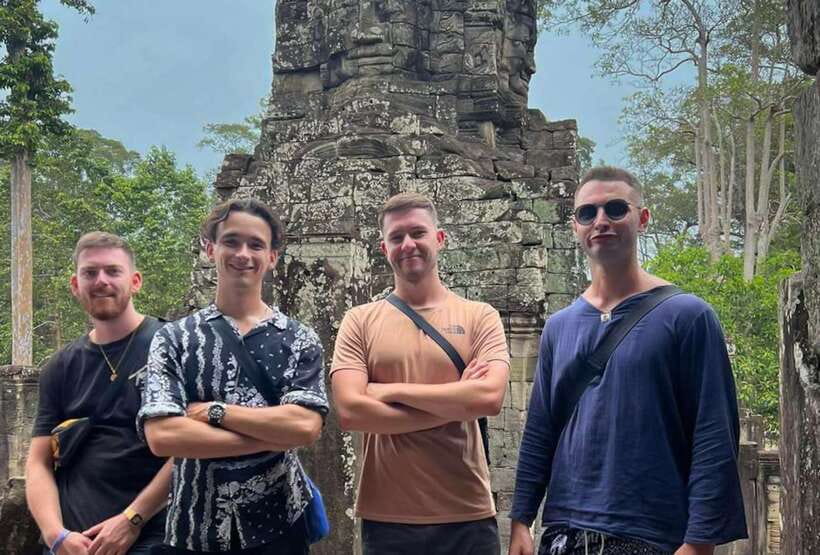
East Mebon was built as an ancestral temple in the 10th century. It once stood in the middle of a reservoir, so its original setting was very different from the dry ground you see today.
That lost water setting is a useful reminder that Angkor depended on large-scale engineering. Reservoirs, canals, roads, and temples were tied together. You are not simply looking at religious buildings, but at the remains of a planned capital supported by water management.
Pre Rup was built by a king for himself. Its stepped form resembles a stone mountain, and it is often mistakenly described as a crematorium. The stone structure sometimes linked to a coffin was used by Hindus for meditation during the full moon, according to the tour explanation.
The site is a good place to think about how modern labels can flatten the past. Ancient buildings did not always have one simple purpose, and the guide’s interpretation helps separate what is known from what is commonly assumed.
Phnom Bakheng provides the sunset finish
The day ends at Phnom Bakheng, a hilltop temple with 33 towers representing the heavens. The climb and the wait for sunset come after a full day, so you should expect tired legs.
The reward is the view from above and the sense of ending the route at a temple tied to the sky. Sunset is not guaranteed to be dramatic, but the hilltop setting gives the final stop a different mood from the enclosed galleries and tree-covered ruins earlier in the day.
Do not treat this as a quick photo stop. The final climb and viewing time can make the last part of the day feel slow, especially if you are already hot. On the other hand, ending around 7 p.m. gives the day a clear finish rather than sending you back to town in the middle of the afternoon.
Guides, transport, and the practical details
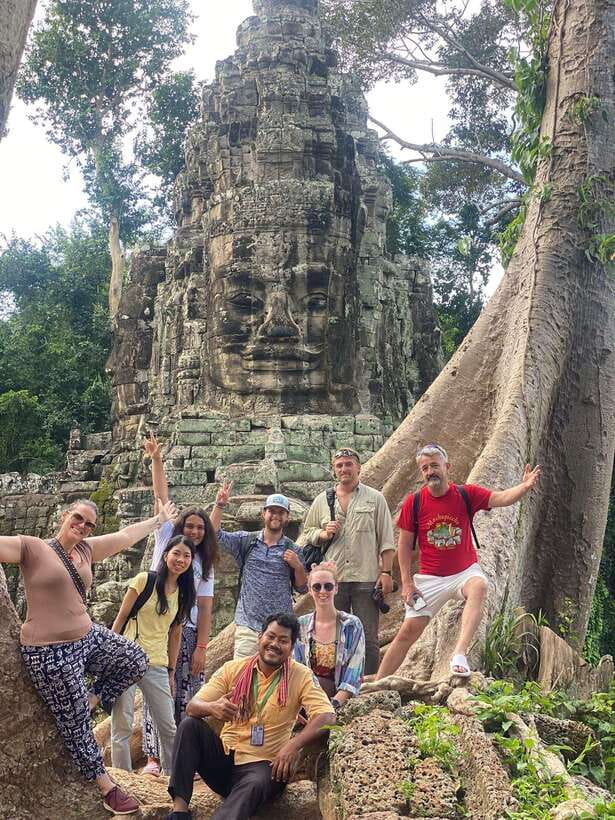
The guiding is one of the most praised parts of the experience. Names that appear repeatedly include Sary, Sok, Sam, Vone, Pheap, John, Sayon, and Nick, also called Kosal. Their styles differ, but useful strengths include explaining religious symbolism, answering questions, organizing photo stops, and keeping the group on schedule.
One guide may be more entertaining, another more focused on chronology or mythology. You may have a different guide on each day, which can work in your favor because the two routes cover different material.
The minibus is air-conditioned, a small comfort that becomes a major one after walking on exposed stone. Cold bottled water and refreshing wipe towels are provided at stops. Several tour participants especially appreciated the towels after long walks in the sun.
Meals are not included. Food and rest breaks occur during the day, and the schedule can include time at local restaurants. One useful warning is that a long lunch can make an already full day feel longer, so ask your guide about timing if you want to keep moving.
The tour is described as available in private or small-group formats. Group size affects how quickly you move through gates and how much personal attention you receive. The exact group arrangement should be confirmed when booking.
The information also contains a practical contradiction: the activity is marked wheelchair accessible in one place, but it is also listed as unsuitable for wheelchair users. With uneven ground, temple steps, and a stated restriction against wheelchair users, you should confirm access directly before paying.
The tour is also listed as unsuitable for people over 70. That is a blunt guideline rather than a personal medical assessment, but the long walks, heat, early start, and steps make it worth taking seriously.
The Angkor pass is separate
The $34 tour price does not include entry to Angkor Archaeological Park. You must purchase the temple pass yourself, either online through the Cambodian government’s Angkor Enterprise website or at the ticket office after pickup, depending on the current arrangement.
Plan this before the morning begins. Since pickup is early, you do not want confusion over the pass to delay the group. The operator can provide information about buying it, but the ticket remains your responsibility.
Bring sunglasses, sunscreen, a charged smartphone, and comfortable clothing. The phone is useful for photos, but also for keeping track of meeting points and sharing images if your guide takes group pictures.
Alcohol and drugs are not allowed. Respectful clothing is required at the temples, with no short skirts, shorts, or sleeveless shirts.
Is this two-day Angkor tour good value?
At $34 per person, I see this as a practical way to cover the main Angkor sights without arranging separate drivers, routes, and explanations. The price is especially fair if you value hotel pickup, air conditioning, an English-speaking guide, cold water, and a planned route across 11 temples.
The value is not only in the number of monuments. You also get context. Without a guide, you can admire the carvings and still miss why Bayon is different from Angkor Wat, why water mattered at Neak Pean and East Mebon, or why Ta Prohm feels so distinct.
The weak point is the pace. Two days from early morning to evening can leave you worn out, especially in hot weather. Families with young children should think carefully, though one guide was praised for slowing down and helping a nine-year-old cope with the heat.
You also need to budget for the park pass and meals. The tour is inexpensive, but $34 is not your complete Angkor cost.
Should you book it?
Book this tour if you have at least two days for Angkor and want a well-organized introduction to the major temples, with history explained as you go. It suits first-time visitors, solo visitors who prefer joining a small group, and anyone who wants sunrise and sunset without arranging transport independently.
I would choose it if you want broad coverage and practical support in the heat. I would not choose it if you need a slow pace, have serious mobility limits, or want to spend most of a day at one temple.
The best strategy is to treat day one as the essential circuit and day two as the more relaxed discovery day. Get proper sleep before the first pickup, dress for temple rules, carry sun protection, and keep some energy for the final hill at Phnom Bakheng.
FAQ
How much does the two-day Angkor tour cost?
The tour costs $34 per person. The Angkor Archaeological Park entry ticket and meals are not included.
How long does the tour last?
The experience covers two separate days. Day one runs approximately from 4:30 a.m. to 1 p.m., and day two runs approximately from 10:30 a.m. to 7 p.m.
Is sunrise included?
Yes. Day one includes sunrise at Angkor Wat.
Is sunset included?
Yes. The second day includes a sunset visit, described in the itinerary at Phnom Bakheng.
Which temples are visited?
The route includes Angkor Wat, Ta Prohm, Bayon, Ta Keo, the South Gate of Angkor Thom, Preah Khan, Neak Pean, Ta Som, East Mebon, Pre Rup, and Phnom Bakheng.
Is hotel pickup included?
Yes. Hotel pickup and drop-off are included. You should be ready around 30 minutes before the tour begins and provide the correct hotel address.
Is transport air-conditioned?
Yes. Transport is provided by air-conditioned minibus.
Is an English-speaking guide included?
Yes. An English-speaking live guide is included. Guides may include Sary, Sok, Sam, Vone, Pheap, John, Sayon, or Nick, also known as Kosal.
Do I need to buy the temple pass separately?
Yes. You must purchase the Angkor Archaeological Park pass yourself, either online through the government website or at the ticket office according to the pickup arrangement.
What should I wear and bring?
Wear comfortable clothing that covers your shoulders and knees. Bring sunglasses, sunscreen, and a charged smartphone. Short skirts, shorts, and sleeveless shirts are not allowed.
More Two-Day Trips in Siem Reap
- Siem Reap: Angkor Sunrise 1- or 2-Day Guided Temples Tour
★ 4.9 · 1,132 reviews - Siem Reap: 2-Days Angkor Wat with Sunrise Small-Group Tour
★ 4.9 · 213 reviews - Angkor Wat: 2-Day Sunrise and Floating Village Tour
★ 4.9 · 31 reviews - Siem Reap: Angkor Sunrise 2 Days Guided Bike Tour
★ 4.9 · 9 reviews
Newly added sunrise trips around Siem Reap
- Sunrise at Angkor Wat with a sharing group★ 5.0 · 2 reviews
- Sunrise at Angkor Wat Temple: 3-Hour Private Tour★ 4.7 · 30 reviews
- Sunrise at Angkor Wat and Full day with Fascinating Temples★ 5.0 · 2 reviews
- Small-Group Explore Angkor Wat Sunrise Tour with Guide★ 5.0 · 3 reviews
- Siem Reap Temple Tour 2-Day with Sunrise/Sunset★ 3.7 · 3 reviews
- Angkor Wat: Sunrise 2.5 Days Temples & Tonle Sap-Small Group★ 5.0 · 10 reviews
- Siem Reap: Angkor Wat Sunrise Tour via Tuk Tuk & Breakfast★ 5.0 · 29 reviews
- Siem Reap: Angkor Wat Sunrise Tour with Spanish Guide★ 5.0 · 18 reviews
Sunrise and Sunset Tours, compared at first light.
Angkor Wat Sunrise or Sunset Tour with Guide from Siem Reap
Read our review →
Angkor Wat: Small-Group Sunrise or Sunset Tour
Read our review →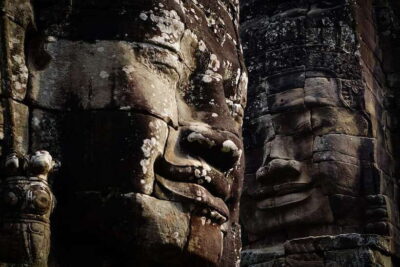

Cappadocia: Horseback Tour with Sunrise and Sunset Options
Read our review →
Cappadocia: Horse Riding Tour with Sunrise or Sunset Options
Read our review →
Sharm ElSheikh: ATV Quad & Buggy Adventure Sunrise or Sunset
Read our review →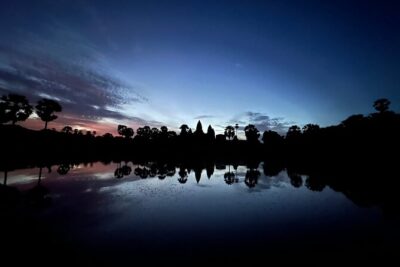
2 Days Exclusive Temple Highlights with Sunset and Sunrise Tour
Read our review →
Cape Town: Lion’s Head Sunrise or Sunset Hike
Read our review →More lists with this sunrise on them