Review · JAPAN
Kyoto: Early Morning Tour with English-Speaking Guide
Kyoto’s famous sights are much easier to appreciate before the day gets noisy. This early-morning route takes you from Kyoto Station to Fushimi Inari, Arashiyama, and Kinkakuji, using public transportation and a small group of no more than eight people.
I like two things right away: you see three major Kyoto sights in one morning, and your guide handles the trains, buses, timing, and basic cultural background. Guides such as Aya, Haruki, Hina, and Genki have been praised for clear English, useful food advice, and taking good photos. The catch is the very early start and steady walking, with no lunch included and transportation paid separately.
Key points to know before booking
- Fushimi Inari comes first: The famous torii gates are at their quietest early in the morning, before the large crowds arrive.
- Three headline sights in 330 minutes: You visit Fushimi Inari, Arashiyama, and Kinkakuji, then return to Kyoto Station.
- Public transportation is part of the experience: Expect trains, a bus, station walking, and about 1,240 yen in transport costs.
- Small group, not private: The group can include up to eight people, giving you more personal attention without the cost of a private guide.
- Strong guide element: Guides including Haruki, Aya, Hina, Rin, Hinano, and Genki have been praised for history, local customs, photo help, and restaurant tips.
- Plan for real walking: Comfortable shoes matter, and the tour is not suitable for wheelchair users, strollers, or people who rely on a cane.
Why the early start matters in Kyoto
Kyoto’s most famous places are not secrets. By late morning, Fushimi Inari’s torii-lined paths, Arashiyama’s bamboo grove, and Kinkakuji’s viewing area can feel packed. This tour’s main advantage is not simply seeing the sights. It is seeing them in a better order, at a better hour.
The meeting time can be as early as 6:45 a.m., depending on the departure selected. That means you give up a slow hotel breakfast, but you gain cooler paths, softer light, and a better chance to pause without being pushed along by a crowd. One useful detail from the morning route is that you finish around lunchtime, leaving the rest of your day open for Nishiki Market, Gion, museums, or a proper meal.
I would not call this a relaxed stroll. You move between stations, platforms, streets, temple grounds, and scenic paths. But the small group keeps the pace manageable, and the guides have been praised for making the transitions easy to follow.
More Guided Tours in the world:
- Angkor Wat Sunrise or Sunset Tour with Guide from Siem Reap
★ 5.0 · 12,109 reviews - Bali: Sunrise Mount Batur Guided Hike with Breakfast
★ 4.8 · 9,660 reviews - Bali: Mount Batur Sunrise Guided Hike and Natural Hot Spring
★ 4.8 · 9,284 reviews
Meeting at Kyoto Station without confusion
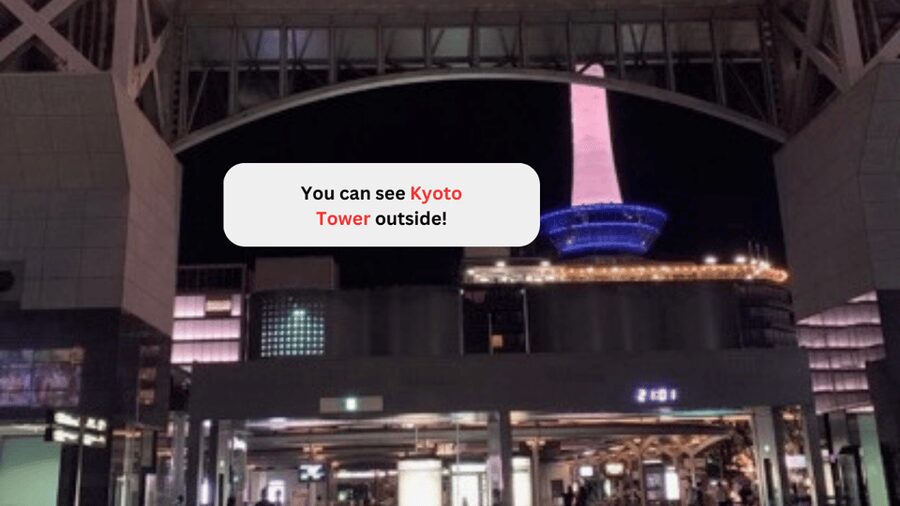
The starting point is the Central Ticket Gate at Kyoto Station. Look for the large gate near Kyoto Tower and the nearby 7-Eleven. The guide carries a board marked GuideMe Japan.
Kyoto Station is large, so do not leave this until the last minute. The operator asks you to arrive five to ten minutes early, and the guide may contact you through WhatsApp before the tour. Download WhatsApp before the morning of the tour and provide a phone number that works in Japan.
This timing rule is strict. If you arrive late, the group may already have left, and you cannot join later or receive a refund. That sounds harsh, but it is understandable on a five-hour route with several train and bus connections. Set an alarm, allow extra time inside the station, and have the meeting point saved on your phone.
Fushimi Inari before the crowds
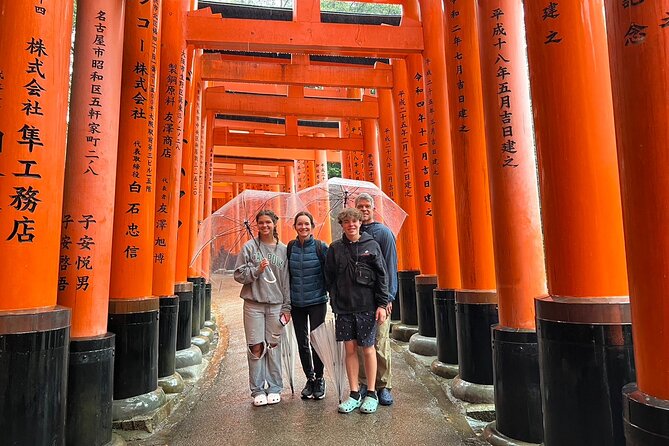
The first stop is Fushimi Inari Taisha, reached by train in about ten minutes from Kyoto Station. You spend roughly 70 minutes here with the guide.
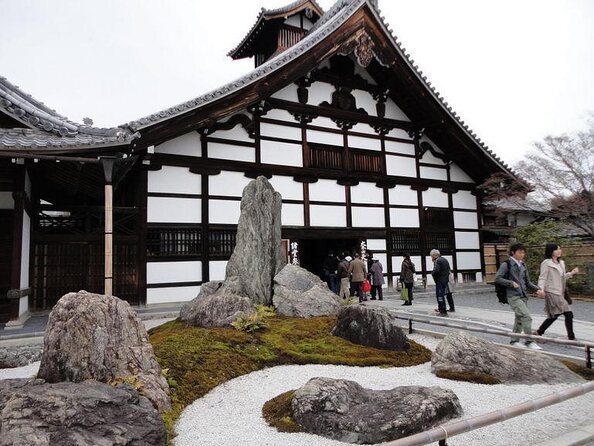
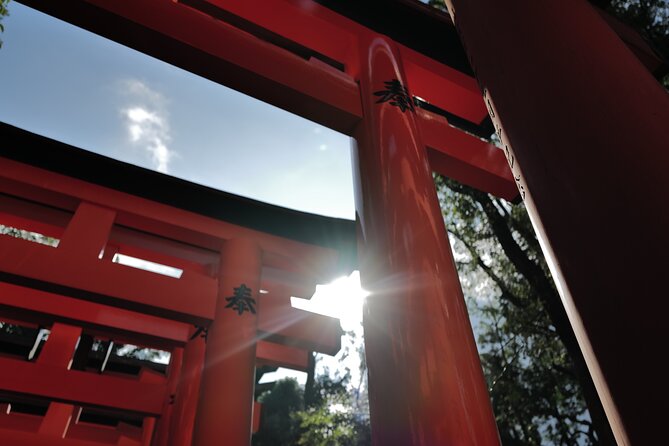
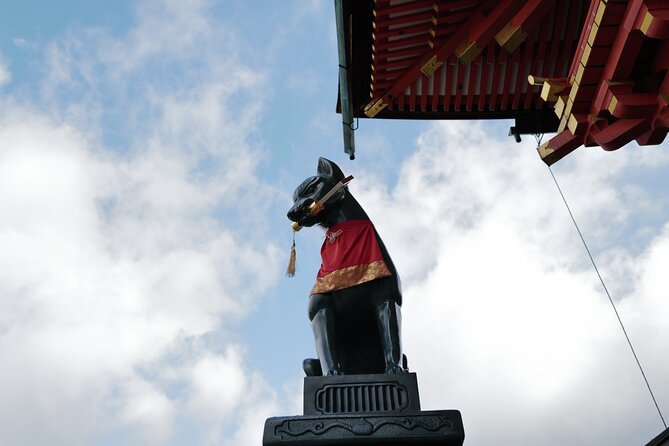
Fushimi Inari is known for its long rows of orange torii gates climbing toward Mount Inari. The shrine is dedicated to Inari, a Shinto deity linked with rice, business, and prosperity. Fox figures appear around the grounds because foxes are traditionally seen as Inari’s messengers.
The early arrival makes a real difference. You can stop beneath the gates, take photographs, and listen to the guide without the constant squeeze of a midday crowd. You may not have time to climb the full mountain, and the tour does not promise that. The value here is a guided introduction to the shrine and its customs, not a strenuous summit walk.
This is also where a guide adds more than a route map. You learn how a Shinto shrine differs from a Buddhist temple, what the gates represent, and how to behave respectfully at the site. Several guides have also helped participants find good photo angles, a small service that matters when you are trying to include the torii tunnels and your whole group in one picture.
Give yourself a proper breakfast before leaving your hotel or carry something small. Lunch is not included, and the next stop involves more walking.
Arashiyama and the bamboo grove
After Fushimi Inari, the group takes a train for about 30 minutes to Arashiyama. The guided visit lasts around an hour.
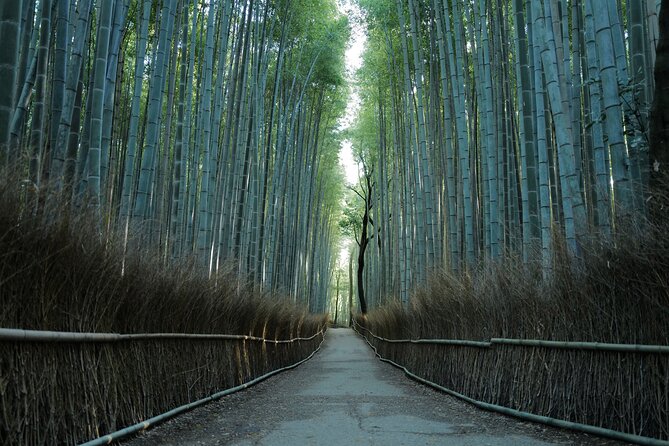
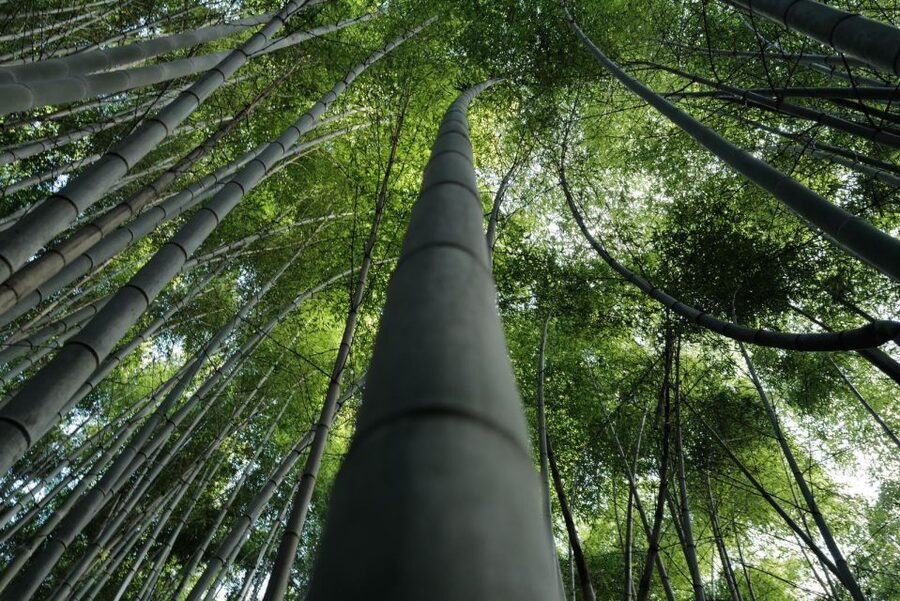
Arashiyama is best known for its bamboo grove, where tall bamboo rises on both sides of the path. The setting can feel calm early in the day, though you should not expect complete solitude. This is one of Kyoto’s most photographed areas, and even an early visit can include other groups.
The route gives you enough time to see the main bamboo area and take photographs, but not enough for a full exploration of every corner of Arashiyama. That trade-off is important. You are choosing breadth, three major sights in one morning, rather than a slow day spent in one district.
Weather can change the mood completely. On a cold or snowy morning, the bamboo can look striking and almost dreamlike. On a wet day, paths may be slippery, so shoes with good grip are a smart choice. The tour continues on schedule in ordinary poor weather, and you should dress for several hours outdoors.
Your guide can explain the religious and cultural setting around Arashiyama and help you understand what you are seeing beyond a photo backdrop. Guides such as Aya and Haruki have also been praised for local recommendations, including places to eat later in the day.
More early starts worth the alarm around the world:
- Siem Reap: Angkor Wat: Small-Group Sunrise or Sunset Tour
★ 5.0 · 9,444 reviews - Cappadocia: Goreme Hot Air Balloon Flight at Sunrise
★ 5.0 · 4,924 reviews - Siem Reap: Angkor Wat 2-Day Tour with Sunrise and Sunset
★ 4.9 · 4,429 reviews - Funchal: Pico do Arieiro Sunrise Hiking Transfer
★ 4.8 · 4,021 reviews
Getting to Kinkakuji by public transportation
From Arashiyama, the group takes another train for about 15 minutes, followed by a bus ride of roughly 20 minutes to Kinkakuji. This is the least predictable part of the route because Kyoto buses can be slow when roads are busy, and weekend service can involve waiting.
That is not a flaw unique to this tour. It is simply the reality of visiting Kyoto without a private vehicle. The guide’s value becomes clear here, since you do not have to work out the correct bus, stop, or connection while watching the clock.
On one winter morning, a bus problem led the guide to arrange taxis so the group could continue. That kind of practical judgment is useful, though you should not assume a taxi will always be provided or included. The standard plan uses public transportation, and the listed transportation cost is about 1,240 yen.
The public transport element also gives you a useful skill for the rest of your stay. Several people found that learning the train and bus system with a guide made it easier to move around Kyoto on their own afterward. Bring an IC card such as ICOCA, SUICA, or PASMO, or use a JR Pass if appropriate. Transport fees are not included in the tour price.
Kinkakuji, the Golden Pavilion
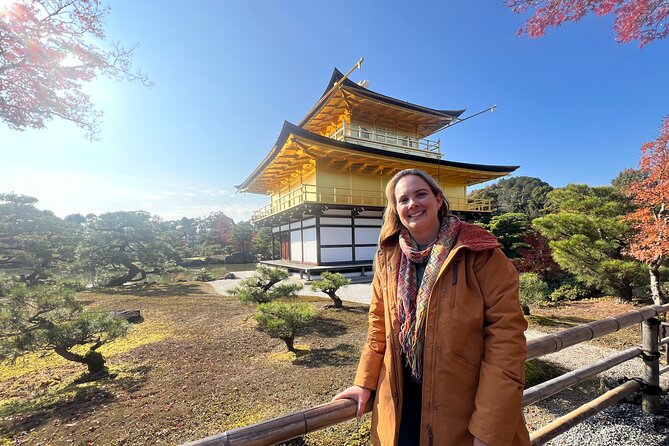
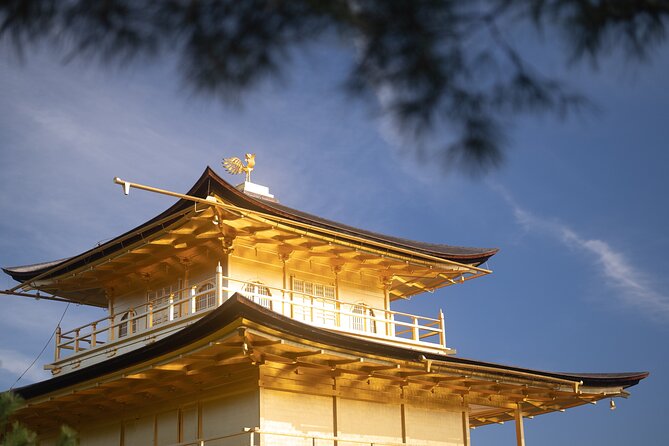
Kinkakuji is the final major stop and receives about an hour of guided time. The temple is famous for its gold-covered upper stories reflected in the pond, with gardens and trees around the water.
You pay a separate entrance fee of 500 yen. Keep cash ready, since cash is specifically recommended for the tour. The grounds are arranged for a fairly direct visit, so this is not a place where you wander freely for hours. You follow the viewing path, stop at the main viewpoints, and hear about the temple’s Buddhist setting and long story of destruction and rebuilding.
The Golden Pavilion is visually powerful, but it can also be the busiest stop, especially later in the morning or when unusual weather draws extra crowds. Snow, for example, can make the temple especially appealing and bring more people out to see it. The early timing helps, but it cannot guarantee an empty path.
The temple visit gives the morning a strong finish. Fushimi Inari introduces Shinto practice, Arashiyama offers one of Kyoto’s signature natural settings, and Kinkakuji brings you to a major Buddhist monument. You get a useful first look at three different sides of Kyoto in a compact route.
What the guide adds to the morning
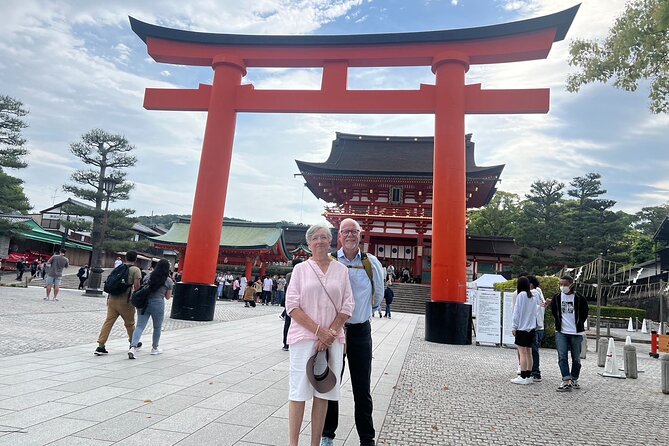
This experience depends heavily on the guide. The route itself is easy to describe, but the value comes from having someone explain the places, keep the group moving, and handle transport.
Guides named in the feedback include Natsuki, Hinano Yoshida, Ramu, Koi, Genki, Karin, Moto, Haruki, DK, Alisa, Aya, Chihiro, Rin, Hina, Suzuka, Erisa, Toshiya, Ayame, Leo, and Karen. Individual assignments change, so you cannot count on a particular person unless the operator confirms it. Still, the repeated strengths are clear: good English, friendly manner, strong knowledge of Kyoto’s history and customs, and patience with questions.
Some guides also take photographs, point out useful viewpoints, and suggest restaurants in Kyoto or Osaka. One guide helped a participant reach the next destination safely when time was tight. Another made a point of involving an 11-year-old in the conversation. These details matter if you are traveling with family or want more than a memorized speech.
The group size can reach eight. That is small enough for questions and conversation, but it is not private. If you want to stop for a long time at one shrine, spend an hour taking portraits, or change the order, this is not the right format.
The cost and what you receive
The price is $101 per person. You also pay about 1,240 yen for transportation and 500 yen for Kinkakuji, so budget for those extras, plus any food or drinks you buy later.
That is not the cheapest way to visit these places. You can reach all three by yourself for less, especially if you already understand Kyoto’s train and bus system. The question is what your time is worth.
For a first visit or a short stay, the price buys route planning, an English-speaking guide, cultural context, and a morning that would be difficult to organize efficiently on your own. You also avoid spending your first day learning station layouts and bus connections. If you have only one full day in Kyoto, this can be a practical way to cover the headline sights.
The value is weaker for experienced Japan visitors who enjoy researching transport, already know the temples, or prefer a slow pace. You are paying for efficiency and explanation, not exclusive access or luxury transport.
Who should book this Kyoto tour
I would choose this tour if you are visiting Kyoto for the first time, have limited time, or feel unsure about using Japanese trains and buses. It also suits couples, families with older children, and solo visitors who like meeting a few other people without joining a large coach group.
It is a good match for anyone who wants history and customs explained along the way. Guides have covered Shinto and Buddhism, local etiquette, photography, food, and practical advice for the rest of a Japan trip.
I would think twice if you have limited mobility, use a cane, need a stroller, or dislike early mornings. The tour is not wheelchair or stroller accessible, is not recommended for people who use a cane, and is not suitable for babies under one year, people with heart problems, or people over 95. Comfortable walking shoes are essential.
Bring cash, an IC card or JR Pass, water, and weather protection. Do not count on lunch during the route. You will finish at Kyoto Station, with the rest of the day available for your own plans.
Should you book it?
Book this tour if your goal is to see Kyoto’s three headline sights before the heaviest crowds and learn how to get around the city. The early start, small group, and capable guide can turn a complicated morning into a clear one.
Skip it if you want a private experience, a leisurely single-district visit, or the lowest possible cost. For most first-time visitors with only a short stay, though, $101 plus local fees is a fair price for the time saved and the cultural context gained.
FAQ
Where does the tour start?
The meeting point is Kyoto Station’s Central Ticket Gate, near Kyoto Tower and a nearby 7-Eleven. Look for a guide holding a GuideMe Japan board.
How long does the tour last?
The stated duration is 330 minutes, or about five and a half hours. The actual finish can vary by roughly 30 minutes.
Which sights are included?
The route visits Fushimi Inari Taisha, Arashiyama and its bamboo grove, and Kinkakuji, also known as the Golden Pavilion. It begins and ends at Kyoto Station.
Is transportation included?
No. The tour uses public trains and buses rather than a private coach. Transportation costs about 1,240 yen, and you should bring an ICOCA, SUICA, PASMO, or JR Pass if you have one.
Is the Kinkakuji entrance fee included?
No. Kinkakuji admission costs 500 yen and should be paid separately.
Is the tour accessible for wheelchairs or strollers?
No. The tour is not wheelchair or stroller accessible and is not recommended for people who use a cane. Comfortable shoes are required because the route includes substantial walking.
Newly added sunrise trips around the world
- Cappadocia Classic Car Experince Sunrise, Sunset & Daytime Tour★ 5.0 · 6 reviews
- Cappadocia: Blue Tour and Sunrise Balloon Tour★ 5.0 · 8 reviews
- Cappadocia Camel Ride Experience Sunset & Sunrise & Daytime★ 5.0 · 2 reviews
- Cappadocia Sunrise Hot Air Balloon Watching Tour w/Transfer★ 5.0 · 73 reviews
- Cappadocia Balloon Watching Experience at Sunrise★ 5.0 · 2 reviews
- Cappadocia Hot Air Balloon Tour Sunrise With Breakfast★ 3.0 · 11 reviews
- Cappadocia Camel Ride at Sunset Sunrise or Daytime★ 5.0 · 20 reviews
- Cappadocia: Balloon Flight at Sunrise★ 4.5 · 28 reviews
Japan Sunrise Tours, compared at first light.
Kyoto Early Morning Tour with English-Speaking Guide
Read our review →
Tokyo Early Morning Tour Asakusa Meiji Shrine (Private Opt)
Read our review →