Review · JAPAN
Kyoto Early Morning Tour with English-Speaking Guide
Kyoto is at its best before the tour buses arrive. This early start takes you from the vermilion gates of Fushimi Inari to Arashiyama’s bamboo grove and the Golden Pavilion while the paths are calmer and photo stops are easier. You still have most of the day left when the tour ends.
I like two things right away: the small maximum of eight keeps the outing personal, and the use of ordinary trains and buses gives you a useful introduction to Kyoto beyond the postcard sights. Guides such as Genki, Aya, Akari, Arisa, and Haruki are often praised for clear English, local history, and help with photography.
The tradeoff is simple: three major sights spread across Kyoto mean a lot of walking and transit. Travel time counts toward the five to six hours, and you pay the public transport fare, food, and Kinkaku-ji entrance fee separately.
Key points at a glance
- Start before the crowds: Fushimi Inari is far more peaceful early in the morning than later in the day.
- Three famous Kyoto sights: Visit Fushimi Inari, Arashiyama Bamboo Grove, and Kinkaku-ji in one half-day outing.
- Small-group format: The group is limited to eight people, with the possibility of a very small group.
- Useful transit practice: Your guide helps you move around Kyoto by train and bus, including the roughly 1,240-yen transport cost.
- Strong guide support: Guides including Genki, Aya, Arisa, Akari, Haruki, and Ramu are praised for history, English, pacing, and family-friendly help.
- Afternoon remains open: The early schedule works well if you want a guided introduction before exploring Kyoto on your own.
Why the early start matters at Fushimi Inari
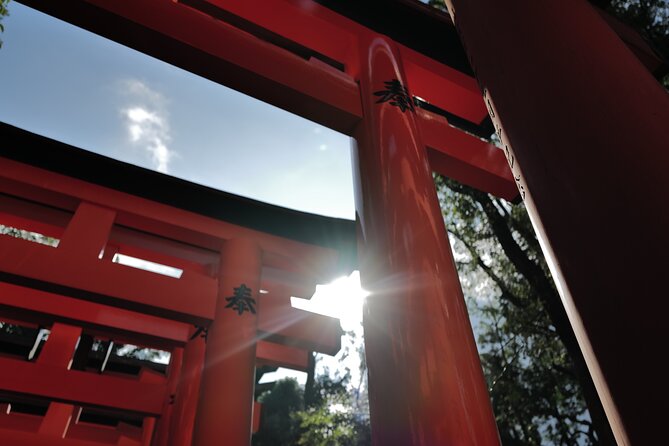
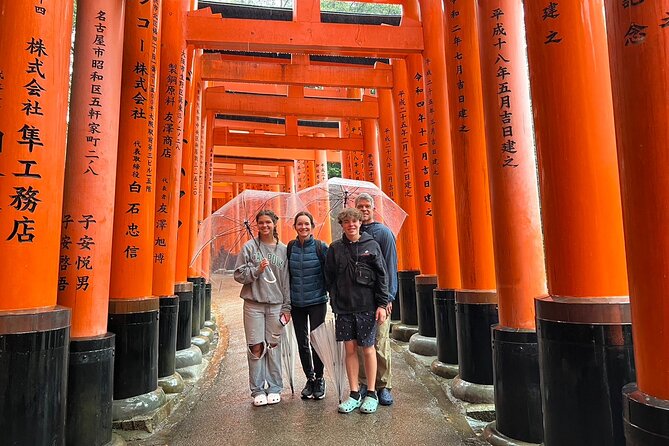
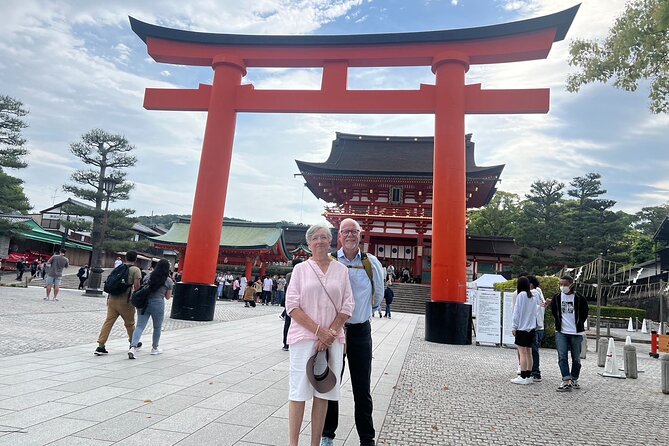
Fushimi Inari-taisha is the natural first stop. Its long corridors of orange-red torii gates are among Kyoto’s most recognizable sights, but the experience changes sharply as the morning fills. Arriving early gives you a better chance to walk beneath the gates without constant interruptions and take cleaner photographs.
You should not expect to cover every path on the mountain during this one-hour visit. The schedule is designed as an introduction, not a full climb to the upper shrine area. That is still a good trade for a morning that also includes Arashiyama and Kinkaku-ji.
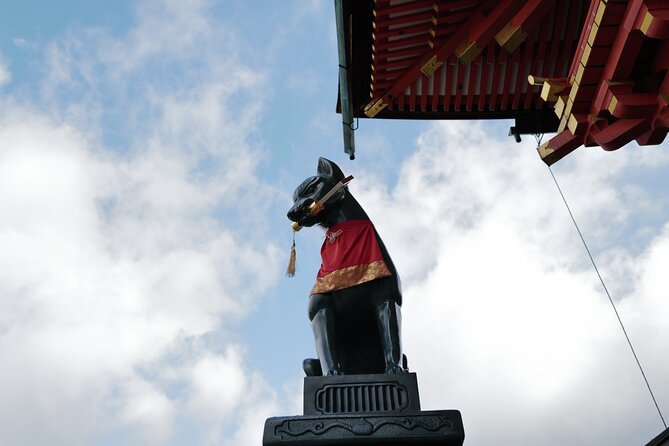
Your guide can add useful context to the shrine’s customs, symbols, and place in Japanese religious life. The strongest part of this stop is not simply seeing the gates. It is learning how to behave at a working shrine and understanding why the site matters.
One practical tip: wear shoes that can handle steady walking. The shrine paths are manageable for anyone with moderate fitness, but this is not a sit-and-look outing. You will be on your feet, and the overall route includes more walking than the short stop descriptions suggest.
The early timing is especially valuable here. One person who returned later that morning found Fushimi Inari much more crowded, particularly when stopping to collect a goshuin. If this shrine is high on your list, seeing it first is one of the best reasons to book the tour.
More Guided Tours in the world:
- Angkor Wat Sunrise or Sunset Tour with Guide from Siem Reap
★ 5.0 · 12,109 reviews - Bali: Sunrise Mount Batur Guided Hike with Breakfast
★ 4.8 · 9,660 reviews - Bali: Mount Batur Sunrise Guided Hike and Natural Hot Spring
★ 4.8 · 9,284 reviews
Arashiyama Bamboo Grove and time for photos
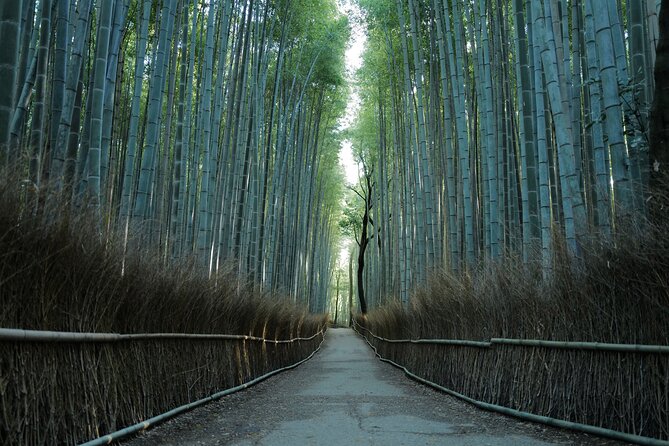
From Fushimi Inari, the tour continues by public transport to Arashiyama. The bamboo grove offers a very different mood: tall green stalks close in around the path, and the narrow route creates a quiet, enclosed feeling when foot traffic is light.
The grove itself is not huge. You can walk through the main section in about an hour, and your guide can point out good angles for photographs and explain the area’s cultural setting. Several guides are praised for helping with photos, which is useful when you are traveling alone or want a picture with your whole group.
The main drawback is that the bamboo path is a famous photo stop, so calm conditions are never guaranteed. The early schedule helps, but it cannot promise an empty walkway. Keep your expectations realistic and enjoy the grove as a short scenic walk rather than expecting a long wilderness experience.
You may also have a little free time near the bamboo forest. One especially useful detail from the experience is the chance to find street food in the area after the main visit, though food is not included in the price. Your guide can also suggest places and local snacks, giving you a better sense of what to do if you return to Arashiyama later.
Arashiyama is also where the transit portion becomes useful. Instead of being carried between stops in a private vehicle, you learn how Kyoto’s rail and bus network connects major areas. That may feel less polished, but it gives you skills you can use the next day.
Kinkaku-ji, the Golden Pavilion
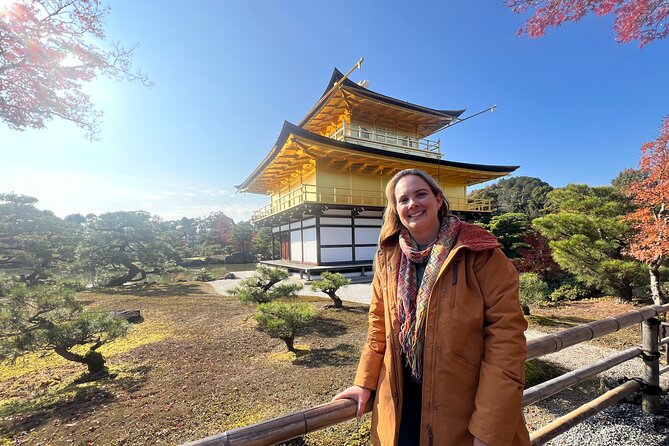
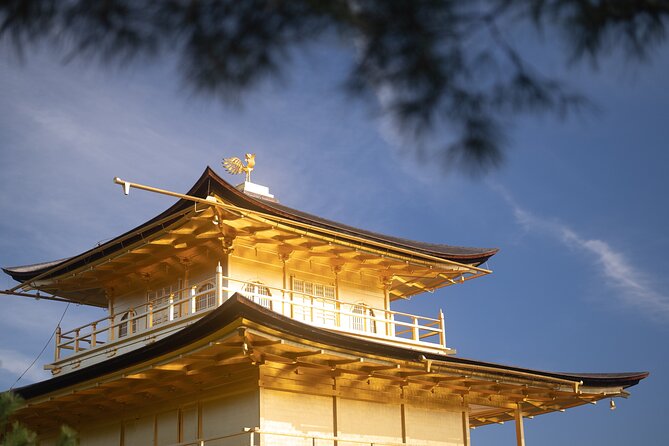
Kinkaku-ji is the visual finale. Also called the Golden Pavilion, the temple’s gold-covered upper levels reflect over a pond, creating one of Kyoto’s most instantly recognizable views.
The stop lasts about an hour, and the entrance fee is not included. Budget ¥500 per person for admission. That is a small extra cost, but you should know about it before booking because the advertised tour price does not cover every expense.
The pavilion is viewed from a set path rather than entered as a normal temple building. Your guide can explain the site’s history, religious role, and rebuilding, while you take in the view from the main garden route. The gold structure is especially striking after the quieter, more natural setting of Arashiyama.
Kinkaku-ji is also the stop where crowd control matters less than at Fushimi Inari. You will still appreciate an early visit, but the pavilion’s fixed viewing points can feel busy even when the surrounding paths are manageable. The guide helps keep the stop efficient, which matters because the tour must still reach the other two areas.
A small group with real guide support
The group limit of eight is one of the best features of this experience. You are not part of a large procession, and the guide can answer questions, adjust the pace, and help with small practical problems.
The guide quality appears to be a major part of the experience. Genki is praised for clear explanations, strong English, and attention to individual needs. Aya is noted for local stories, photo help, and a courteous manner. Arisa receives praise for making the route efficient and memorable, while Akari is described as patient and engaging with families.
Other named guides include Haruki, Ramu, Koi, Karin, Hina, Suzuka, Hiro, Arame, Kanami, and Asuka. The specific guide depends on the booking, but the recurring strengths are consistent: good English, practical help, cultural context, and a friendly pace.
This matters because the route is not hard to understand on paper, but Kyoto’s transport system can be tiring when you are new to the city. A guide who shows you how to move between major areas can save time and reduce stress. You also have someone to ask about customs, temples, food, and plans for the rest of your stay.
Families should pay attention to this point. One guide was praised for being patient and fun with a 10-year-old, while another was described as engaging with both children and adults. That does not remove the walking, but it suggests the tour can work well for families that are comfortable with an active morning.
More early starts worth the alarm around the world:
- Siem Reap: Angkor Wat: Small-Group Sunrise or Sunset Tour
★ 5.0 · 9,444 reviews - Cappadocia: Goreme Hot Air Balloon Flight at Sunrise
★ 5.0 · 4,924 reviews - Siem Reap: Angkor Wat 2-Day Tour with Sunrise and Sunset
★ 4.9 · 4,429 reviews - Funchal: Pico do Arieiro Sunrise Hiking Transfer
★ 4.8 · 4,021 reviews
Public transport is part of the experience
You will use local trains and buses rather than a private coach. The fare is not included and is listed at about 1,240 yen, though the exact amount can depend on the route and transport used.
I see this as both a cost and a benefit. You pay more than the tour price alone, and public transport can mean standing, transfers, and keeping track of the group. On the other hand, you learn how Kyoto functions, and that knowledge can make independent sightseeing much easier.
The transport time is included in the five to six-hour total. This is important when comparing the tour with a shorter walking tour. You are not spending six full hours at the attractions. Part of the morning goes toward crossing the city between Fushimi Inari, Arashiyama, and Kinkaku-ji.
That route covers a lot of ground. It is efficient for first-time visitors who want the classic highlights, but it is not the best choice if you prefer one neighborhood explored slowly. You will see three important areas, then need to return later if you want a closer look at any one of them.
Several people find the transit instruction useful enough to shape the rest of their Kyoto plans. You can ask for suggestions for the next day, learn how the city is laid out, and gain confidence using public transportation on your own.
What the price includes and what it does not
The price is $68.98 per person. It includes the English-speaking guide, but not public transport, food and drinks, or the ¥500 Kinkaku-ji entrance fee.
For a first Kyoto morning, I consider the price reasonable if you value time and orientation. You receive a guided route through three major attractions, help with local transport, cultural explanations, and a small group rather than a large coach. You also finish early enough to use the afternoon for Nishiki Market, Gion, another temple, or a return to a favorite stop.
The value is weaker if you are already comfortable with Kyoto’s trains and buses or if you only want a deep visit to one site. You could visit the locations independently for less than the tour price, but you would need to plan the connections, manage the timing, and provide your own background.
Group discounts may be available, which could improve the cost for families or friends booking together. Confirmation is provided at booking, and mobile tickets make the experience easy to carry on your phone.
Who should book this Kyoto morning tour
This tour suits a first visit to Kyoto, especially if you have limited time. It gives you three iconic sights in one organized morning and helps you get your bearings before spending later days independently.
It is also a good match for solo visitors. The small group provides company without the scale of a large tour, and the guide can help with photographs and local questions. One booking even operated with a single participant rather than being canceled, creating a more private experience.
Families can benefit from the relaxed explanations and guide support, but you should be ready for walking and public transportation. The tour requires a moderate level of fitness, and children who dislike early starts or long transit stretches may find the pace tiring.
You may want to skip it if you have already visited all three sites or if you prefer slow travel. The route is designed to cover highlights efficiently, not to linger at every shrine, garden, or neighborhood along the way.
Practical tips for a smoother morning
- Wear comfortable shoes: Walking is a real part of the experience, and the transport connections add more time on your feet.
- Bring money for extras: Set aside about ¥1,240 for public transport, ¥500 for Kinkaku-ji, plus anything you want to eat or drink.
- Keep your morning flexible: Travel time is included, so delays or crowded transit can affect the exact time at each stop.
- Use the guide for the rest of your trip: Ask about local customs, food, and routes you can handle independently later.
- Take the weather seriously: The experience requires good weather. If poor weather causes cancellation, you are offered another date or a full refund.
- Cancel early if needed: You can receive a full refund when canceling at least 24 hours before the start time. Changes or cancellations inside that window are not accepted for a refund.
Should you book it?
Book this tour if you want Kyoto’s famous morning sights without spending your first day figuring out the transport system. The strongest reasons are the early visit to Fushimi Inari, the small group, and the practical help from guides such as Genki, Aya, Arisa, and Haruki.
Skip it if you want a private car, a very slow temple visit, or a route focused on only one district. For most first-time visitors with moderate fitness, the $68.98 price is fair once you value the saved planning time and the confidence you gain using Kyoto’s trains and buses.
FAQ
How long does the Kyoto Early Morning Tour last?
The tour lasts approximately five to six hours, including travel time between the three locations.
Which attractions are included?
The tour visits Fushimi Inari-taisha Shrine, Arashiyama Bamboo Grove, and Kinkaku-ji, also known as the Golden Pavilion.
Is the Kinkaku-ji entrance fee included?
No. The entrance fee is ¥500 per person and must be paid separately.
Is public transportation included?
No. Public transportation costs about ¥1,240 and are paid separately. The English-speaking guide helps you use Kyoto’s trains and buses.
How large is the tour group?
The experience has a maximum of eight people.
What happens if bad weather cancels the tour?
If poor weather causes cancellation, you can choose a different date or receive a full refund.
Newly added sunrise trips around the world
- Cappadocia Classic Car Experince Sunrise, Sunset & Daytime Tour★ 5.0 · 6 reviews
- Cappadocia: Blue Tour and Sunrise Balloon Tour★ 5.0 · 8 reviews
- Cappadocia Camel Ride Experience Sunset & Sunrise & Daytime★ 5.0 · 2 reviews
- Cappadocia Sunrise Hot Air Balloon Watching Tour w/Transfer★ 5.0 · 73 reviews
- Cappadocia Balloon Watching Experience at Sunrise★ 5.0 · 2 reviews
- Cappadocia Hot Air Balloon Tour Sunrise With Breakfast★ 3.0 · 11 reviews
- Cappadocia: Balloon Flight at Sunrise★ 4.5 · 28 reviews
- Cappadocia Balloon Flight at Sunrise★ 4.0 · 4 reviews
Japan Sunrise Tours, compared at first light.
Kyoto: Early Morning Tour with English-Speaking Guide
Read our review →
Tokyo Early Morning Tour Asakusa Meiji Shrine (Private Opt)
Read our review →