
Review · CAMBODIA
Siem Reap: 2-Day Temple Highlights Sunrise and Sunset Option
Angkor is best understood over two days, not rushed through in one sweaty circuit. This tour pairs the famous temples with quieter sites such as Banteay Srei and Preah Khan, then adds sunrise at Angkor Wat and a sunset finish. I like the strong mix of major sights and smaller ruins, and I like the practical care: cold water, chilled towels, and an air-conditioned vehicle waiting after each temple.
The main drawback is the pace. You will cover a lot of ground, rise before dawn, walk over uneven stone, and spend long hours in the heat. The $46 tour price also excludes the $62 Angkor pass, meals, and drinks beyond the supplied water, so the true cost is higher.
Key points at a glance
- Banteay Srei’s fine carvings: This smaller temple has some of the most delicate stone work in Cambodia.
- Sunrise at Angkor Wat: Enter before dawn from the quieter eastern side, with a torch in hand.
- A useful mix of temples: See the headline sites, atmospheric ruins, and lesser-known Ta Nei in one plan.
- Guides who add real context: Names often praised include Sak, Pi, Pal, Chhay, Bun, and Sam.
- Cool transport matters: Air conditioning, bottled water, and cold towels take the edge off Cambodia’s heat.
- Flexible booking terms: You can cancel up to 24 hours ahead and reserve without paying at once.
Why two days works better than one
Angkor is not one temple. It is a huge archaeological area with grand state monuments, small shrines, jungle-covered ruins, reservoirs, terraces, and long roads between them. A one-day visit can show you Angkor Wat and a few nearby sites, but it leaves little room for Banteay Srei, Preah Khan, Neak Pean, and Ta Nei.
I like the shape of this two-day plan. Day one moves farther from the main Angkor Thom area and concentrates on temples with very different characters. Day two focuses on the headline sights, beginning in darkness and ending among the famous faces of Bayon.
You should still expect a full schedule. The tour is designed for people who want to see a lot, not for someone seeking a slow morning at one temple. The guide can help control the pace, and several accounts describe time for photos, questions, snacks, and rest between stops, but the walking does not disappear.
More Sunrise and Sunset Tours in Cambodia
- Angkor Wat Sunrise or Sunset Tour with Guide from Siem Reap
★ 5.0 · 12,109 reviews - Siem Reap: Angkor Wat: Small-Group Sunrise or Sunset Tour
★ 5.0 · 9,444 reviews - Siem Reap: Angkor Wat 2-Day Tour with Sunrise and Sunset
★ 4.9 · 4,429 reviews
Day one: Pre Rup, Banteay Srei, and the outer temples
Pre Rup gives you a temple mountain first
The first stop is Pre Rup, a Hindu temple built under King Rajendravarman in 961 or early 962. Its brick, laterite, and sandstone structure rises in a stepped form, giving you an early example of the temple-mountain idea used across Khmer architecture.
I find this a useful opening site because it introduces the basic language of Angkor: high terraces, central towers, sacred geometry, and a blend of Hindu belief with royal power. The stone can feel stark in the early light, and the broad setting helps you understand the scale of the old Khmer building program.
The upper levels involve steps and uneven surfaces. You will want sturdy shoes, and anyone with knee or balance problems should tell the guide before climbing. One traveler with a knee problem received extra help from the guide and driver, but this remains a walking tour, not an accessible one.
Banteay Srei rewards the long drive
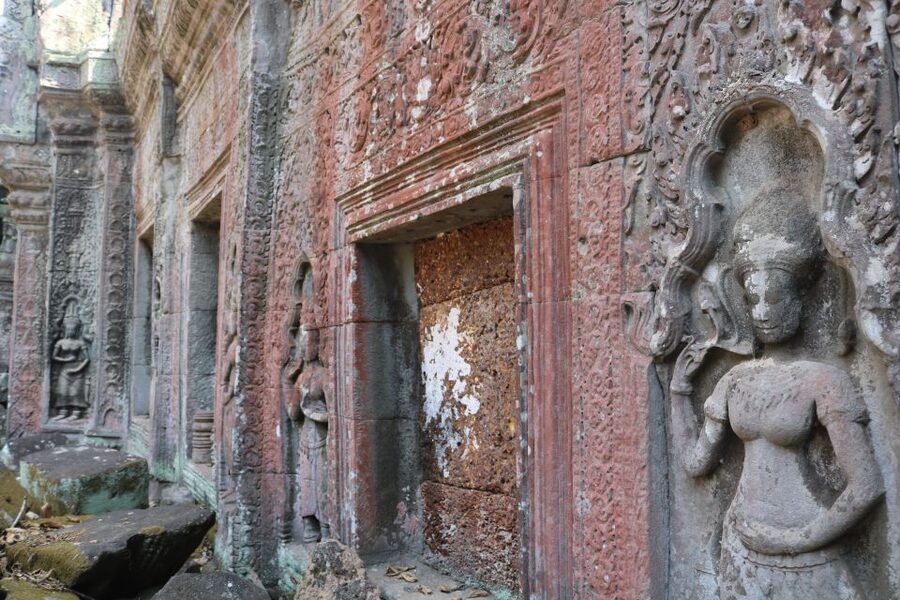
Banteay Srei lies farther from the central temple circuit, so reaching it takes time. The reward is a compact sandstone temple covered with unusually fine carvings. Compared with the large monuments, it feels more intimate and easier to read at close range.
Look for the careful treatment of figures, floral patterns, guardian creatures, and scenes from Hindu stories. The detail is the point here. A guide can show you what the carvings represent and explain why this temple has such a strong reputation for craftsmanship.
Banteay Srei was only accessible to visitors from the late 1990s after the Khmer Rouge left the area. That recent history adds weight to the visit, although your guide may give more or less attention to it depending on the group’s interests.
The distance is also the clearest tradeoff. If you want only the central Angkor monuments, Banteay Srei uses a substantial part of the day. I think it earns its place, especially for anyone interested in sculpture and close-up architectural detail, but you should not expect every stop to be close together.
More Sunrise Temple Tours in Cambodia
- Angkor Wat Sunrise & 3 Main Temples with Breakfast – Small Group
★ 5.0 · 2,857 reviews - 2 Days Exclusive Temple Highlights with Sunset and Sunrise Tour
★ 5.0 · 1,157 reviews - Siem Reap: Angkor Sunrise 1- or 2-Day Guided Temples Tour
★ 4.9 · 1,132 reviews - Siem Reap: Angkor Wat Sunrise Explore The Most Iconic Temples
★ 5.0 · 879 reviews
Neak Pean feels unlike the other temples
Neak Pean sits on an artificial island in the Jayatataka Baray reservoir. Rather than presenting a tall temple mountain or a long gallery, it gives you a small Buddhist sanctuary reached across a causeway over the water.
This change of setting is welcome after several stone-heavy stops. The temple’s design relates to water and healing, and your guide can explain the religious ideas tied to the pools and central shrine. Water levels and access can affect how the site looks, so do not expect the same view in every season.
Neak Pean is not a huge complex. You visit for its unusual plan and setting, not for hours of exploration. It works well as a shorter stop during a busy day.
Preah Khan has the best ruin atmosphere
Preah Khan was commissioned by Jayavarman VII in honor of his father. It is a large, layered complex with long corridors, carved stone, courtyards, and trees pressing into the remains. Compared with Angkor Wat, it feels less formal and much more broken down.
I particularly like the contrast. At Angkor Wat, the scale and symmetry dominate. At Preah Khan, you notice the collision between architecture and time. Roots, leaning stones, narrow passages, and open courtyards create a place that feels easier to wander through.
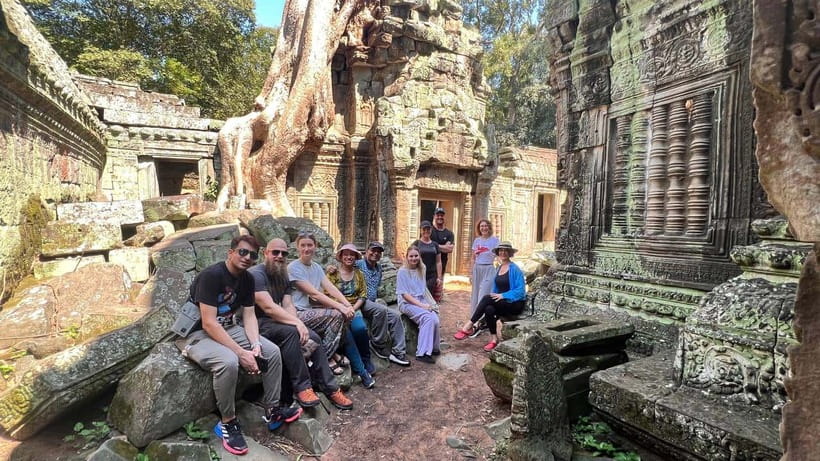
The World Monuments Fund is restoring parts of Preah Khan, and some areas are in remarkably good condition. Other sections remain rough underfoot. Watch your step, especially where stone blocks and roots interrupt the walking route.
Preah Khan once supported 2,740 monks, a reminder that these were not simply stone monuments. They were religious, political, and social centers. A good guide such as Sak, Pi, Pal, Chhay, or Bun can connect the surviving walls with the people and beliefs that once filled them.
Sunset depends on the booking option
The final light of day is handled differently depending on the tour format. The small-group option includes sunset at Bakheng Temple, a hilltop setting known for views over the surrounding area. The private option includes a rice-field sunset drink, a quieter and more relaxed way to finish.
Check which version you are booking. These are not the same experience. Bakheng involves a temple visit and a climb, while the rice-field option is more about sitting back as the sun drops over the fields.
The sunset stop is a pleasant counterweight to the early start on day two. It also means day one can run long, especially after the drive to Banteay Srei and the return through the temple area. Bring insect repellent and water, even though the driver supplies bottled water and cool towels.
Day two: Angkor Wat at sunrise
Bring a torch for the dark approach
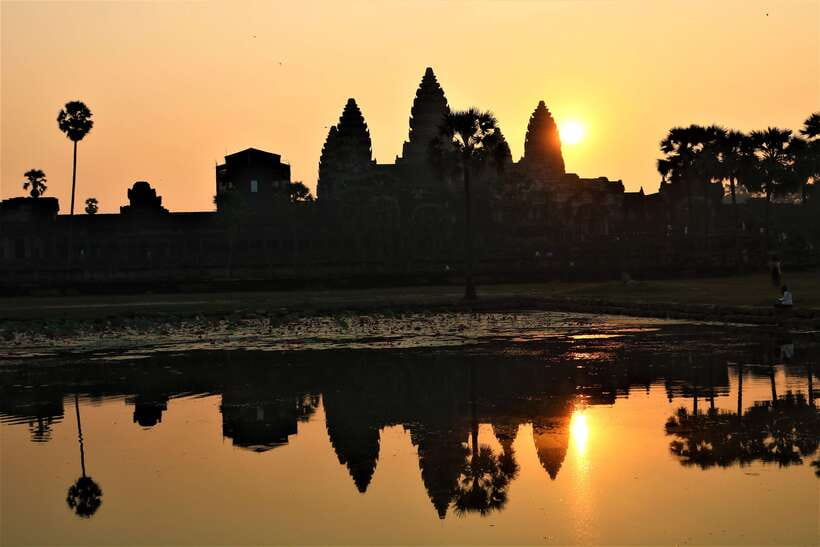
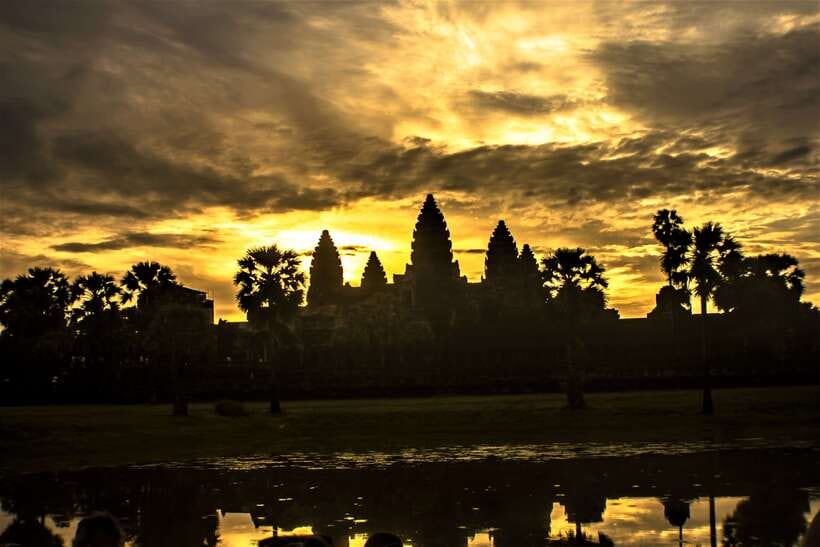
Day two begins before dawn. You enter Angkor Wat from the eastern side while it is still dark, so bring a torch or headlamp. This route avoids beginning with the standard front approach and takes you through cloistered corridors toward the main temple.
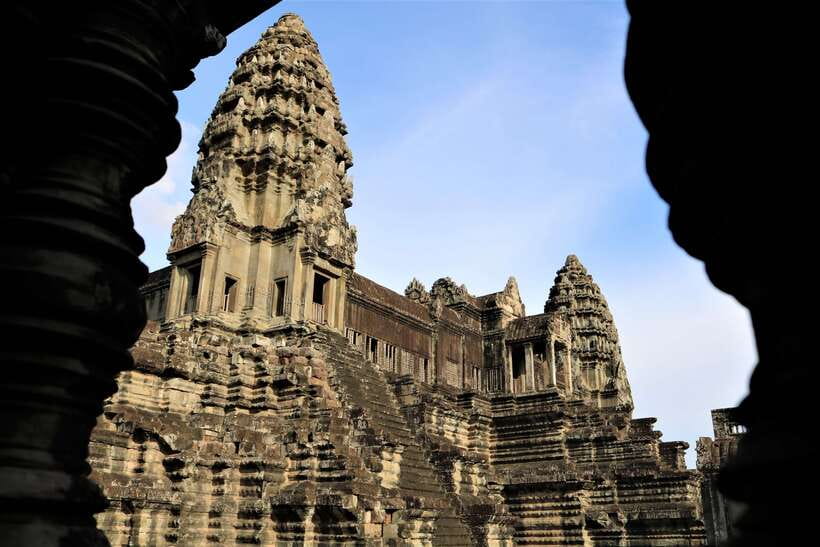
The point is not only the famous reflection view. Moving through the dark galleries gives the building a different mood. As the sky lightens, details in the stone begin to appear, including the long bas-relief carvings that run through the temple.
Sunrise can be crowded, and the best position depends on timing and conditions. Guides including Sak and Pi were praised for getting groups into good viewing spots, but no guide can control clouds, crowds, or the exact colors of the morning. Keep expectations practical: the site is spectacular even when the sky is pale.
After sunrise, the tour continues inside Angkor Wat. This is when the guide’s value becomes clear. The reliefs, towers, galleries, and religious symbolism can blur together without explanation. A strong English-speaking guide can point out the stories in the carvings, explain the shift between Hindu and Buddhist use, and show you architectural details you would likely pass by.
Breakfast is taken outside the temple. Meals are not included, so budget for food and check whether you want to carry a snack or buy breakfast nearby. The early start makes this stop important, not optional.
Ta Prohm and Ta Nei: trees, silence, and smaller scale
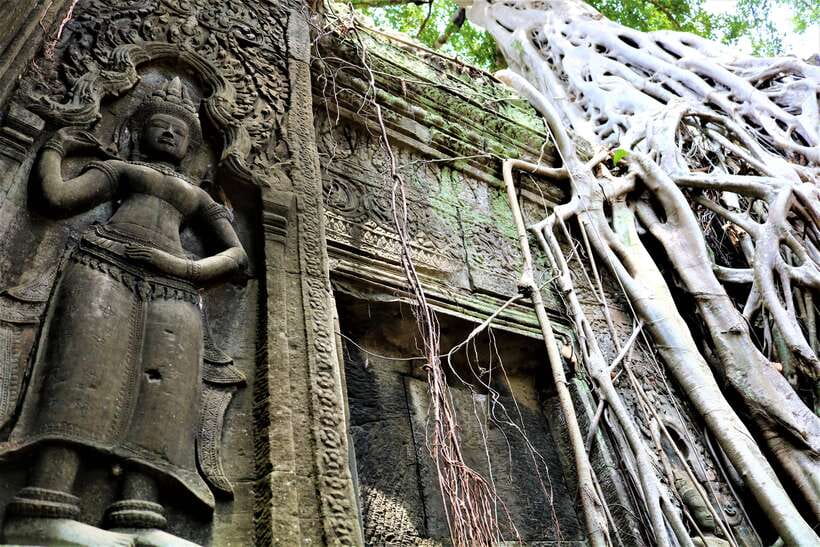
Ta Prohm is famous for good reason
Ta Prohm is the jungle-covered temple linked with the film Tomb Raider. Its appeal is not just film recognition. The site preserves a powerful sense of a major complex being reclaimed by trees, roots, weather, and time.
It once housed 2,740 monks. Today, you walk through collapsed galleries, courtyards, and doorways where tree roots grip the stone. The temple looks much as it did when French explorer Henri Mouhot described it in the 1850s, though conservation work and visitor routes have changed parts of the site.
This is one of the busiest stops, so patience helps. Your guide may lead you toward less crowded corners and good photo points, but Ta Prohm is not a secret place. I would give yourself time to look beyond the famous root-covered doorway. The smaller carvings and shifting views through the galleries are just as rewarding.
Ta Nei offers a quieter contrast
Ta Nei is a late 12th-century stone temple in the Angkor area. It is smaller and less polished than Ta Prohm, which is exactly why it works in the itinerary.
After the crowds and visual drama of Ta Prohm, Ta Nei gives you a quieter look at a ruin. It is a useful reminder that Angkor contains many temples beyond the few names printed on postcards. Expect uneven ground and a less formal visit, with the guide supplying the context that the site itself does not always make obvious.
Angkor Thom and Bayon’s stone faces
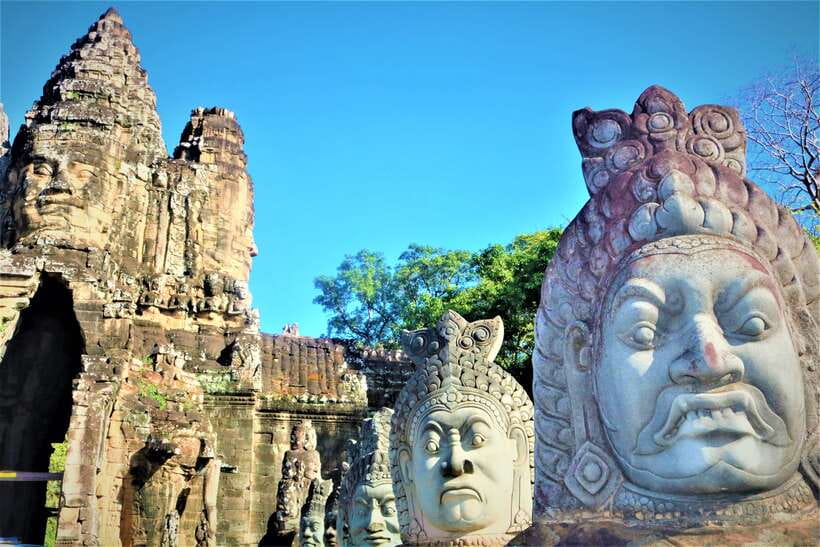
Enter through the South Gate
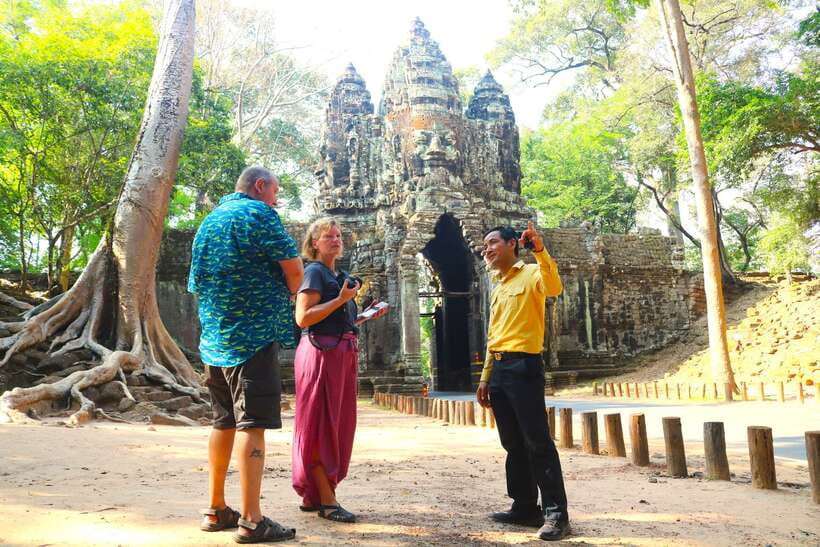
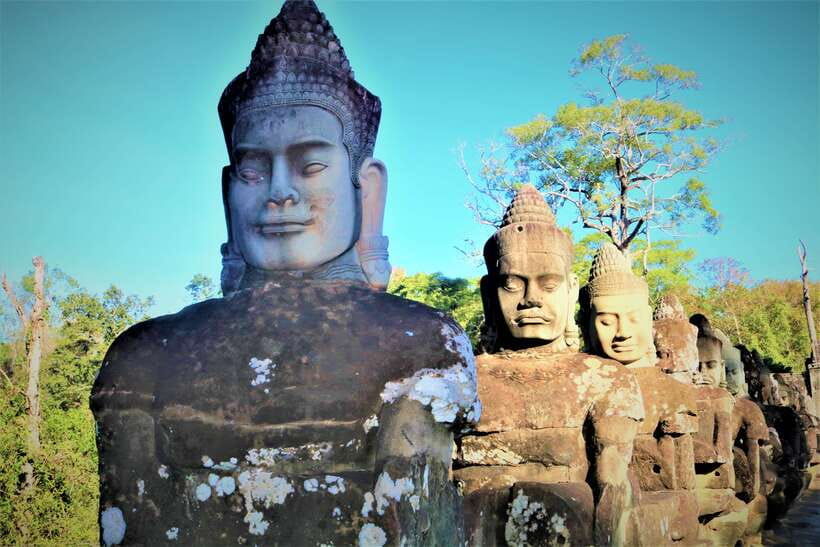
The southern gate of Angkor Thom is lined with 54 stone figures on each side. Gods appear on the left and demons on the right, recalling the well-known Khmer story of the churning of the ocean of milk.
The causeway makes a strong approach to the fortified city. Look closely at the expressions and posture of the figures, though some have suffered damage or restoration. This is a good place to let the guide explain how religious stories were used in royal architecture.
Angkor Thom was a city, not just a temple. Inside, the route includes Bayon, the Terrace of the Leper King, and the Terrace of Elephants. The distance between these areas is manageable by vehicle and on foot, but you will still be tired by this point.
Bayon is a close-looking temple
Bayon’s central towers carry more than 200 enormous faces. The faces are the reason most people remember the temple, but the lower galleries deserve time too. Carvings show scenes of warfare, markets, travel, cooking, and daily life, offering a more human view of the Khmer world.
The towers can make the temple feel confusing at first. Corridors turn, faces appear above you, and levels overlap. I like having a guide here because the layout is not obvious, and the symbolism benefits from explanation. Guides such as Chhay, Sam, and Bun have been praised for combining history, religious background, humor, and time for questions.
The terraces complete the city visit
The Terrace of Elephants and Terrace of the Leper King are open, carved platforms linked to the ceremonial center of Angkor Thom. The Elephant Terrace is especially striking for its repeated animal figures and long raised edge.
The Terrace of the Leper King is more compact and enclosed by carved walls. It rewards careful looking rather than a quick photograph. Your guide can explain the competing interpretations and the religious setting without turning the stop into a lecture.
Guides, drivers, and the value of the service
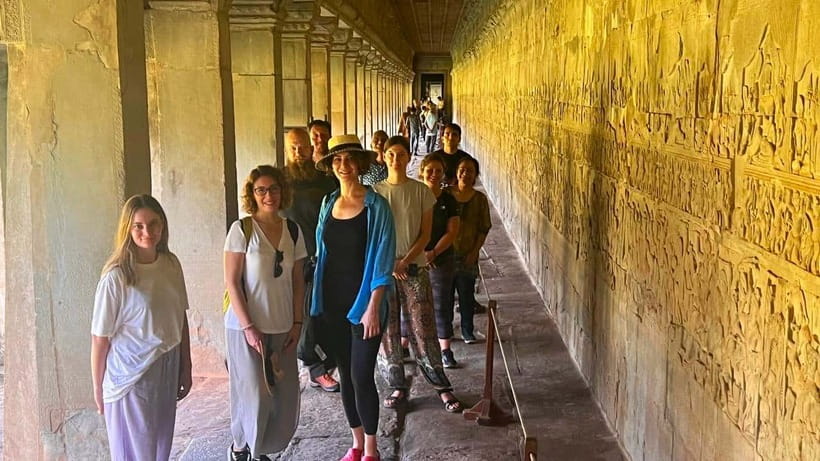
The strongest part of this experience is the human service. Guides named Sak, Pi, Pal, Chhay, Bun, So, and Sam receive repeated praise for clear English, humor, cultural explanations, photo help, and a willingness to answer questions about Hinduism, Buddhism, Cambodian life, and Khmer history.
That does not mean every guide will teach in exactly the same way. Some may go deep into symbolism, while others keep the talk lighter and move faster. If you want more detail, say so early. If you are tired, ask for a shorter explanation or more quiet time.
The drivers are just as important. Names such as Vichet, Keal, Mao, Naroo, Seyha, Sal, and Naro appear often in the feedback, with particular praise for safe driving, punctual pickup, cold bottles of water, and chilled towels after temple walks.
The air-conditioned vehicle is not a luxury in this setting. It is your recovery room. Cambodia can be hot and humid, and the contrast between a stone courtyard and a cool van makes it easier to keep going for a second day.
Price, group size, and who gets the best value
The advertised price is $46 per person. Add the required $62 two or three-day temple pass, and the known fixed cost becomes $108 per person before meals. That is still a fair price for two days of hotel pickup, transport, a licensed English-speaking guide, water, and a planned route through both central and outer temples.
Meals are not included. You should also check the sunset format, since the private option includes a rice-field sunset drink while the small-group option includes sunset at Bakheng Temple.
Small groups are available, and reported group sizes have ranged from about six to 15 people. That is far more manageable than a large coach. Private bookings suit people who want more control over stops and pacing, while the small-group version offers a lower-cost way to meet other people.
I would choose this tour if I had only two days in Siem Reap and wanted the main Angkor story with several less obvious temples. I would choose something slower if I had a week, disliked early mornings, or wanted long unstructured time at each site.
Wear clothing covering your shoulders and knees. Bring comfortable walking shoes, insect repellent, and a torch for sunrise. Shorts are not allowed, and feeding animals is prohibited. The tour is not suitable for children under eight, wheelchair users, or people with significant mobility impairments.
Should you book this Angkor two-day tour?
Book it if you want a well-organized first look at Angkor without spending hours planning temple order, sunrise timing, transport, and photo stops yourself. The combination of Banteay Srei, Preah Khan, Ta Prohm, Bayon, Angkor Wat, and smaller sites gives you a broad picture of the complex.
I would be more cautious if you need a gentle schedule. The pre-dawn departure, long walks, heat, uneven stones, and full two-day route demand energy. Still, the cold towels, careful drivers, and guides who adjust the pace make the workload easier.
For most first-time visitors with two days in Siem Reap, this is good value. Just add the temple pass to your budget, confirm the sunset arrangement, and arrive ready for an early alarm.
FAQ
How long does the tour last?
The experience lasts two days.
What temples are included?
The route includes Angkor Wat, Angkor Thom, Bayon, Ta Prohm, Ta Nei, Pre Rup, Banteay Srei, Neak Pean, and Preah Khan. It also includes either Bakheng Temple sunset or a rice-field sunset drink, depending on the booking option.
Is the Angkor temple pass included?
No. The two or three-day temple pass costs $62 per person and is not included in the tour price.
Are meals included?
No. Meals are not included. Breakfast is taken outside Angkor Wat on day two, and you should budget separately for food.
What should I wear?
Wear clothing that covers your shoulders and knees. Comfortable walking shoes are recommended.
Is hotel pickup available?
Yes. Pickup and drop-off are available from hotels throughout Siem Reap City.
Is the tour wheelchair accessible?
No. The activity is not wheelchair accessible and is not suitable for wheelchair users or people with mobility impairments.
More Sunrise and Sunset Tours in Siem Reap
- Angkor 2-Day Sunset & Sunrise Small-Group Tour
★ 5.0 · 2,567 reviews - Siem Reap: Angkor Wat Sunrise or Sunset Guided Tour
★ 4.9 · 2,123 reviews - Angkor Sunrise or Sunset Tour (includes breakfast or lunch)
★ 4.8 · 144 reviews - Angkor Wat: Sunrise or Sunset Tours with Tuk Tuk
★ 5.0 · 103 reviews
More Sunrise Temple Tours in Siem Reap
- 1-Day Angkor Wat Sunrise & All Interesting Temples Private Tour
★ 5.0 · 174 reviews - From Siem Reap: Angkor Wat Sunrise and Temples E-Bike Tour
★ 5.0 · 52 reviews - Sunrise at Angkor Wat Temple: 3-Hour Private Tour
★ 4.7 · 30 reviews - Siem Reap Angkor Wat Sunrise Explore The Most Iconic Temples
★ 4.8 · 20 reviews
Newly added sunrise trips around Siem Reap
- Sunrise at Angkor Wat with a sharing group★ 5.0 · 2 reviews
- Sunrise at Angkor Wat Temple: 3-Hour Private Tour★ 4.7 · 30 reviews
- Sunrise at Angkor Wat and Full day with Fascinating Temples★ 5.0 · 2 reviews
- Small-Group Explore Angkor Wat Sunrise Tour with Guide★ 5.0 · 3 reviews
- Siem Reap Temple Tour 2-Day with Sunrise/Sunset★ 3.7 · 3 reviews
- Angkor Wat: Sunrise 2.5 Days Temples & Tonle Sap-Small Group★ 5.0 · 10 reviews
- Siem Reap: Angkor Wat Sunrise Tour via Tuk Tuk & Breakfast★ 5.0 · 29 reviews
- Siem Reap: Angkor Wat Sunrise Tour with Spanish Guide★ 5.0 · 18 reviews
Sunrise Temple Tours, compared at first light.
Angkor Wat Sunrise & 3 Main Temples with Breakfast – Small Group
Read our review →
2 Days Exclusive Temple Highlights with Sunset and Sunrise Tour
Read our review →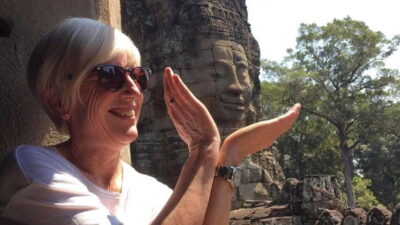
Angkor Sunrise 1- or 2-Day Guided Temples Tour
Read our review →
Angkor Wat Sunrise Explore The Most Iconic Temples
Read our review →
North Bali: Sunrise Tour with Dolphins, Waterfalls & Temples
Read our review →
From Sharm: Mount Moses Trekking, Sunrise & Monastery Visit
Read our review →
1-Day Angkor Wat Sunrise & All Interesting Temples Private Tour
Read our review →More lists with this sunrise on them