
Review · CAMBODIA
Angkor 2-Day Sunset & Sunrise Small-Group Tour
Angkor Wat at sunrise is the big draw, but this tour gives you much more than one famous temple. You’ll also reach Banteay Srei, with its fine pink sandstone carvings, and atmospheric Preah Khan, where trees and ruined walls create a scene far removed from the grand scale of Angkor Wat. I like the air-conditioned vehicle and the steady supply of cold water and towels. I also like the mix of major monuments and quieter stops. The tradeoff is simple: day one can be very long, and day two begins around 4:10 to 4:30 in the morning.
Key points before you book
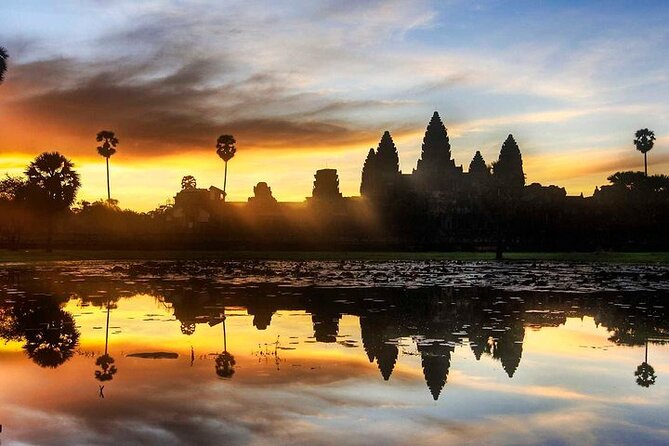
- Angkor Wat sunrise: Arrive before dawn, enter from the eastern side, and watch the temple emerge from the dark.
- Banteay Srei included: See some of Cambodia’s finest carved stonework at a smaller temple outside the main cluster.
- Air-conditioned transport: A major comfort advantage over an open tuk-tuk during hot temple days.
- Strong guide service: Guides including Pal, Sak, Sokpee, Chhay, Pi, and Bun are praised for clear history talks and taking photos.
- Two different kinds of days: Day one covers countryside temples and sunset, while day two focuses on Angkor Wat and Angkor Thom.
- Budget carefully: The $49 tour price does not include the required $62 temple pass.
Why this two-day plan works
Angkor is too large and too important to treat as a quick stop between breakfast and lunch. The main temples are spread across a large archaeological area, and the heat makes rushing from one ruin to the next a poor way to see them.
This two-day plan gives you a useful first look without leaving you entirely to maps and signs. Your English-speaking guide explains the religious stories, royal ambitions, and carved figures that can otherwise blur together. Guides such as Pal and Sak are also praised for using pictures and an iPad to make the details easier to follow.
I like the balance here. You get the famous names, including Angkor Wat, Bayon, Ta Prohm, and Angkor Thom, but you also reach Preah Khan, Neak Pean, Banteay Srei, and Pre Rup. Those smaller or less central sites help you see how varied Khmer temple design can be.
The small-group format also matters. The maximum is 15 people, with some departures running closer to six or 13. That is small enough for questions and personal attention, though it is still a shared tour. You will need to keep to the group’s meeting times, especially before sunrise.
More Sunrise and Sunset Tours in Cambodia
- Angkor Wat Sunrise or Sunset Tour with Guide from Siem Reap
★ 5.0 · 12,109 reviews - Siem Reap: Angkor Wat: Small-Group Sunrise or Sunset Tour
★ 5.0 · 9,444 reviews - Siem Reap: Angkor Wat 2-Day Tour with Sunrise and Sunset
★ 4.9 · 4,429 reviews
Day one: Preah Khan, Neak Pean, Banteay Srei, and Pre Rup
The first morning begins with hotel pickup at about 8:00. From there, you head toward the temples in a climate-controlled vehicle. That sounds like a minor detail until you have spent several hours walking over dusty paths in Cambodian heat. The short breaks inside the vehicle are part of what makes the full day manageable.
Preah Khan and the pleasure of ruins
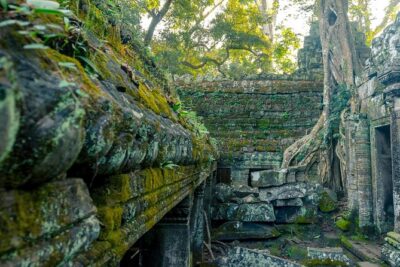
Preah Khan is a fine opening stop because it feels atmospheric rather than polished. Its crumbling stone corridors and tree roots give you a sense of a site being slowly reclaimed by the forest.
Plan on about an hour here. Your guide can point out the mix of religious imagery and explain the temple’s place in the wider Angkor complex. I would not rush this stop. The appeal is in the worn stone, shadowy passages, and changing views as you move through the ruins.
The ground can be uneven, and you will walk more than the short stop length suggests. Wear shoes with a firm sole rather than lightweight sandals.
Neak Pean and a compact island temple
Neak Pean takes about 40 minutes. The temple sits on a circular island in the middle of Jayatataka Baray, an ancient reservoir. Reaching it involves a raised walkway, which gives you a different view from the enclosed corridors of Preah Khan.
This is a compact stop, so it works well in a busy day. You will not spend hours climbing or wandering through a giant complex. Instead, you get a clear look at a carefully arranged water setting and a Buddhist temple built around an island.
The tradeoff is that Neak Pean is more about the setting and design than extensive ruins. If you expect another Angkor Wat, you may find it brief. If you appreciate variety, it is a useful change of pace.
More Sunrise and Sunset Tours in Siem Reap:
- Siem Reap: Angkor Wat Sunrise or Sunset Guided Tour
★ 4.9 · 2,123 reviews - 2 Days Exclusive Temple Highlights with Sunset and Sunrise Tour
★ 5.0 · 1,157 reviews - Siem Reap: 2-Day Temple Highlights Sunrise and Sunset Option
★ 4.9 · 445 reviews - Angkor Sunrise or Sunset Tour (includes breakfast or lunch)
★ 4.8 · 144 reviews
Banteay Srei and the finest small-scale carving
Banteay Srei is one of the strongest parts of the tour. It is smaller than Angkor Wat, but its sandstone carvings are exceptionally detailed. The relief work is the reason to make the trip into the countryside.
You have about 90 minutes here, enough time to study the carved figures and listen to the stories behind them. The smaller scale makes it easier to notice faces, floral patterns, and carefully cut borders. This is a place where your guide’s explanations add real value. Without context, you might simply see a beautiful red-toned temple. With help, the carvings become part of a larger Hindu story.
Banteay Srei also breaks up the main temple circuit. You get a sense that Angkor was not one single monument, but a broad religious and political center with many different styles and purposes.
Pre Rup and the day’s high viewpoint
Pre Rup is a temple mountain built from brick, laterite, and sandstone. It served as the state temple of King Rajendravarman and was dedicated in 961 or 962.
The planned stop is about 90 minutes. Expect stairs, open stone, and strong sun. The temple’s upper levels give you a broad view over the surrounding area, although the climb may be uncomfortable if you have breathing problems or dislike steep, exposed paths.
Pre Rup is also tied to the sunset portion of the day. The sunset viewing point involves an uphill walk, and the climb can be hot or dusty. Air quality and clouds may affect the view, so you should treat the sunset as a welcome extra rather than a guaranteed postcard moment.
One practical point is easy to miss: day one may run from roughly 8:00 in the morning until around 7:00 in the evening when sunset is included. That makes it a full day, not a gentle afternoon outing. Eat when you can, drink often, and do not save all your energy for the final temple.
Day two: the 4:10 sunrise at Angkor Wat
The second day begins before dawn, usually between 4:10 and 4:30 depending on the season. Your hotel pickup is arranged in advance, which removes one of the biggest headaches of an early morning visit.
You enter Angkor Wat in darkness from the eastern side, a quieter approach than the usual front-facing view. Then you wait for daylight. You may sit on the ground for a while before the sun appears, so bring patience and something light to wear over your shoulders.
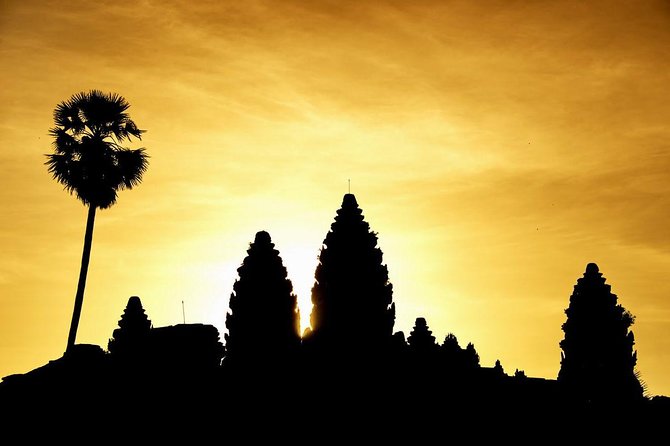
Sunrise conditions are never guaranteed. Clouds, rain, haze, and smoke can change the colors and visibility. Even on a cloudy morning, Angkor Wat’s outline appearing against the growing light can be peaceful and memorable. I would value the early access and calm atmosphere more than the promise of a perfect orange sky.
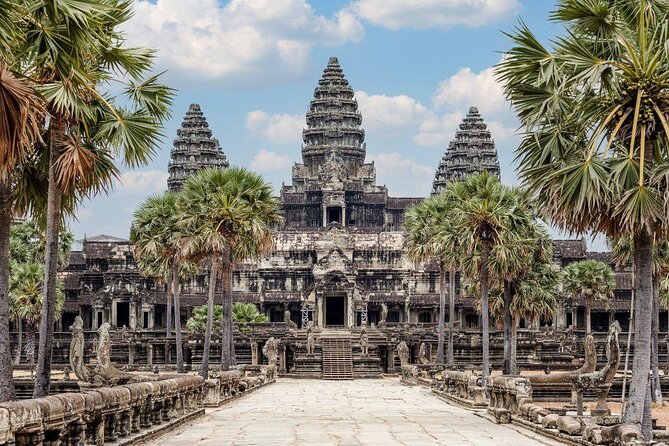
The temple visit lasts about three hours. That gives you time to see the famous exterior view, walk through the galleries, and study the bas-reliefs. Angkor Wat is not a quick photo stop. Its scale only makes sense once you spend time moving through the courtyards and corridors.
You should expect a long wait before sunrise and a lot of walking afterward. The reward is that you see the temple at a time when the air is cooler and the stone changes character as daylight grows.
Angkor Thom and the faces of Bayon
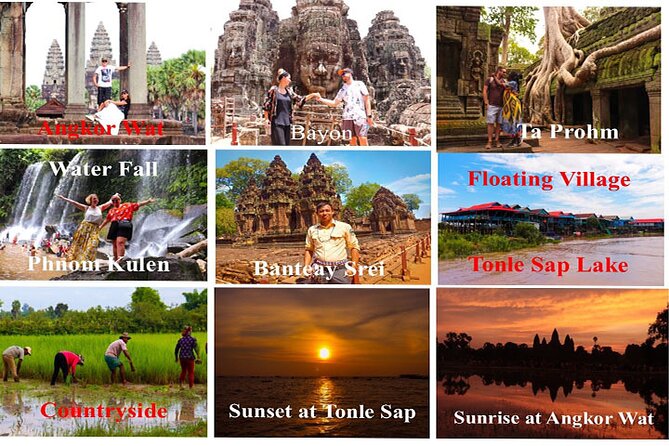
After Angkor Wat, the group moves to Angkor Thom, the former Khmer capital. The scale changes again. Instead of one temple, you enter a huge walled city with roads, gates, terraces, and several major monuments.
The Bayon is the highlight. Its towers carry the famous carved faces, which look different as light and shadows move across them. This is a place where a guide can help you understand what you are seeing, especially when religious symbols and royal imagery overlap.
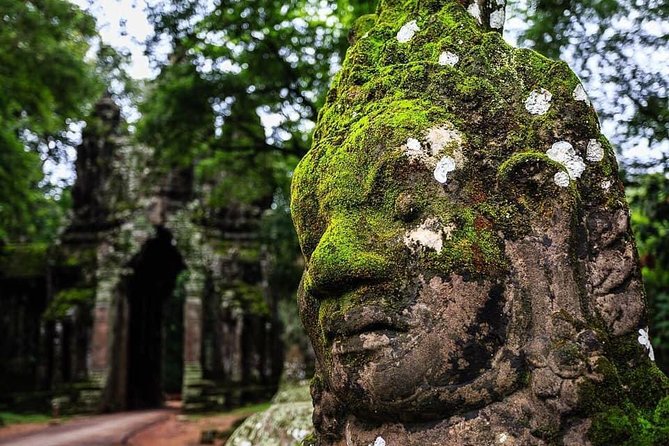
The stop at Angkor Thom lasts about 90 minutes, followed by about 30 minutes at the South Gate. The gate itself is a dramatic approach, lined with figures pulling a serpent. It gives you a strong sense of arrival before you move farther into the former capital.
The broad scale can be confusing without a clear explanation. Your guide should help connect the gate, city walls, Bayon, and terraces so the site feels like a planned capital rather than a collection of unrelated stones.
Terraces and Ta Prohm
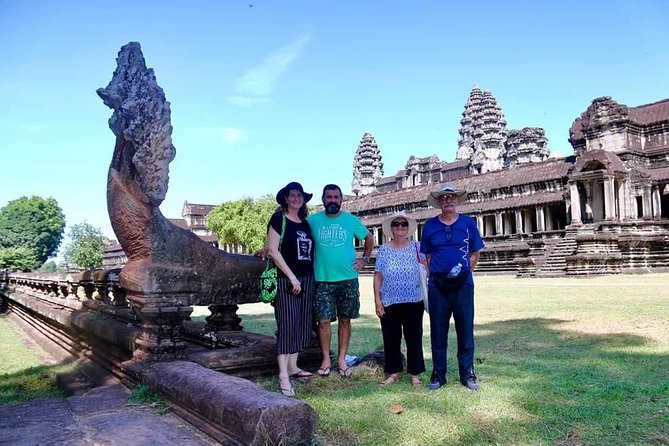
The Terrace of the Elephants and the Terrace of the Leper King bring you back to the ceremonial center of Angkor Thom. You will pass the Leper King Terrace and spend about 90 minutes around the terrace area.
These open stone platforms are less enclosed than the temple stops, so sun protection matters. The carvings and long raised walls make more sense when you understand that this area served public and royal purposes. It is also a useful pause after the darker corridors of Bayon.
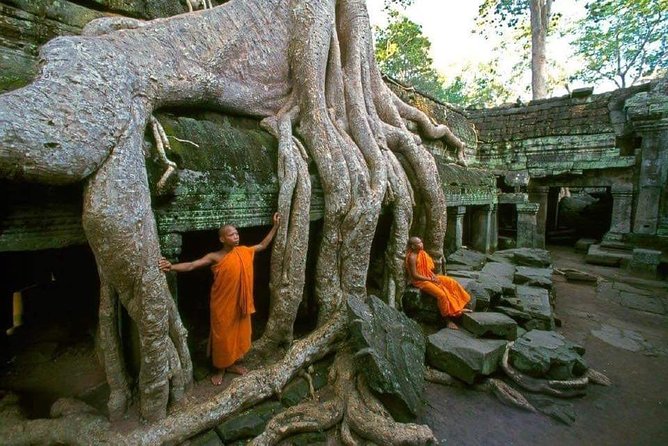
Ta Prohm is the final major stop and one of Angkor’s most atmospheric sites. Trees push through walls, roots wrap around stone, and the ruin feels less controlled than the grand monuments nearby. It is easy to see why this temple has become so popular.
The visit lasts about an hour. That is enough for a good walk, but not enough to inspect every corner. Crowds can gather in the best-known sections, and the paths may be dusty or uneven. Your guide may help you find better photo angles and keep the group moving without turning the visit into a race.
Ta Prohm once housed 2,740 monks and now looks much as it did when French explorer Henri Mouhot encountered it in the 1850s. That contrast helps explain its appeal: you are seeing a major religious site in a condition that still feels raw and overgrown.
The guide can make or break the experience
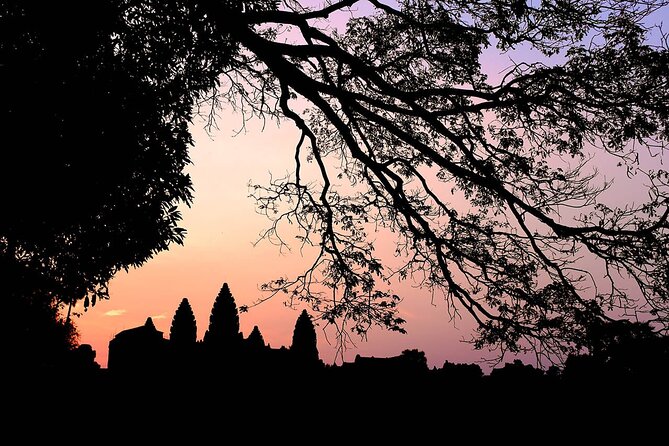
The temples are spectacular, but stone alone does not explain why they were built or what the carvings mean. I would place a high value on the guide here.
Several guides associated with this tour are praised for different strengths. Pal is noted for clear explanations, visual material on an iPad, patience, and taking photographs. Sak is described as a friendly guide who combines history with practical help at photo spots. Sokpee is praised for answering questions and keeping a busy schedule on track. Chhay is known for adding cultural context and humor. Pi and Bun are also singled out for making the group comfortable and explaining each stop clearly.
You cannot normally choose a specific guide in advance, so consider these names examples of the service style rather than a promise. The common pattern is useful: expect a guide who explains the temples, answers questions, helps with photos, and keeps an eye on timing.
Solo visitors benefit especially from this. You do not need to ask strangers to take every photograph, and guides may know angles that work better than the obvious front-facing shot. Families also have good reason to consider the format. Children as young as seven and eight have managed the long days with attentive guides, though younger than five are not allowed.
Air conditioning, water, and the real comfort factor
An open-air tuk-tuk can be charming, but two full temple days in heat and dust can make it tiring. This tour uses an air-conditioned vehicle, often described as a comfortable van or bus with reclining seats.
The driver is an important part of the experience. Drivers named Naro, Mao, Keal, Ha, Vichet, and Sha have been praised for punctual pickups, safe driving, and keeping the vehicle ready between stops. Cold bottled water and cool or mint-scented towels are provided, which is exactly the kind of small service that matters after a hot walk.
The roads and paths can still be rough or dusty. Air conditioning will not remove the need for water, sun protection, and sturdy shoes. It simply gives you a genuine chance to cool down before the next ruin.
Cost, temple pass, and value
The tour costs $49 per person, but the required temple pass is extra. The stated charge for a two to three-day pass is $62 per person, paid directly at the site. Your basic total is therefore about $111 before meals.
That makes the tour more expensive than the headline price suggests, but the value is still strong if you want transport, a guide, two full days of sightseeing, sunrise arrangements, and hotel pickup and drop-off. Meals are not included, though you can buy them at your own choice during the day.
I would not choose this tour if you want a slow, private visit with complete control over every stop. I would choose it if you have limited time and want the main temples organized for you. The pass may also give you useful flexibility beyond the scheduled visits, since it is valid for two to three days according to the supplied details.
Who should book this tour?
This is a good match for a first visit to Siem Reap, especially if you want a broad introduction to Angkor without arranging several separate rides. It suits solo visitors, couples, families with older children, and anyone who values explanation as much as photographs.
You should be comfortable with long walks, hot weather, dusty paths, stairs, and early mornings. Cover your shoulders and knees inside the temples, and wear comfortable walking shoes. If the pre-dawn start sounds miserable rather than exciting, you may prefer a slower temple plan.
The schedule can be adjusted between the sunset and sunrise portions. One arrangement allowed a day between them at no extra cost, so ask about a swap day if you need a rest day. The activity also offers free cancellation up to 24 hours before the start time, subject to the stated local cut-off.
FAQ
What is included in the $49 tour price?
The price includes two days of temple visits, an English-speaking licensed guide, air-conditioned transport, hotel pickup and drop-off, bottled water, cool towels, sunset on day one, and sunrise at Angkor Wat on day two.
Is the Angkor temple pass included?
No. The temple pass is paid separately at the site. The stated charge for a two to three-day pass is $62 per person.
What time does the tour begin?
Day one starts around 8:00 in the morning. Day two requires a pre-dawn hotel pickup, usually between 4:10 and 4:30 depending on the time of year.
Which temples are visited?
The planned stops include Preah Khan, Neak Pean, Banteay Srei, Pre Rup, Angkor Wat, Angkor Thom, Angkor Thom South Gate, the Terrace of the Elephants, and Ta Prohm. The schedule also passes the Terrace of the Leper King.
How large is the group?
The maximum group size is 15 people. Some departures may be smaller, with group sizes reported at six, seven, or 13 people.
What should I wear and bring?
Wear comfortable walking shoes, and cover your shoulders and knees inside the temples. Bring patience for the early sunrise wait, along with sun protection and suitable clothing for hot conditions.
Should you book it?
I would book this tour if you want to see Angkor’s major monuments plus Banteay Srei in two organized days. The air-conditioned vehicle, cold water, cool towels, hotel service, and strong guide support make the $49 tour fee useful once you add the separate $62 pass.
The main warning is the pace. Day one can last until evening, and day two begins before most people have had their first cup of coffee. If you accept the long hours, the heat, and the uncertainty of the sunset sky, this is an efficient and well-balanced introduction to Angkor.
More Two-Day Trips in Siem Reap
- Siem Reap: Angkor Sunrise 1- or 2-Day Guided Temples Tour
★ 4.9 · 1,132 reviews - Siem Reap: 2-Days Angkor Wat with Sunrise Small-Group Tour
★ 4.9 · 213 reviews - Angkor Wat: 2-Day Sunrise and Floating Village Tour
★ 4.9 · 31 reviews - Siem Reap: Angkor Sunrise 2 Days Guided Bike Tour
★ 4.9 · 9 reviews
Newly added sunrise trips around Siem Reap
- Sunrise at Angkor Wat with a sharing group★ 5.0 · 2 reviews
- Sunrise at Angkor Wat Temple: 3-Hour Private Tour★ 4.7 · 30 reviews
- Sunrise at Angkor Wat and Full day with Fascinating Temples★ 5.0 · 2 reviews
- Small-Group Explore Angkor Wat Sunrise Tour with Guide★ 5.0 · 3 reviews
- Siem Reap Temple Tour 2-Day with Sunrise/Sunset★ 3.7 · 3 reviews
- Angkor Wat: Sunrise 2.5 Days Temples & Tonle Sap-Small Group★ 5.0 · 10 reviews
- Siem Reap: Angkor Wat Sunrise Tour via Tuk Tuk & Breakfast★ 5.0 · 29 reviews
- Siem Reap: Angkor Wat Sunrise Tour with Spanish Guide★ 5.0 · 18 reviews
Sunrise and Sunset Tours, compared at first light.
Angkor Wat Sunrise or Sunset Tour with Guide from Siem Reap
Read our review →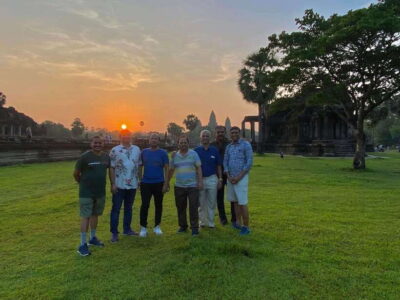
Angkor Wat: Small-Group Sunrise or Sunset Tour
Read our review →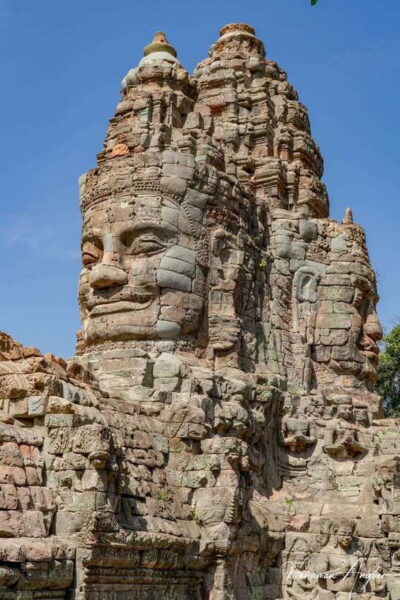
Angkor Wat 2-Day Tour with Sunrise and Sunset
Read our review →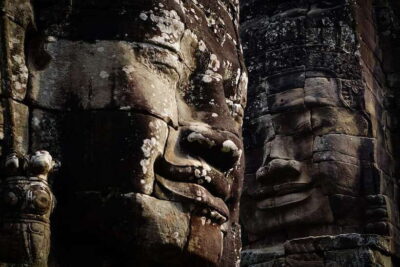

Cappadocia: Horseback Tour with Sunrise and Sunset Options
Read our review →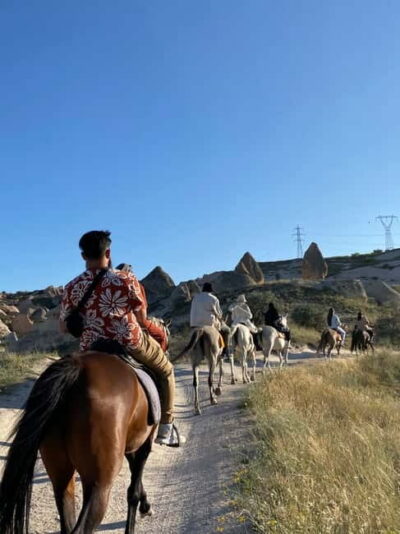
Cappadocia: Horse Riding Tour with Sunrise or Sunset Options
Read our review →
Sharm ElSheikh: ATV Quad & Buggy Adventure Sunrise or Sunset
Read our review →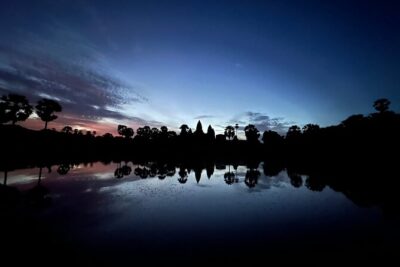
2 Days Exclusive Temple Highlights with Sunset and Sunrise Tour
Read our review →More lists with this sunrise on them